Germany is where many of Europe's greatest long-distance cycle routes begin — and where one of them famously ends. From Munich, riders launch the legendary alpine crossing to Venice and Milan; along the Elbe, the route from Prague rolls north through Saxony to Berlin; and on the Danube, the gentle path out of Passau is one of the best first cycling holidays a family can take. Germany's appeal is that it is rarely the whole trip. It is the launchpad: superb cycle infrastructure, a dense network of signed paths, reliable trains that carry bikes, and borders that open onto the Alps, the Adriatic, and the heart of Central Europe.
This guide covers six self-guided cycling tours that start in or pass through Germany — four alpine crossings from Munich, the Elbe route from Prague to Berlin, and a family ride along the Danube — and helps you choose the one that fits your legs, your group, and your pace.
Why cycle in Germany
Three things make Germany an outstanding base for a cycling holiday. First, the infrastructure: Germany has one of the densest networks of signed long-distance cycle routes (the D-Routes and EuroVelo paths) anywhere in the world, much of it on dedicated, traffic-free paths along rivers and former railway lines. Second, the trains: German and Austrian regional trains carry bikes reliably, which is what makes a point-to-point alpine crossing possible without grinding up a high pass on a loaded touring bike. Third, the position: Bavaria sits at the doorstep of the Alps, the Elbe links Bohemia to the North German plain, and the Danube carries you east toward Austria. A German start point buys you variety that few countries can match.
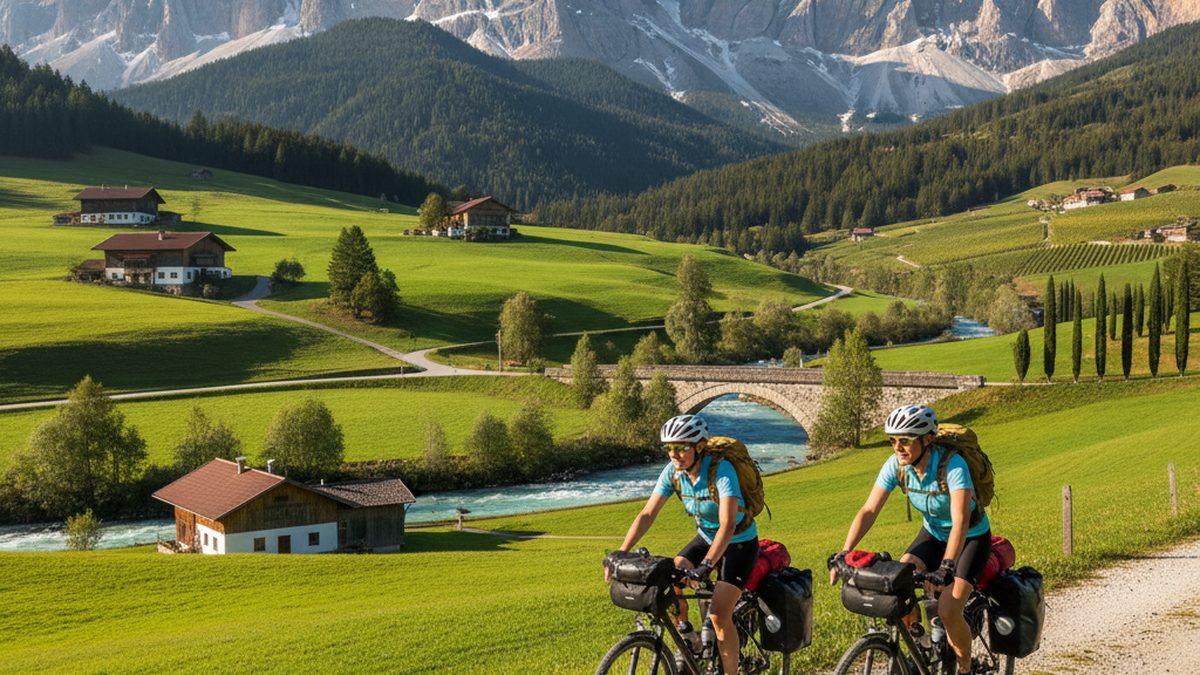
The great alpine crossing: Munich to Venice
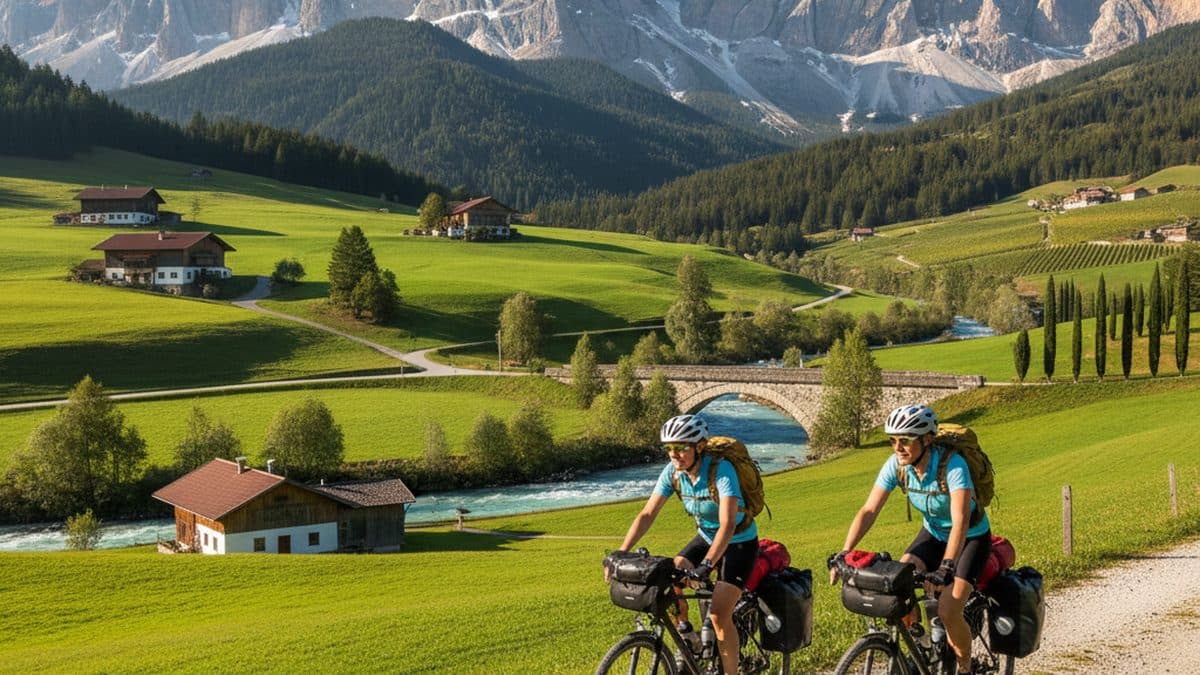
The Munich to Venice cycle route is the headline German departure — one of the most ambitious and most beautiful long-distance rides in Europe. Across roughly 550 kilometres and three countries, it climbs out of the Bavarian lake district, crosses the eastern Alps via a short Brenner train transfer, descends the spectacular Lunga Via delle Dolomiti rail-trail, and rolls down through the Prosecco hills to the canals of Venice. The genius of the route is that the high pass is handled by train, which makes a genuine Alps-to-Adriatic crossing accessible to fit holiday cyclists rather than only expedition riders. We run it in several versions, and you can read the full route breakdown in our dedicated Munich to Venice cycling guide.
The premium SELECT version
Same iconic itinerary, but every hotel is hand-picked from the top of the local four-star bracket — Bavarian lakehouse hotels, Tyrolean inns, a Prosecco-country villa, and a final night near the Venetian lagoon. Nine days, around 550 km, for travellers who want the alpine crossing paired with serious comfort. From €2,080 per person.
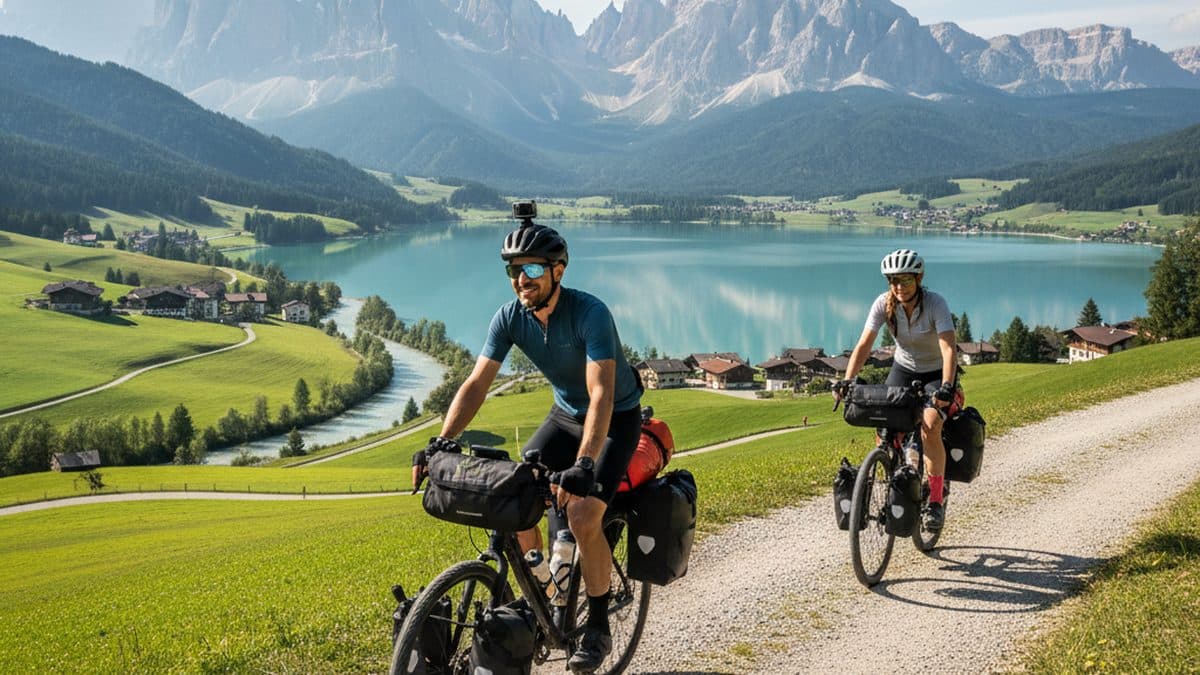

Full itinerary, dates and prices: Munich to Venice Select: Premium Alpine Cycling Tour.
The slow twelve-day version
For riders who would rather pedal shorter daily stages and spend real time in Bavaria, the Dolomites, and the Prosecco region, the twelve-day version covers the same 525 km route with shorter days and extra non-riding days in key towns. It is the most relaxed way to make the crossing. From €1,818 per person.
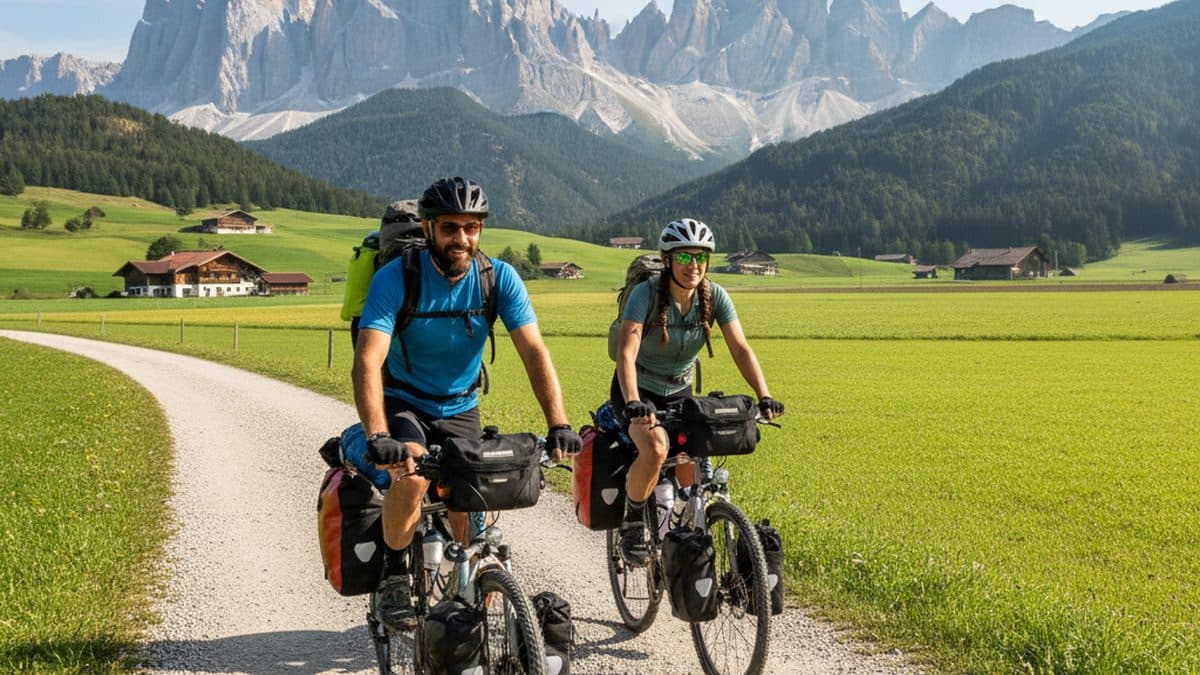
Full itinerary, dates and prices: Munich to Venice by Bike: 12-Day Alpine Crossing.
The road-bike sportive version
Road cyclists who want the same Bavaria-to-Venice arc with longer, faster stages and bigger climbs will find their tour here: 700 km in nine days on a road bike, with more elevation and fewer gentle detours. Strong fitness required, and the reward is one of the continent's classic point-to-point road rides. From €1,428 per person.
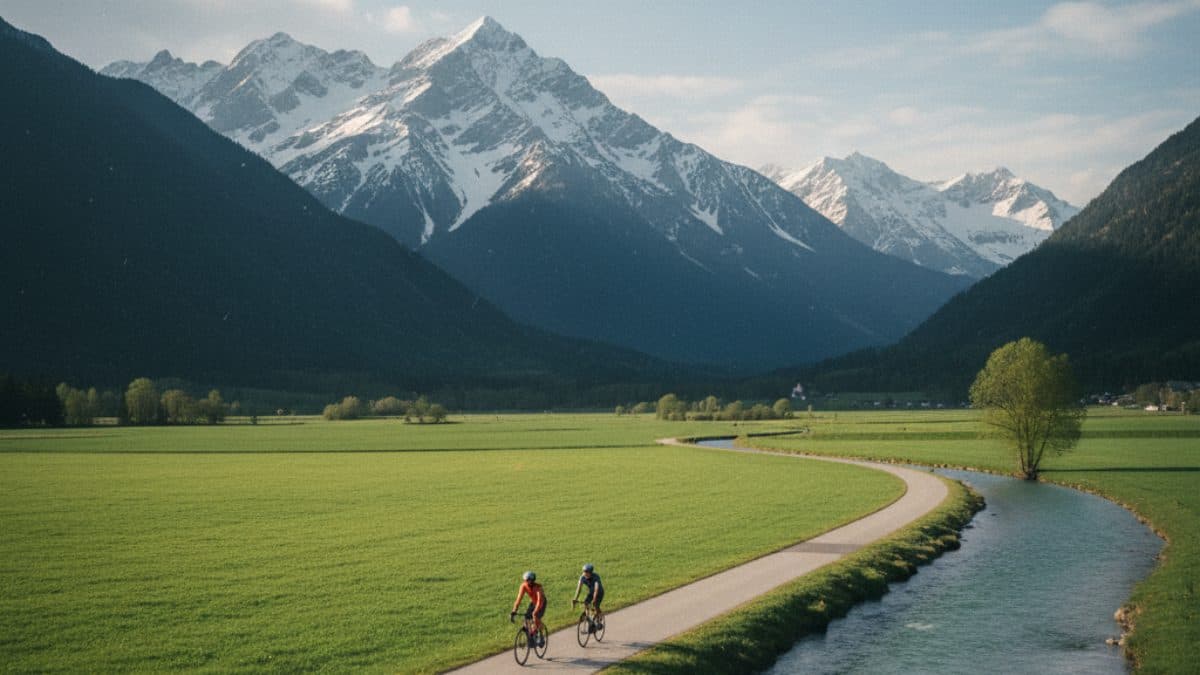
Full itinerary, dates and prices: Munich to Venice Road Bike Tour.
Over the Alps to Lombardy: Munich to Milan
If Venice is the classic finish, Milan is the connoisseur's alternative. The Munich to Milan route follows the same Bavarian start and alpine spine — Tyrol, Alto Adige, Trentino — but bends west into Lombardy instead of east to the Veneto, finishing in Italy's design capital. It is a 566 km, ten-day crossing that trades the Prosecco hills for the lakes and plains of northern Italy, and it is the natural choice for riders who have already done Munich to Venice and want a fresh way over the mountains. From €1,655 per person.
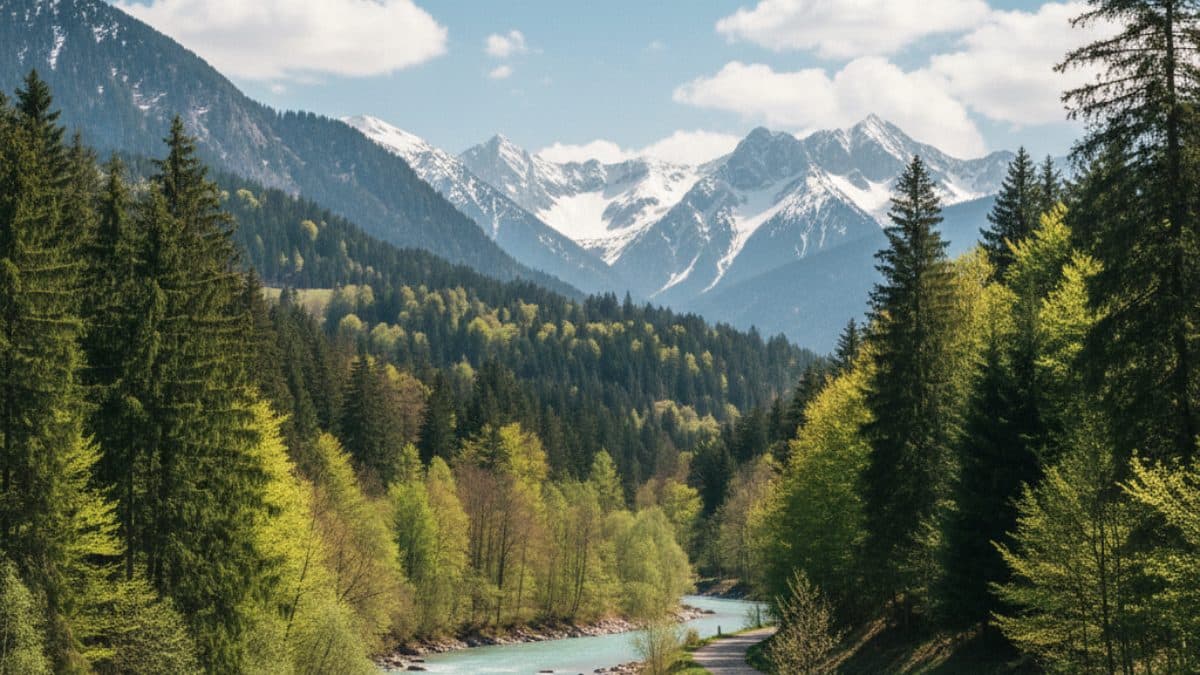
Full itinerary, dates and prices: From Munich to Milan: Cycling Across the Alps to Lombardy.
Along the Elbe: Prague to Berlin
Germany is not only mountains. One of the most rewarding flat-water routes on the continent runs along the Elbe (Labe) from Prague to Berlin, threading Bohemian wine country, the sandstone towers of Czech and Saxon Switzerland National Park, and the great river cities of Dresden, Meissen, and Lutherstadt Wittenberg before finishing in the Potsdam lakes and Berlin. At 536 km over thirteen days it is a long but genuinely gentle ride — almost entirely along riverside cycle paths — making it ideal for travellers who want distance and depth of history without serious climbing. From €1,715 per person, self-guided, with trekking or e-bike options.
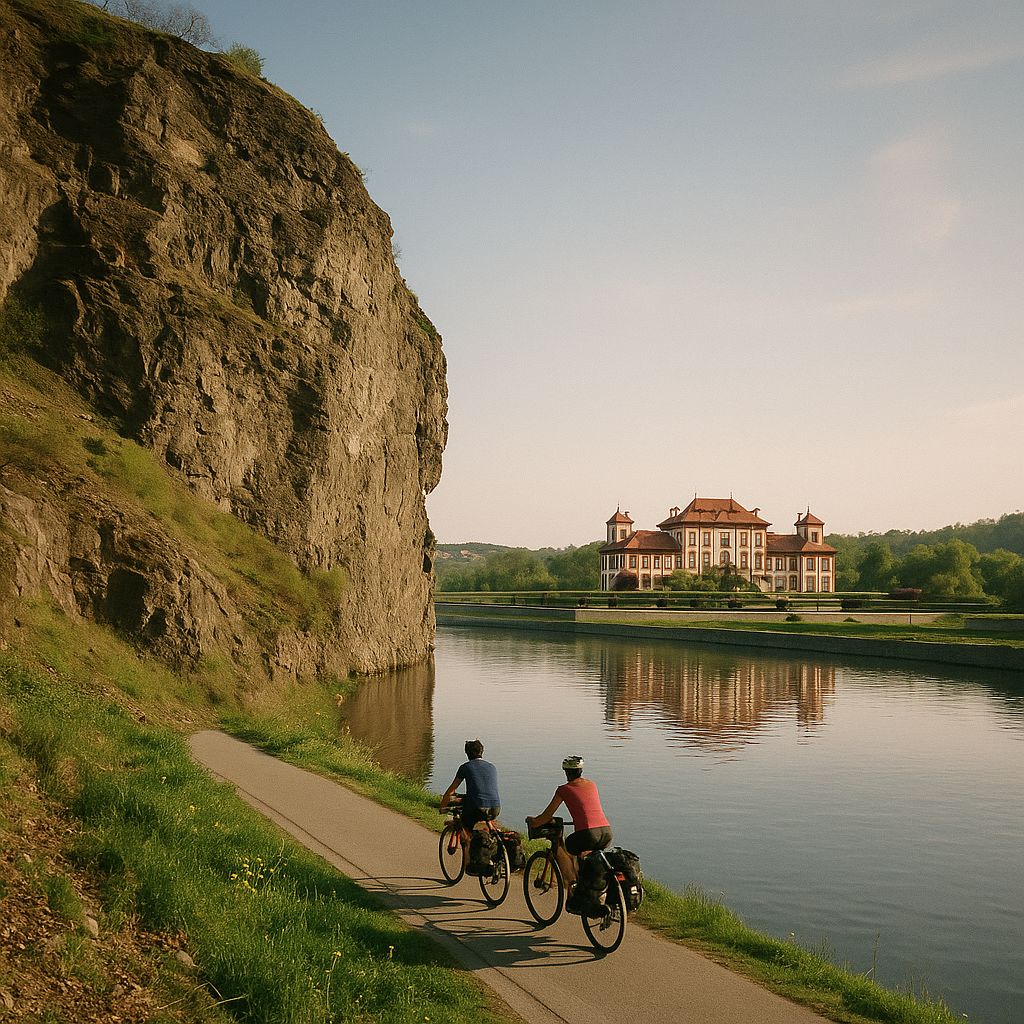
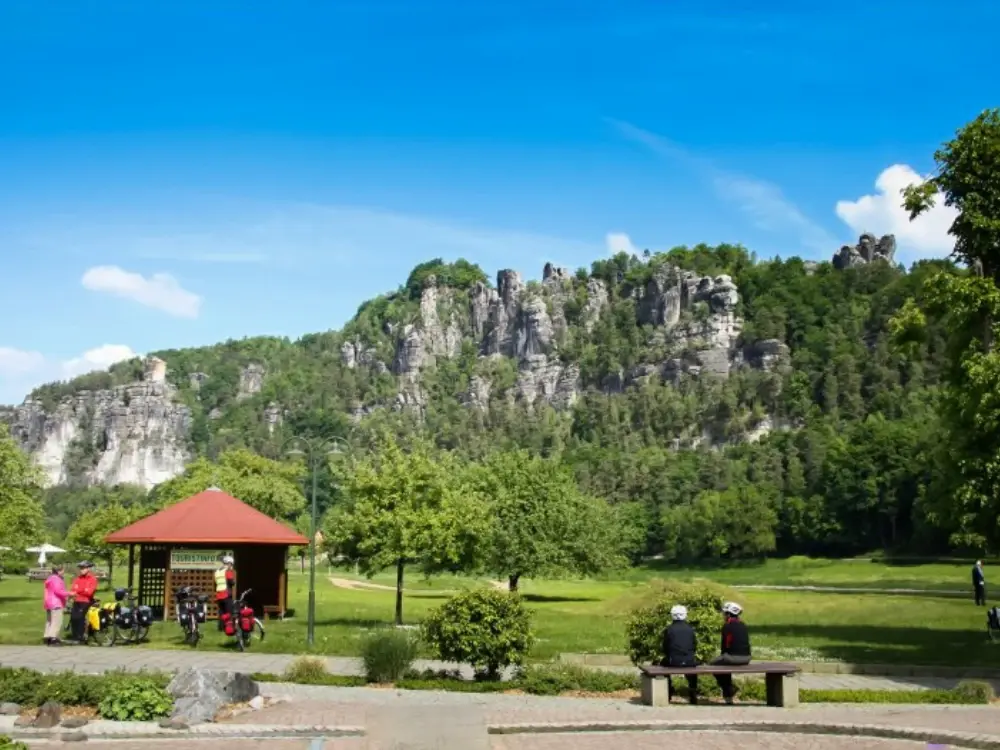
Full itinerary, dates and prices: Prague to Berlin Bike Tour.
The shorter alternative: Prague to Dresden
For riders with less time or those drawn to the most dramatic stretch of the Elbe — the sandstone towers, the border crossing, the Saxon wine country — the six-day Prague to Dresden route covers the first 222 km of the same riverside path. It ends in Dresden rather than continuing north to Berlin, which means you get Czech-Saxon Switzerland National Park and the Bastei cliffs without committing to a two-week ride. From €625 per person, self-guided, with trekking, gravel, or e-bike options.
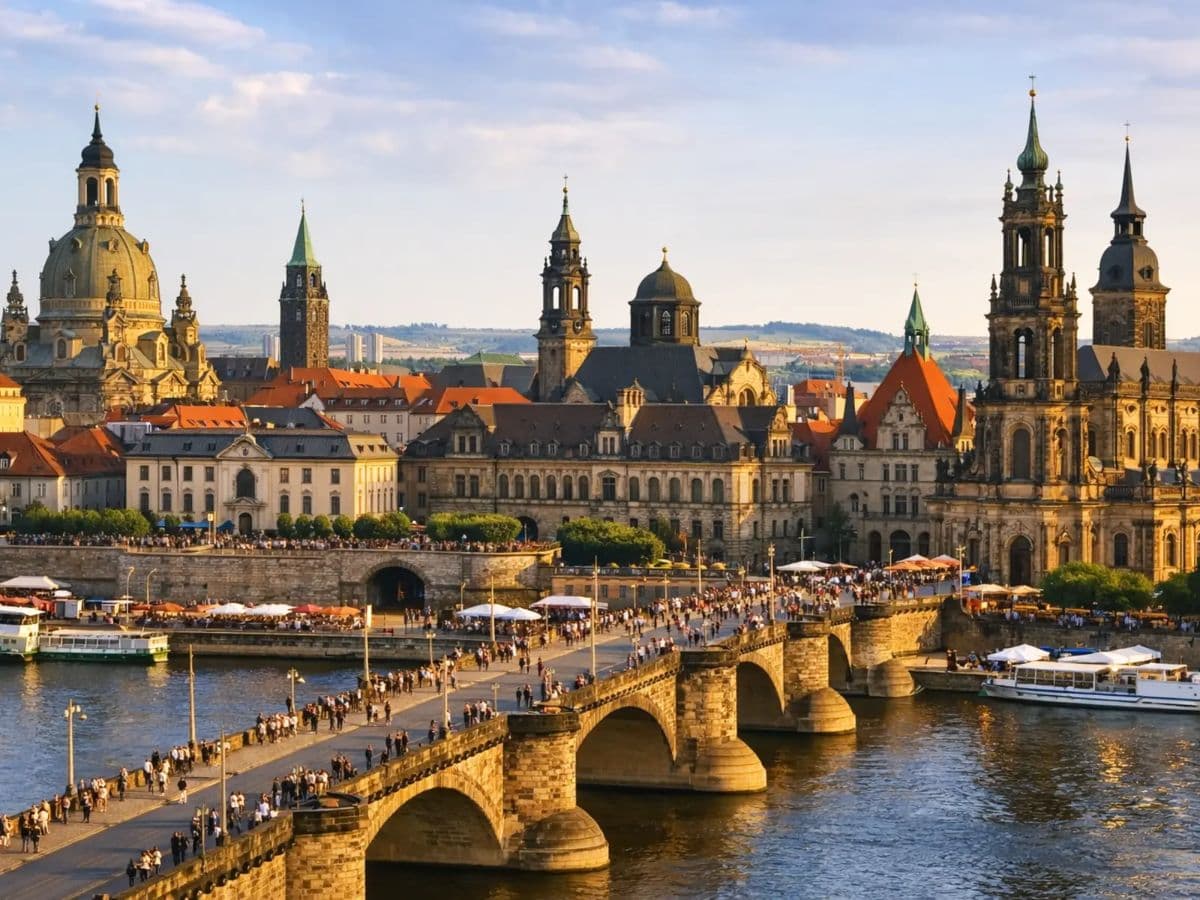
Full itinerary, dates and prices: Prague to Dresden: Cycling the Elbe from Bohemia to Saxony.
The Danube for families: Passau to Linz
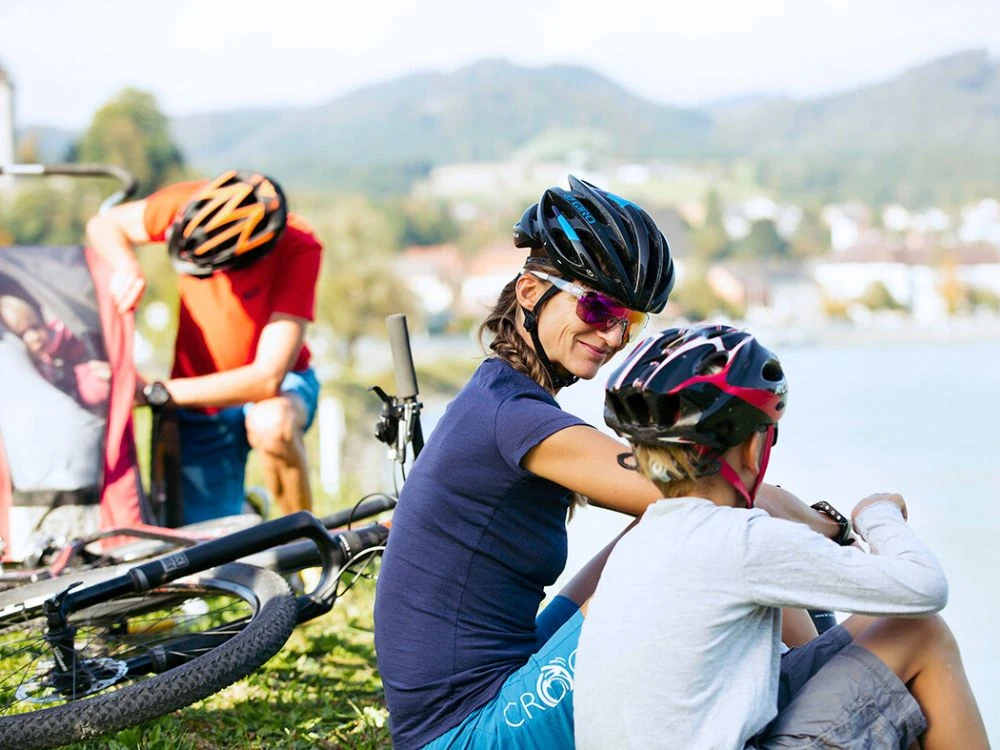
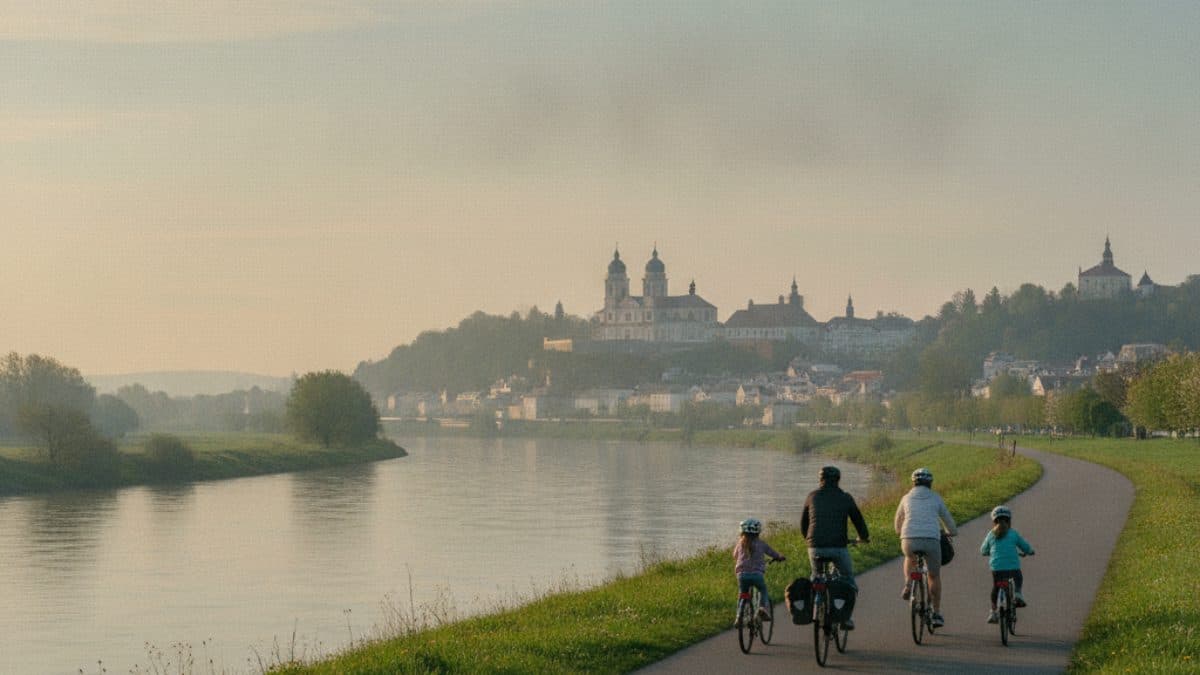
For families taking their first cycling holiday, the Danube path out of Passau is hard to beat. This six-day route covers just 75 km across short, flat, almost entirely car-free daily stages of 15 to 20 km — easy enough for children riding their own bikes or sitting in a trailer. The trip is built around the river: a Danube boat cruise on the first cycling day, the dramatic Schlögener Schlinge bend where the river carves through granite, and the fairytale Grottenbahn railway in Linz. Hotels are chosen for family-friendly facilities, and a train carries everyone comfortably back to Passau at the end. From €449 per person — one of Europe's gentlest introductions to cycle touring.
Full itinerary, dates and prices: Danube from Passau to Linz — Family Tour.
Germany by boat and bike
Not every German cycling week has to be point-to-point on land. On these tours the hotel is a ship: it moves each night while you ride, so you unpack once and still wake up somewhere new. All are flat, all are among the gentlest riding in this guide, and all are worth knowing about if the daily hotel change is the part of cycle touring you would rather skip.
The Rhine and the Moselle from Koblenz
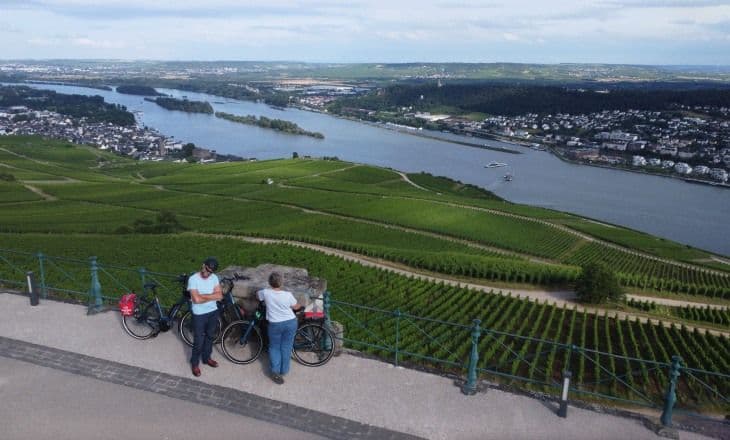
Eight days that start and end in Koblenz, where the two rivers meet, riding flat riverside cycle paths of 20 to 45 km a day — difficulty level 1, the easiest we grade. The route takes in the UNESCO-listed Upper Middle Rhine Valley with its forty-odd castles and fortresses, the Loreley rock seen from the path between St. Goar and Oberwesel, and an optional detour up the Eltz Valley to Eltz Castle. On the Moselle side it passes the Bremmer Calmont, the steepest vineyard in Europe, and moors at Cochem, Bernkastel-Kues, Beilstein and Traben-Trarbach, with a guided city tour of Mainz at the southernmost point of the route. From €999 per person.
Full itinerary, dates and prices: Rhine and Moselle by Boat and Bike: Koblenz to Koblenz.
The Moselle only, point to point: Metz to Cochem
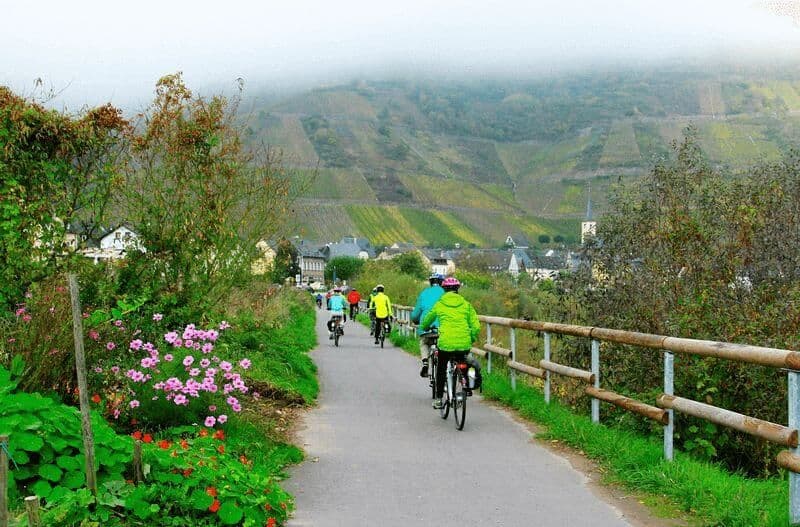
A linear alternative to the Koblenz loop above: instead of returning to where you started, this boat and bike week follows the Moselle one-way between Metz, just over the border in France, and Cochem in Germany — available in either direction, so you can start from whichever end suits your travel plans.
Hamburg and the Old Salt Road
Northern Germany, and the medieval trade route that made it rich. This eight-day loop from Hamburg links three Hanseatic cities shaped by the salt trade — Hamburg, Lüneburg and Lübeck — riding flat canal paths, the lakes and forests of the Lauenburg region and Mölln of Till Eulenspiegel fame, with a cycling day out to Travemünde on the Baltic. Along the way you pass the Scharnebeck ship lift, one of the largest in Europe, which overcomes a height difference of 38 metres; entrance to the German Salt Museum in Lüneburg and a guided city tour of UNESCO-listed Lübeck with a local guide are both included. Two route options on most days, from 25 to 64 km. From €1,199 per person.
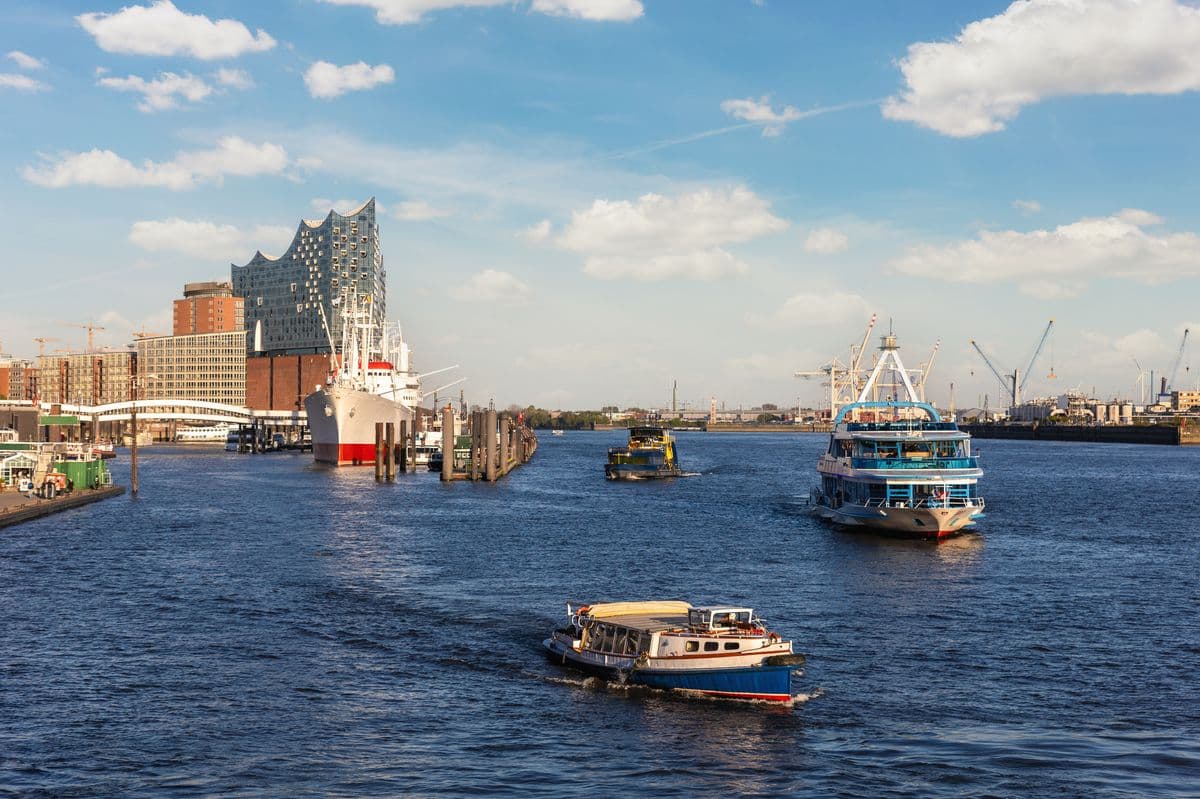
Full itinerary, dates and prices: Hamburg and the Old Salt Road.
If the format appeals, the country that does it best is next door: see our guide to boat and bike tours in Holland, or read how a cruising cycle week works in bike and boat itineraries: everything there is to know.
How to choose the right German route
Best for first-timers and families: the Danube from Passau. Short, flat stages, boat and train support, and a route designed around keeping children happy.
Best for history and easy distance: Prague to Berlin along the Elbe. Big mileage, but flat riverside riding through three culturally rich regions.
Best for a shorter Elbe ride: Prague to Dresden. The same riverside path as Prague to Berlin, but condensed into six days through the most dramatic stretch including Czech-Saxon Switzerland National Park.
Best for the bucket-list crossing: any of the Munich to Venice tours. Choose the SELECT version for comfort, the twelve-day version for a relaxed pace, or the road-bike version for a sportive challenge.
Best for repeat alpine riders: Munich to Milan, a fresh line over the same mountains into Lombardy.
Best if you would rather not change hotels: the Rhine and Moselle loop, the Metz to Cochem Moselle route, or the Old Salt Road, where the ship follows you and the riding stays flat.
As a rule of thumb: pick by daily distance and terrain first, then by comfort level. The family Danube ride sits at one end of the spectrum (15-20 km flat days), the road-bike crossing at the other (100 km-plus mountain stages), with the Elbe and standard alpine tours comfortably in between at 40 to 75 km per day.
Best time to cycle in Germany
The German cycling season runs broadly from April to October. The river routes — the Elbe and the Danube — ride well across the whole of that window, with late spring and early autumn offering the best balance of warmth and quiet paths. The alpine crossings are more seasonal: the high Dolomite rail-trail and the passes need to be snow-free, which usually means mid-June at the earliest and early October at the latest. September is the standout month for the mountain routes — warm in the valleys, cool at altitude, and timed with the Prosecco and grape harvest in northern Italy. Avoid the high passes in early May and late October, when snow is still a real possibility.
Frequently asked questions
Do I have to cycle over the Alps on the Munich to Venice route?
No. The highest section, the Brenner crossing, is covered by a short train transfer included in every version of the tour. You spend less than an hour on the train, with bikes carried in dedicated cycle wagons, and start the long Dolomite descent from the top. The route is designed for fit holiday cyclists, not only expedition riders.
Which German route is best for a family with young children?
The Danube Family tour from Passau to Linz. Daily stages are just 15 to 20 km on flat, mostly car-free paths, with a boat cruise and a train ride built into the itinerary and hotels chosen for child-friendly facilities. No cycling experience is required.
Are these tours guided or self-guided?
The six land tours are self-guided: you ride independently each day with GPS navigation and detailed route notes, while luggage is transferred between hotels and a local assistance line is available throughout. The boat and bike weeks are the exception — there the ship carries your luggage and the riding is accompanied.
What kind of bike do I need?
A trekking or hybrid bike suits the river routes and the standard alpine crossings, and e-bikes are available if you want a more relaxed daily effort. The road-bike Munich to Venice version is the exception — it is built for road bikes and strong riders. The family Danube route offers children's bikes, trailers, and child seats.
Can I combine two of these routes?
Yes. Riders with time often pair an alpine crossing with a flat river route to vary the effort, or link a German tour with a connecting trip in Austria or Italy. Tell a consultant your dates and fitness and we will sequence the routes and transfers for you.
Ready to ride Germany?
From the gentle Danube to the great alpine crossings, Germany offers a cycling holiday for every level — and a launchpad to some of the most spectacular routes in Europe. Browse the full cycling tour catalogue or talk to a consultant, and we will match the daily distance, the comfort level, and the bike to your group.
Bavaria has more river valleys worth exploring than the Elbe and Danube alone. In the south, the Altmühl valley threads through limestone gorges and medieval towns between Rothenburg and Regensburg — the full-length Altmühl Classic from Rothenburg to Regensburg covers 299 km over eight days, while From the Altmühl Lakes to Regensburg shortens the ride to 216 km and six days by starting further along the valley at the Altmühlsee lake district, joining the Danube at Regensburg's Roman old town.
Further north, the Fulda and Weser rivers trace a quieter, greener route through Hesse and Lower Saxony. The Fulda & Weser Cycle Path Classic follows the full 394 km waterway in eight days, tracing the fairy-tale towns that inspired the Brothers Grimm; the Cozy Tour from Fulda to Hamelin is a gentler seven-day, 371 km take on the same valley, finishing at the Pied Piper's town; and for cyclists with more time, the Fulda & Weser Cycle Path from Fulda to Minden extends the ride to 411 km over seven days, continuing past Hamelin to where the Weser breaks through the Wiehen hills at the Porta Westfalica.
And in the west, the Moselle valley offers some of Germany's most scenic vineyard cycling. The German Moselle in Full Length from Perl to Koblenz follows the river's every loop for 247 km over seven days; the Moselle Loops Classic from Trier to Koblenz takes on the river's dramatic hairpin bends over 241 km in six days; riders with less time can choose the Moselle Short Tour from Trier to Treis-Karden, a compact 202 km, five-day introduction to the valley; and the Wine & Delight Tour from Trier to Koblenz covers the same 194 km stretch over six days at an unhurried pace built around vineyard stops and wine tastings.