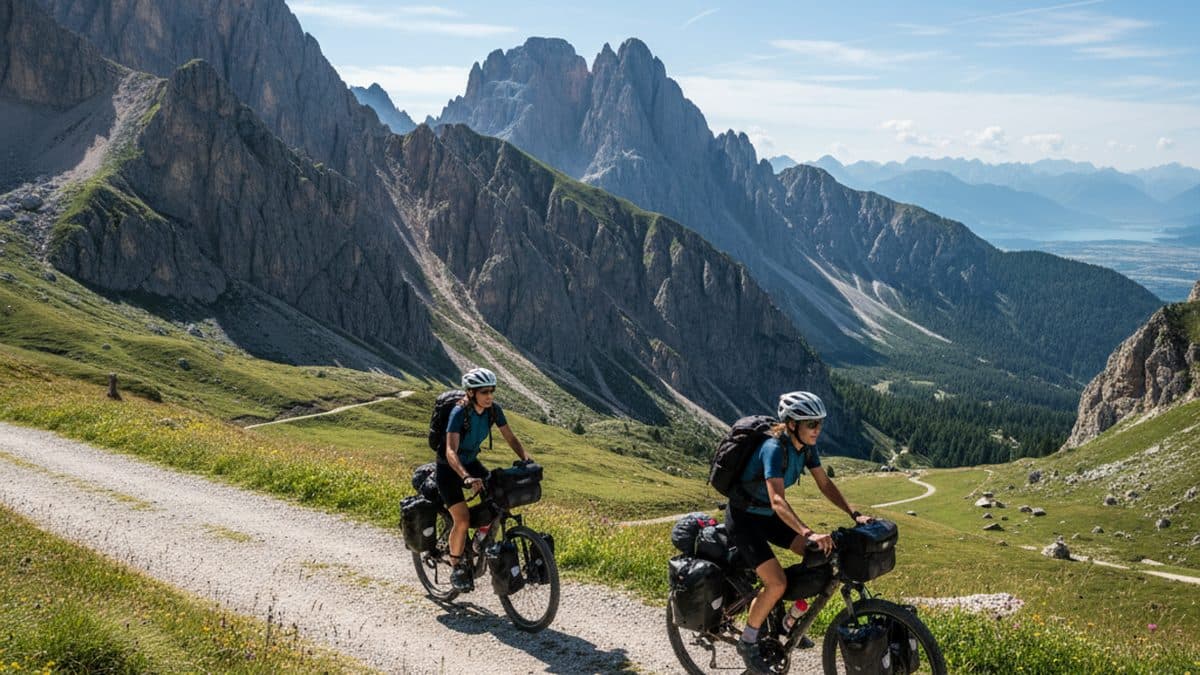
From Bavaria to the Venetian lagoon — the Munich to Venice cycle route is one of the most ambitious and most beautiful long-distance rides in Europe. Across roughly 550 kilometres and three countries, it crosses the entire eastern Alps from the lakes of southern Germany, over the Brenner Pass, through the UNESCO Dolomites, down the Adige valley, and onto the Venetian plains. The route is signed, well-supported, and — thanks to a train transfer through the Brenner — climbable by riders who have no business riding fully loaded up an alpine pass.
This guide explains the route, the train sections that make it work, and which of our four self-guided itineraries fits your bike and your pace.
Why ride Munich to Venice
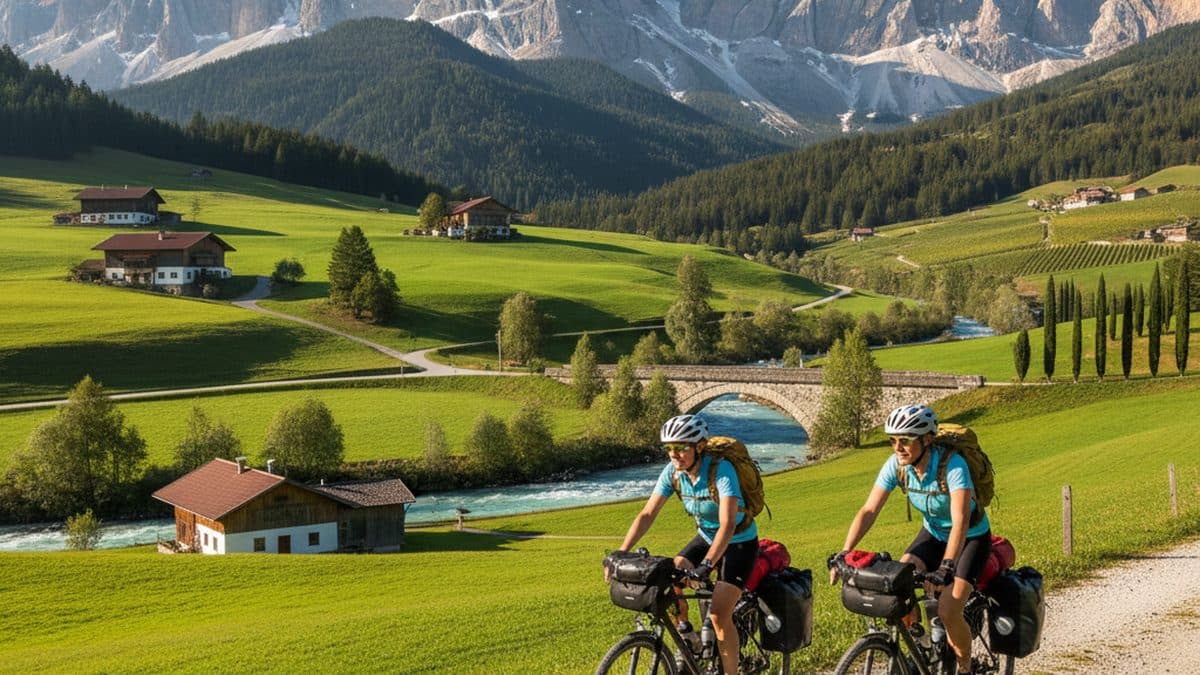
Three reasons make this route extraordinary. First, the landscape arc: in nine days you ride from Bavarian beer-garden country, into Tyrolean valleys, across the Dolomites, through Prosecco hills, and arrive at the canals of Venice. Few cycling routes anywhere change scenery so dramatically.
Second, the engineering: the path uses the old railway line from Toblach (Dobbiaco) down through Calalzo and into the Veneto — the Lunga Via delle Dolomiti — which is one of the most beautiful rail-trails in Europe. The descent is smooth, gentle, and almost entirely traffic-free.
Third, the train solution: the alpine crossing at the Brenner Pass is handled by a short train transfer that gets you to the start of the descent without forcing you to climb a long, busy road. The route is genuinely accessible to fit holiday cyclists, not just expedition riders.
The Munich to Venice route
The standard itinerary runs Munich → Bad Tölz → the Bavarian lake district → Innsbruck → Brenner train transfer → Sterzing/Vipiteno → Brixen/Bressanone → Toblach/Dobbiaco → the rail-trail descent → Calalzo → Belluno → Conegliano (Prosecco country) → Treviso → Venice. Total distance varies from 515 to 700 km depending on whether you ride extra loops in the Bavarian and Veneto sections.
The terrain is mixed: gentle in Bavaria, a train across the high pass, then a long descent through the Dolomites, and finally flat across the Veneto plain. Most of the route is on dedicated cycle paths or quiet country roads.
Choose your Munich to Venice route
The classic nine-day version
The original itinerary: nine days from Munich to Venice, around 515 km, eight riding days plus arrival and departure. Suitable for fit holiday cyclists — daily distances of 50-75 km, generally gentle terrain with one big descent through the Dolomites. This is where most riders start.

The premium SELECT version
Same itinerary, but every hotel is hand-picked from the top of the local 4-star bracket. Bavarian lakehouse hotels, Tyrolean luxury inns, a Prosecco-country villa, and a final night close to the canals of Venice. If you want the iconic alpine crossing paired with serious comfort, this is the version to book.
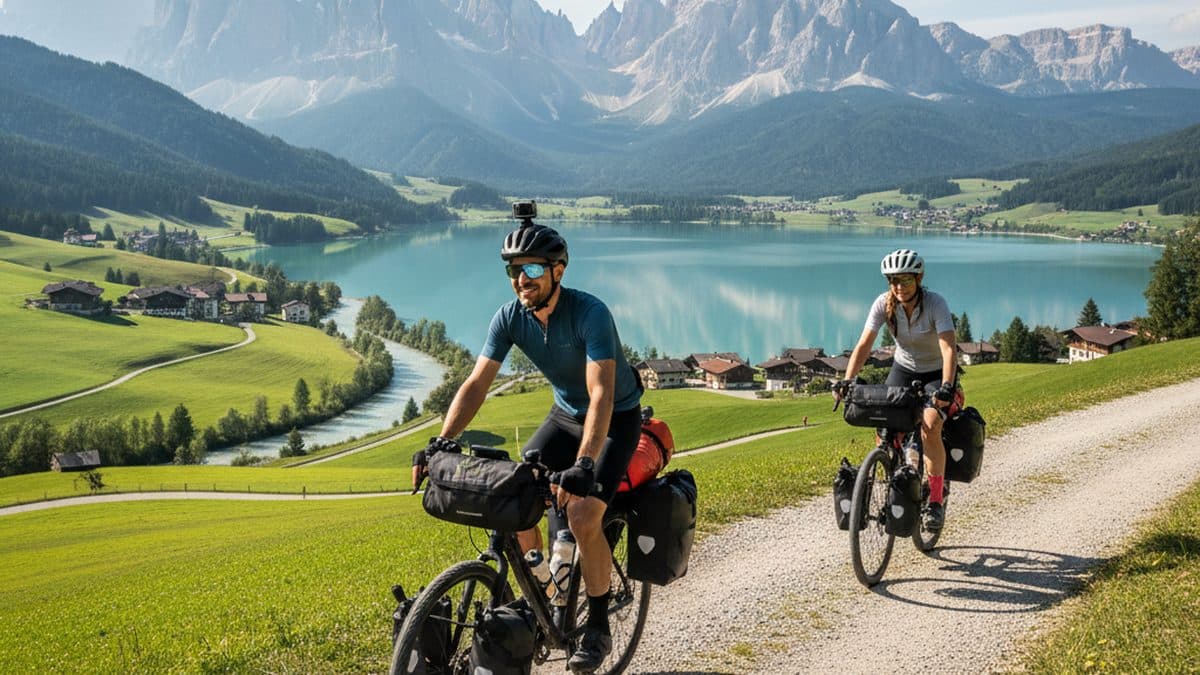
The slow twelve-day version
For travellers who'd rather pedal shorter days and have time to explore Bavaria, the Dolomites and the Prosecco region in depth, the twelve-day extended version is the perfect fit. Same route, shorter daily distances, three extra non-riding days in key towns.
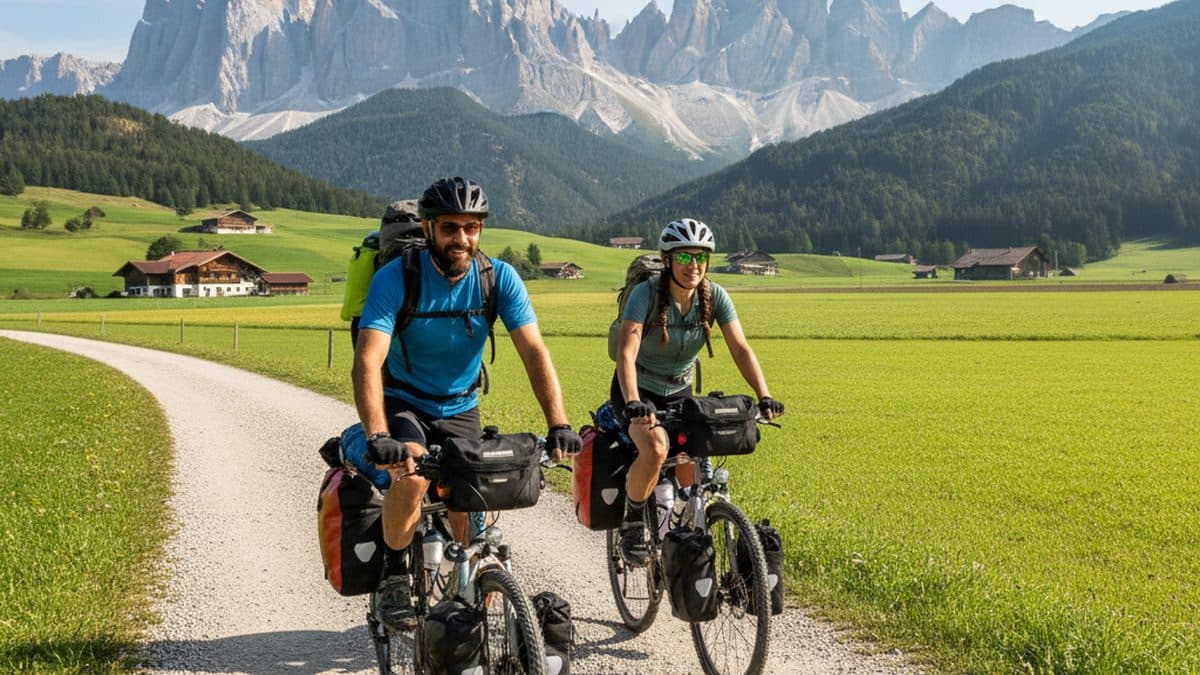
The road-bike sportive version
For road cyclists who want the same arc — Bavaria to Venice — but with longer, faster daily stages and a road bike, this version covers 700 km in nine days. Bigger climbs, more elevation, smaller daily detours. Strong fitness required.
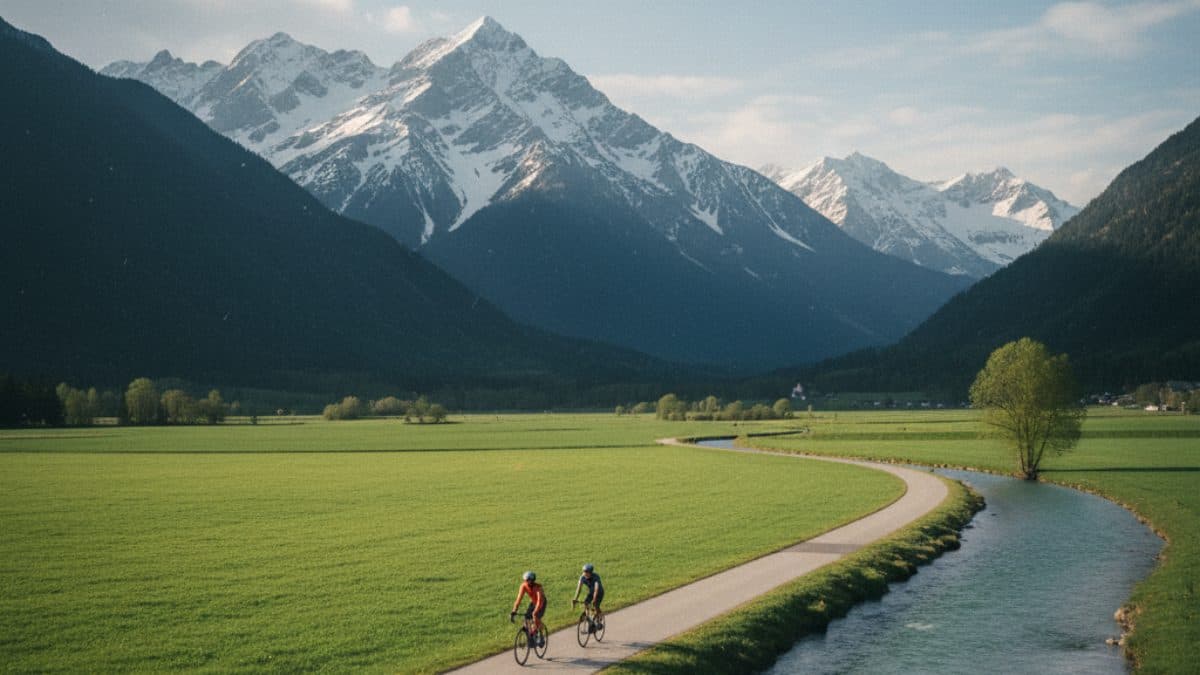
When to ride Munich to Venice
The season runs from late May to early October. The Bavarian and Veneto sections cycle well from April to October, but the Dolomite passes and the high-altitude rail-trail need to be snow-free, which usually means mid-June at the earliest. September is arguably the best month: warm enough across the whole route, cooler in the mountains, and the Prosecco harvest in full swing. Avoid early May and late October — snow on the high passes is a real possibility.
Practical tips for your Munich to Venice trip
Bike choice. Trekking or hybrid bikes are perfect for the standard tours. E-bikes are a sensible upgrade if you want a more relaxed daily effort. Road bikes are only for the sportive version — the rail-trail descent has some unpaved sections better suited to wider tyres.
Daily distance. Standard tours cover 50-75 km per day. The road bike version goes up to 100+ km on some stages.
The Brenner train transfer. All our tours include the train ticket for the alpine crossing. You'll spend less than an hour on the train; bikes are carried in dedicated cycle wagons.
Finish-line logistics. Most tours end with the train into Venice and a final night near St Mark's. Return transfers and bike rental drop-off are all included.
Alternative Alps-to-Adriatic crossings
If you love the idea of crossing the Alps to the Mediterranean but want a different line, the Alpe Adria route offers three outstanding options. The Alpe Adria Classic from Salzburg to Grado follows dedicated cycle paths from Mozart's city across the Austrian Alps and down to the Adriatic beaches of Friuli — a stunning eight-day journey through three countries. For the full-length experience, the Alpe Adria Full Length from Salzburg to Trieste extends the ride to the elegant harbour city of Trieste. And for a shorter crossing starting deeper in the mountains, the Alpe Adria from Mallnitz to Trieste picks up the route at the Tauern tunnel and descends through Carinthia and Friuli to the Adriatic.
Riders drawn to the Adige valley section of the Munich to Venice route may also enjoy the 100% Adige Cycle Path to Lake Garda, which follows the river from the mountains all the way down to one of Italy's most beautiful lakes on a dedicated, almost entirely flat cycle path.
Ready for the alpine crossing?
Munich to Venice is the rare long-distance route that delivers both bucket-list landscape and genuine accessibility. Browse the full cycling tour catalogue or talk to a consultant — we'll match the daily distance, the comfort level, and the bike to your group.