Northern Italy is where the Alps meet the Mediterranean, and few regions on earth pack so much variety into a few days' ride. You can pedal beneath the UNESCO peaks of the Dolomites in the morning, freewheel down an old railway trail through Prosecco country in the afternoon, and finish the week on the shores of Lake Garda or the lagoons of the Adriatic. From South Tyrol's bilingual valleys to the wine hills of Friuli, this guide walks through every self-guided tour we offer across the Italian north — the Dolomites, the great lakes, the Veneto, and the borderlands of Friuli Venezia Giulia.
Why Cycle Northern Italy
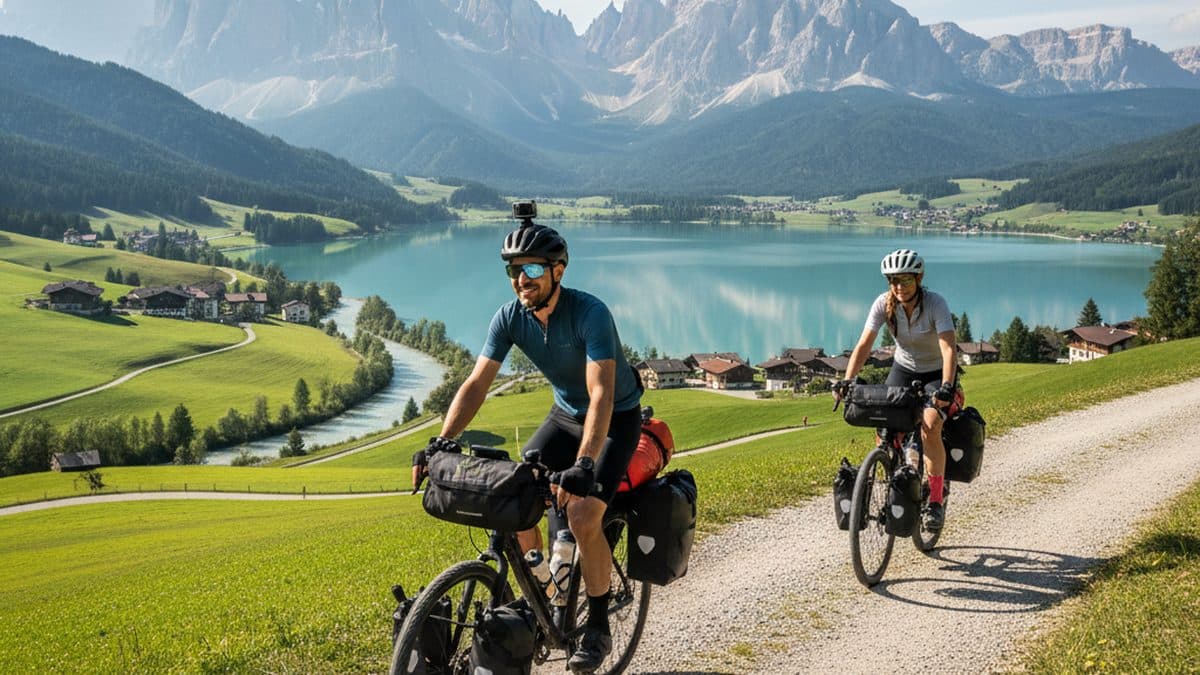
The north's appeal is its sheer range. The valley floors of the Adige, Pusteria, and Piave are flat and threaded with some of the best cycle infrastructure in Europe — much of it on converted railway lines — so you get genuine high-mountain scenery without the high-mountain effort. Step up the difficulty and the Dolomites offer sportive climbs and gravel adventures; ease off and the lake shores and Prosecco hills deliver gentle, vineyard-lined days. Add bilingual South Tyrolean culture, Venetian art, Friulian wine, and food that shifts from speck and canederli in the mountains to seafood and prosecco on the plain, and you have a region you can return to again and again. It is also one of the most cycle-friendly parts of Italy: the network of valley greenways and lakeside paths means even long-distance routes keep you off busy roads for most of the day.
The Dolomites by Bike
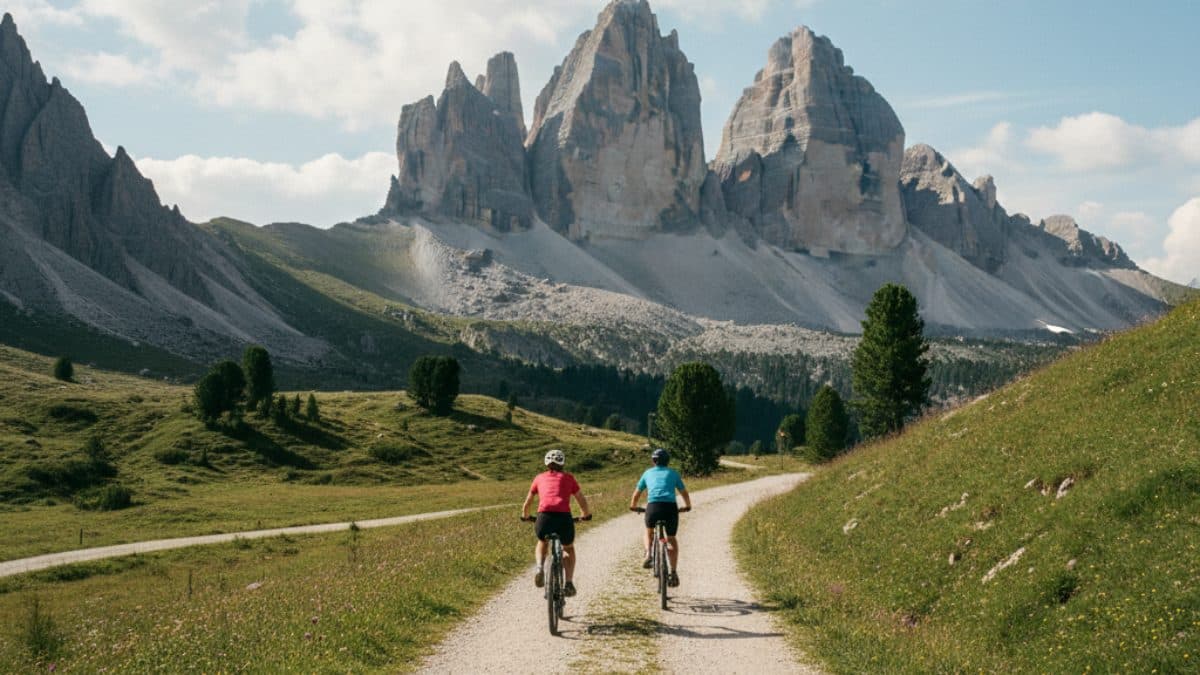
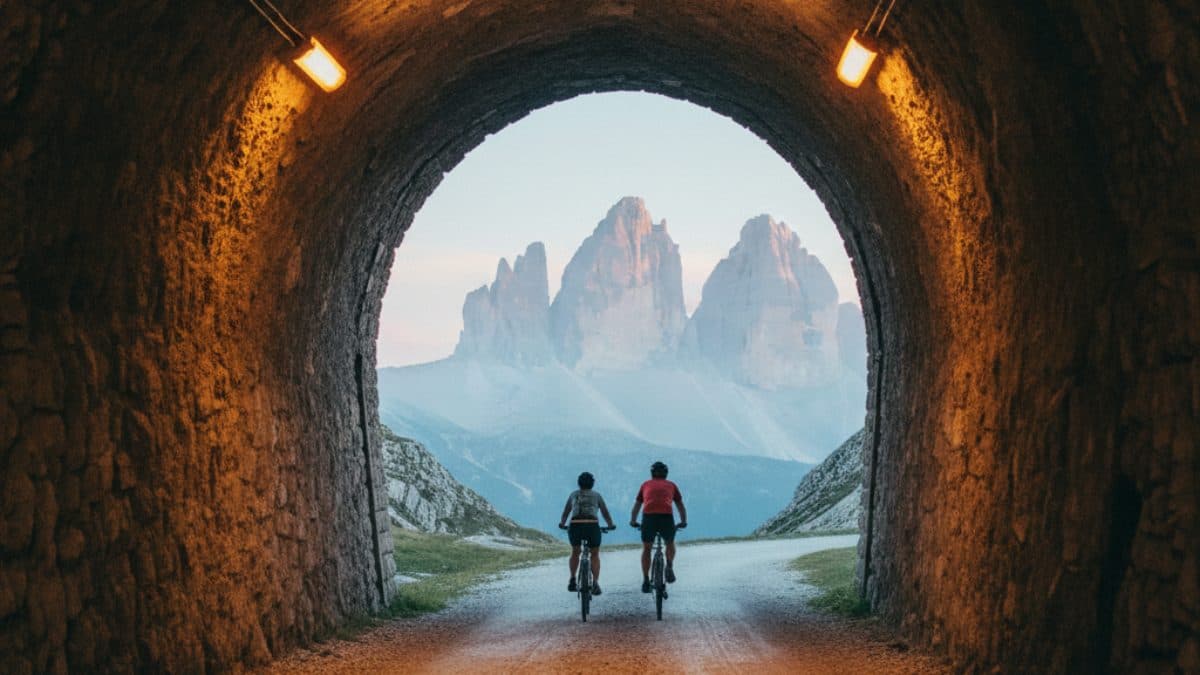
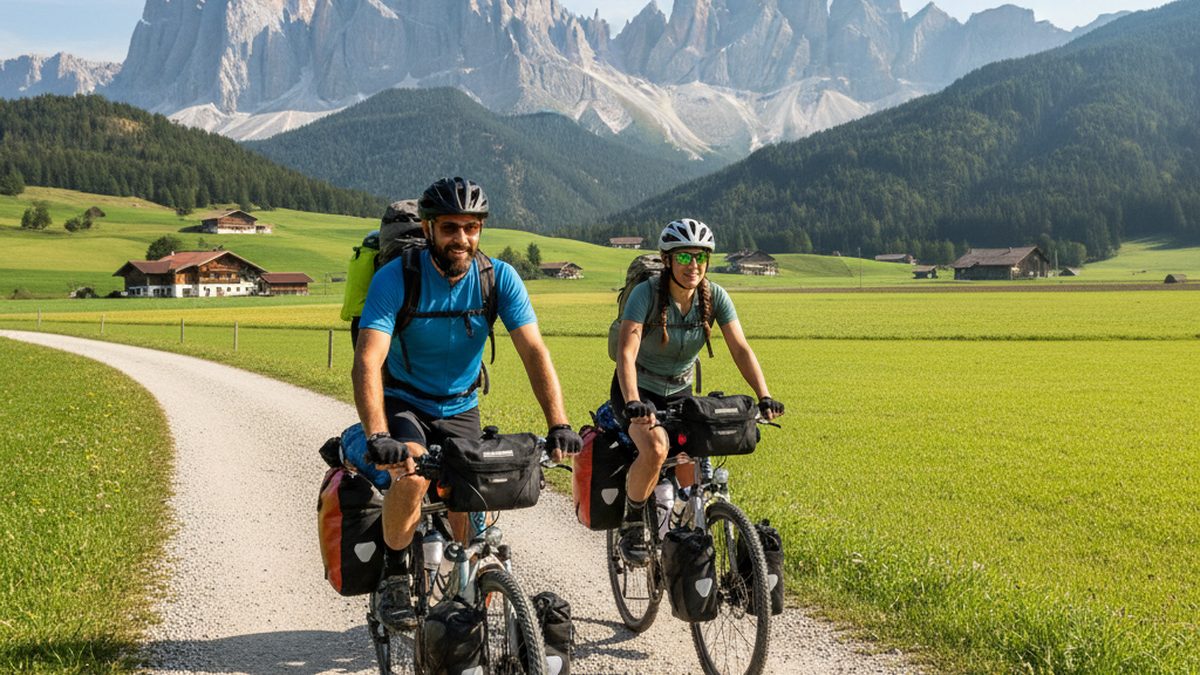
The Dolomites are the scenic heart of northern Italy, and there is a route here for every kind of rider. For a relaxed week without packing and unpacking, the hotel-based tour at the foot of the Dolomites uses a single base in the Val Pusteria for day rides on comfortable cycle paths, including the classic Dobbiaco–Lienz descent and the side valleys of Sesto and Val Casies. To ride from the peaks all the way to the sea, the eight-day Dolomites to Venice tour on the old railway trail follows the former railway past the Tre Cime di Lavaredo and Cortina d'Ampezzo down through the Cadore to the canals of Venice.
Gravel riders can take a wilder line on the six-day Dolomites to Jesolo gravel tour, descending from Dobbiaco through Cortina and Prosecco country to the Adriatic beaches at Jesolo. And for fit cyclists and e-bikers who want the full circular sweep of the range, the eight-day Grand Tour of the Dolomites links the Tre Cime, Cortina, Feltre, the Valsugana, and Trento on a sportive 385 km loop.
South Tyrol and the Alpine Crossings
West of the Dolomites, the German-speaking province of South Tyrol (Alto Adige) is apple orchards, vineyards, and castle-topped valleys laced with dedicated cycle paths. The eight-day Alto Adige for Everyone tour is a circular ride from Bressanone through the Pusteria Valley, past Bolzano and the wine villages of Lake Caldaro, into elegant Merano and the orchards of the Val Venosta. For a longer journey that crosses into Lombardy, the seven-day Bressanone to Milan tour rides from alpine South Tyrol past the Brenta Dolomites and Lake Iseo through the Franciacorta wine country to the canals of Milan.
For riders who want to follow the Adige river itself from the mountains to the lake, the 100% Adige Cycle Path to Lake Garda is a dedicated, almost entirely downhill ride through apple orchards, vineyards, and medieval towns — one of the easiest and most scenic valley routes in the Alps.
Lake Garda and the Veneto Wine Hills
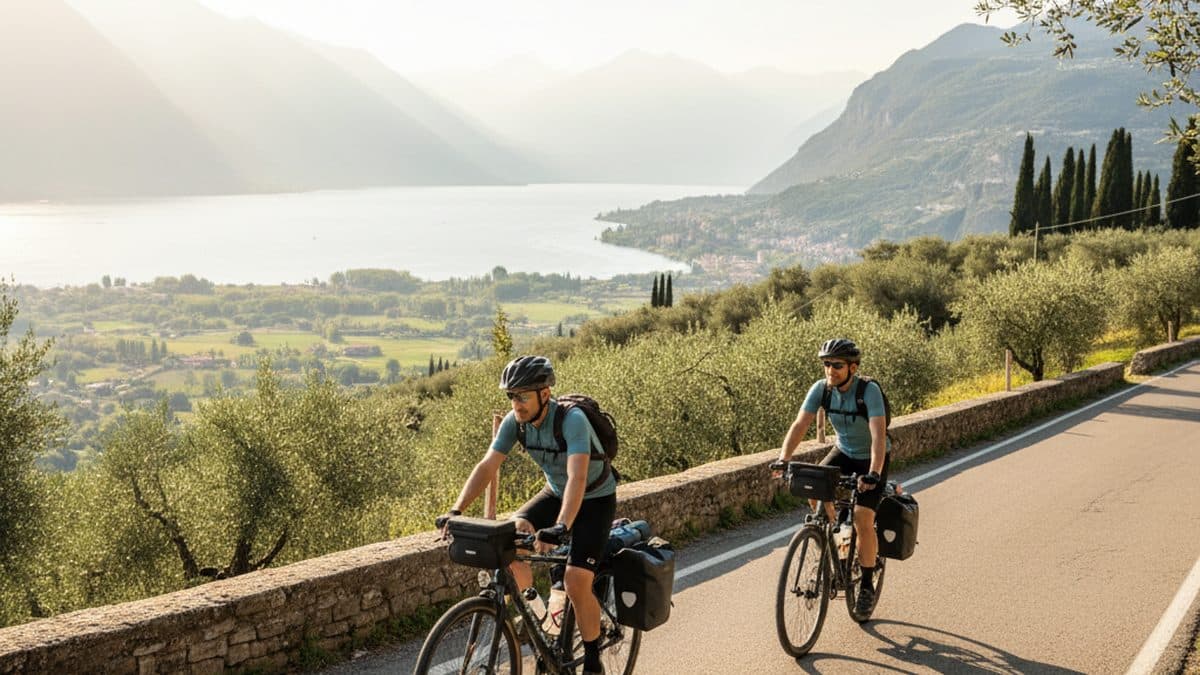
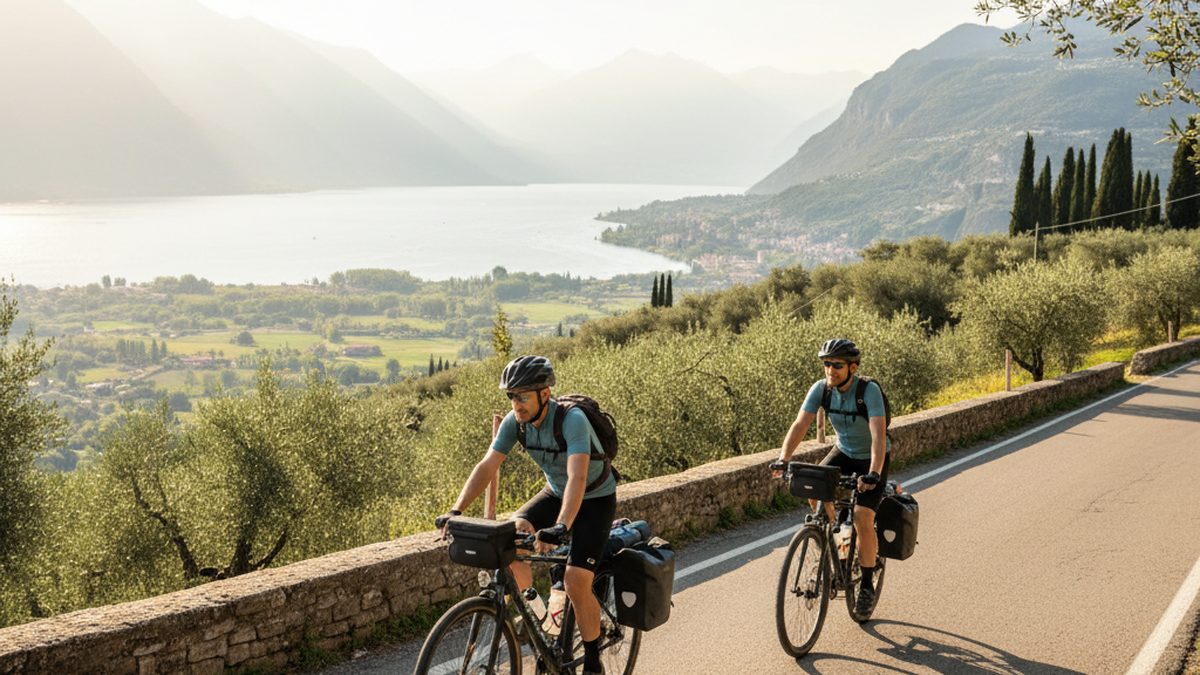
For lake-and-vineyard riding, two routes stand out. The eight-day Lake Garda circular tour circumnavigates Italy's largest lake from Bussolengo near Verona — past the Mediterranean-like southern shore and lemon groves, along the spectacular cliff-edge cycle path of the western bank, through the windsurfing town of Riva del Garda. East of Verona, the Prosecco circular short break loops through the steep, vine-clad DOCG hills around Valdobbiadene and Conegliano, taking in Follina, Bassano del Grappa, and hilltop Asolo, with a grappa tasting and a wine tasting included.
Friuli Venezia Giulia: Mosaics, Lagoons and Wine
Italy's quiet northeastern corner rewards cyclists with Roman history, Adriatic lagoons, and the celebrated white wines of the Collio. The eight-day Friuli Cycling Loop circles from elegant Udine to Spilimbergo's mosaic school, the Roman ruins of Aquileia, the lagoon coast near Trieste, and back through the Collio wine hills. For a linear ride across the region, the six-day Pedemontana Cycleway from Sacile to Gorizia follows the foothills past the knife-making town of Maniago and the Lombard UNESCO sites of Cividale del Friuli.
From Austria to the Adriatic: The Alpe Adria Route
Riders arriving from Austria or looking for a cross-border adventure can also reach northern Italy's Adriatic coast via the Alpe Adria cycle route. The Alpe Adria Classic from Salzburg to Grado crosses the Austrian Alps and descends through Carinthia and Friuli to the beaches of Grado, while the Alpe Adria Full Length from Salzburg to Trieste continues to the elegant harbour city of Trieste. For a shorter version starting at the Tauern tunnel, the Alpe Adria from Mallnitz to Trieste offers a compact crossing through some of the route's most dramatic scenery.
Food and Wine of the North
Northern Italy eats as well as it rides, and the table changes with the landscape. In the Dolomites and South Tyrol the food is Alpine and Austrian-inflected — speck, canederli (bread dumplings), barley soup, and apple strudel, washed down with crisp Alto Adige whites like Gewürztraminer and Pinot Bianco. Descend to the Veneto and it turns to risotto, bigoli pasta, and cicchetti, paired with the sparkling Prosecco of the Valdobbiadene hills and the reds of Valpolicella near Lake Garda. In Friuli, the kitchen blends Italian, Slavic, and Austrian traditions — frico, prosciutto di San Daniele, and the celebrated white wines of the Collio. Many stages pass directly through these vineyards and orchards, so a cellar visit or a long lunch is rarely more than a short detour from the route.
How to Choose the Right Route
Match the route to your fitness and your taste. For the easiest riding, the hotel-based Dolomites week, the Alto Adige valleys, the Lake Garda circuit, and the Prosecco and Friuli loops all follow gentle, well-surfaced cycle paths suitable for confident beginners and families, with e-bikes available throughout. For more of a challenge, the Grand Tour of the Dolomites and the Bressanone to Milan crossing add real climbing and distance, and the Dolomites to Jesolo gravel route is for riders who want mixed surfaces and a sense of adventure. If your priority is a journey with a destination, the Dolomites to Venice railway trail and the Bressanone to Milan ride both finish in a great Italian city. Every tour is self-guided, with route notes, GPS tracks, and luggage transfers included.
Best Time to Cycle Northern Italy
The valley and lake routes have a long season, comfortable from April to October, with Lake Garda and the Veneto rideable even in the shoulder months. The higher Dolomites routes are best from June to September, once the snow has cleared the upper sections and the mountain passes and railway trails are fully open. May, June, and September are the sweet spots across the board — warm days, long light, quieter paths, and, in autumn, the grape harvest in the Prosecco hills, the Collio, and South Tyrol. July and August are warmest and busiest, especially around Lake Garda and the Dolomite resorts.
Getting There and Back
Northern Italy is very well connected. Verona, Venice, Milan, and Bolzano all have airports and major rail stations, and the cycle routes are built around the regional train network — Bressanone, Dobbiaco, Udine, Conegliano, and Vittorio Veneto are all reachable by train. Most tours are designed so you can travel car-free to your start and home from your finish, and the linear routes that end in Venice or Milan make returning especially easy. Several tours also offer free parking at the start for those who prefer to drive.
Frequently Asked Questions
Do I need to be fit to cycle the Dolomites?
Not necessarily. Many Dolomites routes follow flat valley floors and gentle old-railway descents — the hotel-based tour and the Dolomites to Venice trail are manageable for most riders, especially on an e-bike. The Grand Tour of the Dolomites and gravel routes are more demanding and suit fitter cyclists.
Are the tours guided or self-guided?
All the northern Italy tours in this guide are self-guided. You ride at your own pace with route notes and GPS tracks, and your luggage is transferred between hotels — except the hotel-based Dolomites tour, where you stay in one place and ride day loops.
Which route is best for families?
The hotel-based Dolomites tour, the Alto Adige valleys, the Lake Garda circuit, and the Piedmont and Prosecco short breaks are all gentle, scenic, and well suited to families, with cycle paths and short daily distances.
What kind of bike should I choose?
Trekking and e-bikes suit the valley, lake, and Veneto routes; e-bikes are popular for the longer crossings and the Dolomite climbs. The Dolomites to Jesolo route is designed for gravel or mountain bikes.
Can I finish in Venice or Milan?
Yes. The Dolomites to Venice railway trail finishes in Venice, and the Bressanone to Milan tour ends in Milan — both linear journeys with easy onward train connections.
When is the best time to go?
Late spring (May–June) and September are ideal across the region; the high Dolomites routes are best from June to September, while the lakes and Veneto stay comfortable from April into October.
Start Planning Your Northern Italy Ride
From a gentle week at the foot of the Dolomites to a sportive grand tour, a lap of Lake Garda, or a wine-soaked loop through Friuli, northern Italy has a cycling route for every level and every interest. Browse all our cycling tours in Italy to compare itineraries, durations, and routes, and find the trip that fits your time and your taste.