The Danube Cycle Path is the gold standard of European cycling holidays. From Passau on the German-Austrian border to Vienna, around 320 kilometres of almost-flat, mostly traffic-free cycle path follow Europe's most famous river through baroque cities, vineyards, monasteries and medieval river towns. It's the easiest long-distance route on the continent, the most family-friendly, and the most thoroughly developed for cycle tourism. If you're cycling Austria for the first time, this is where you start.
This guide covers the classic Danube route plus the broader Austrian cycling landscape — the Wachau wine valley, the Salzkammergut lakes, and the Carinthian alpine country to the south. We'll show you which itinerary fits your group, your time, and your fitness. If you'd rather see the whole picture first, browse all our cycling tours in Austria.
Why cycle the Danube
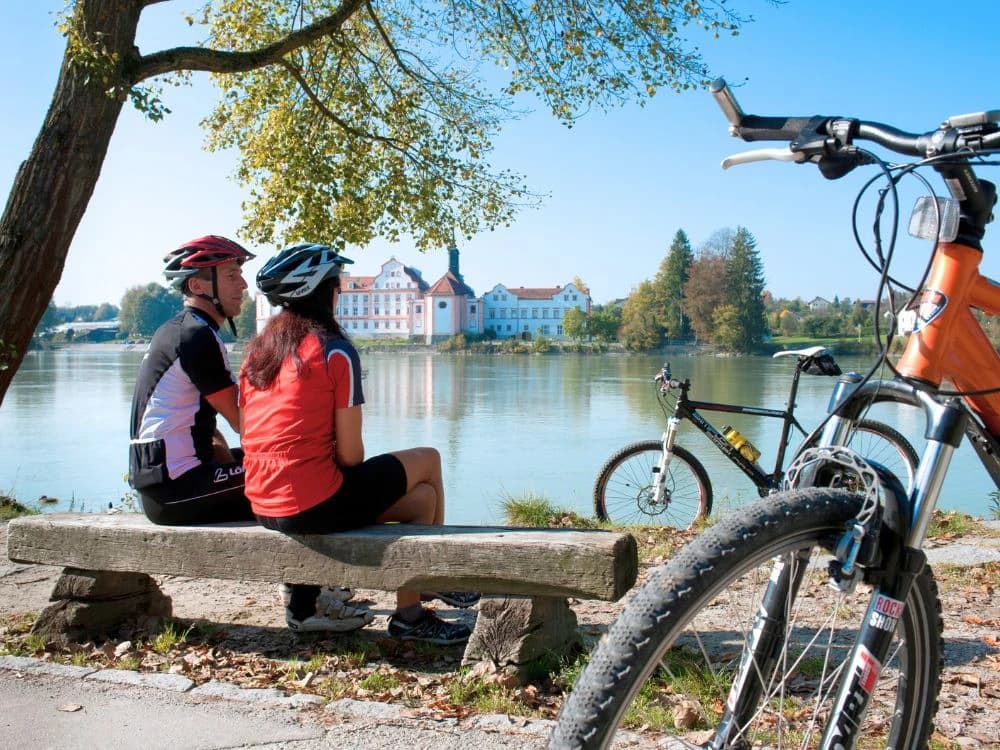
The Danube Cycle Path is the most popular long-distance bike route in Europe — and with good reason. The path is almost entirely on dedicated cycle ways, mostly along the riverbank, mostly on level terrain. Total elevation gain on a typical Passau-Vienna week is under 500 metres. Surface is paved throughout. Signage is bilingual and impossible to lose. Hotels, bike shops, bakeries and beer gardens are dense along the route.
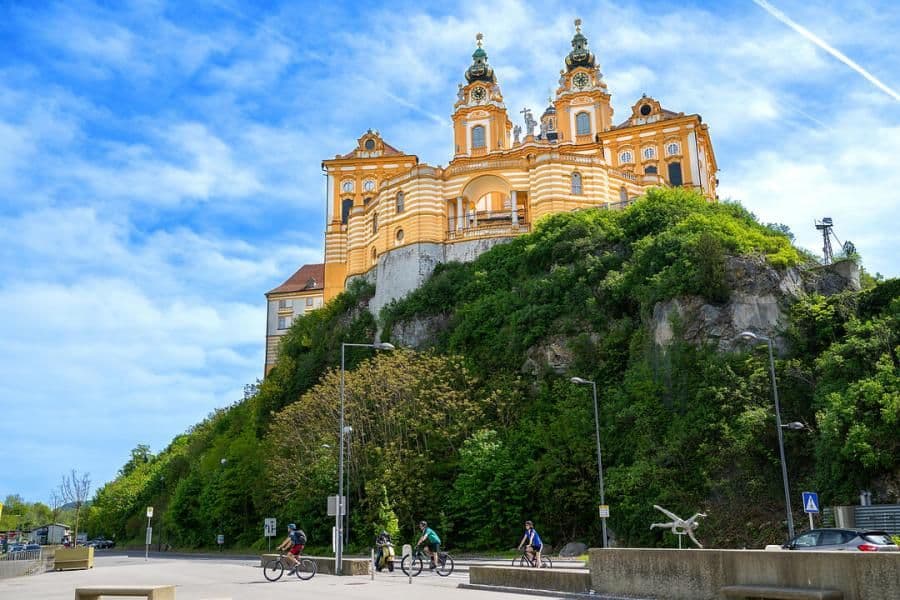
The route is also the most diverse week of cycling in Austria: you start in the wooded Schlögener Schlinge, ride through the historic city of Linz, traverse the Wachau wine valley (a UNESCO World Heritage site), pass the spectacular Melk Abbey, and finish in imperial Vienna. Every day brings a different landscape and a different reason to slow down.
The Danube Cycle Path: route overview
The most-ridden section is Passau to Vienna — 320 km, six to eight cycling days depending on pace, almost no climbing. The path follows the river closely, with occasional detours on quiet country roads. There are usually paths on both banks, so you can switch sides at most ferries and bridges for variety.
Key stops: Engelhartszell (oldest Trappist monastery in Austria), Schlögener Schlinge (the famous Danube bend), Linz (street food and modern art), Mauthausen (sobering memorial), Melk Abbey, the Wachau vineyards between Spitz and Krems, the baroque town of Krems, and Vienna at the finish. Most tours include a free day in either Linz or Vienna.
The path doesn't stop in Vienna. East of the capital it carries on into Slovakia and Hungary, and the Passau to Budapest Cycling Tour rides the whole central Danube in fourteen days, 567 km and four countries. For the longest journey of all, the Danube Iron Gates Bike & Boat pairs easy riding with a river ship, travelling from Passau down to the Iron Gates gorge and back over fifteen days. And if you would rather not change hotel at all, the Passau 3 Rivers Cycling Tour is a five-day, centre-based stay in the city where the Danube meets the Inn and the Ilz.
Choose your Danube route
The classic: Passau to Vienna
If you've never cycled the Danube, the full Passau-Vienna route is the headline. Eight days, around 325 km, comfortable 3- and 4-star hotels, daily luggage transfer. Suitable for any reasonably fit adult and most children over 10 who can ride 40-50 km a day.
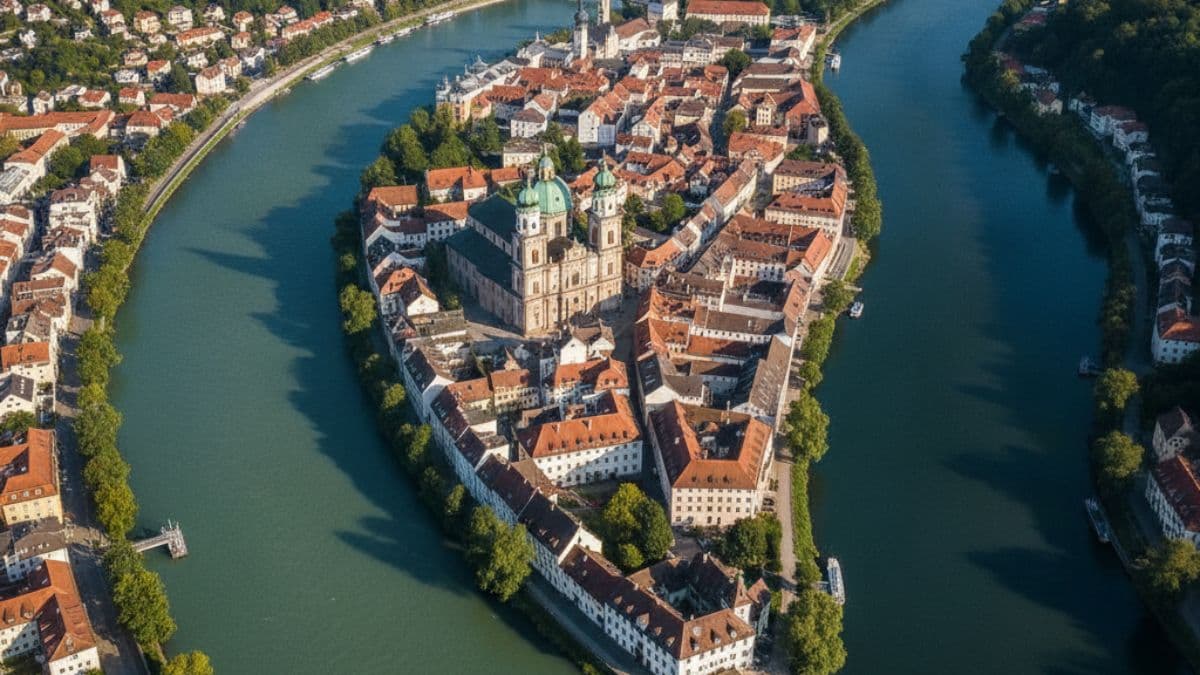

The relaxed version: Passau to Vienna with rest days
If a full week at that pace is too much — or you want lower daily distances — the same route stretched over nine days, with rest days built in. You still cover the Strudengau, the Wachau, Melk and the imperial capital, but with shorter stages and time to stop. Perfect for first-time cycling tourists.
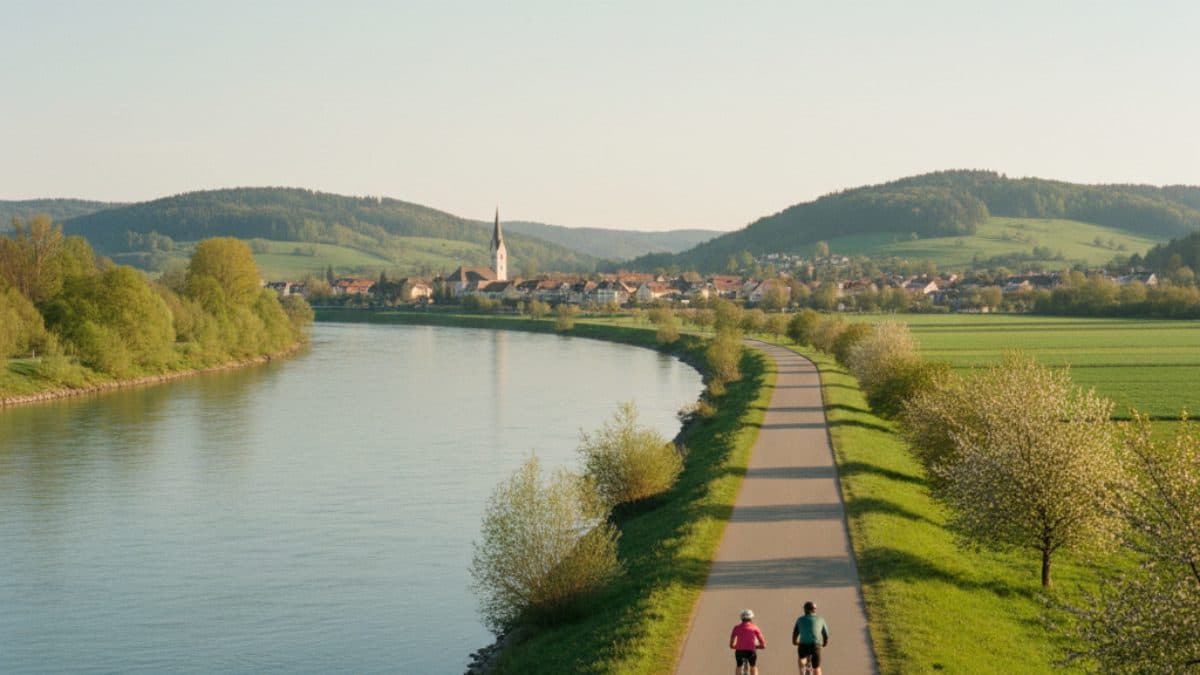
Family edition: Linz to Vienna
The Danube is one of the few long-distance routes that genuinely works for families with younger children. The family edition adds dedicated stops — the Celtic village near Tulln, the Garten Tulln adventure playground, Vienna's Prater amusement park — and slightly shorter daily distances. The terrain stays flat throughout.
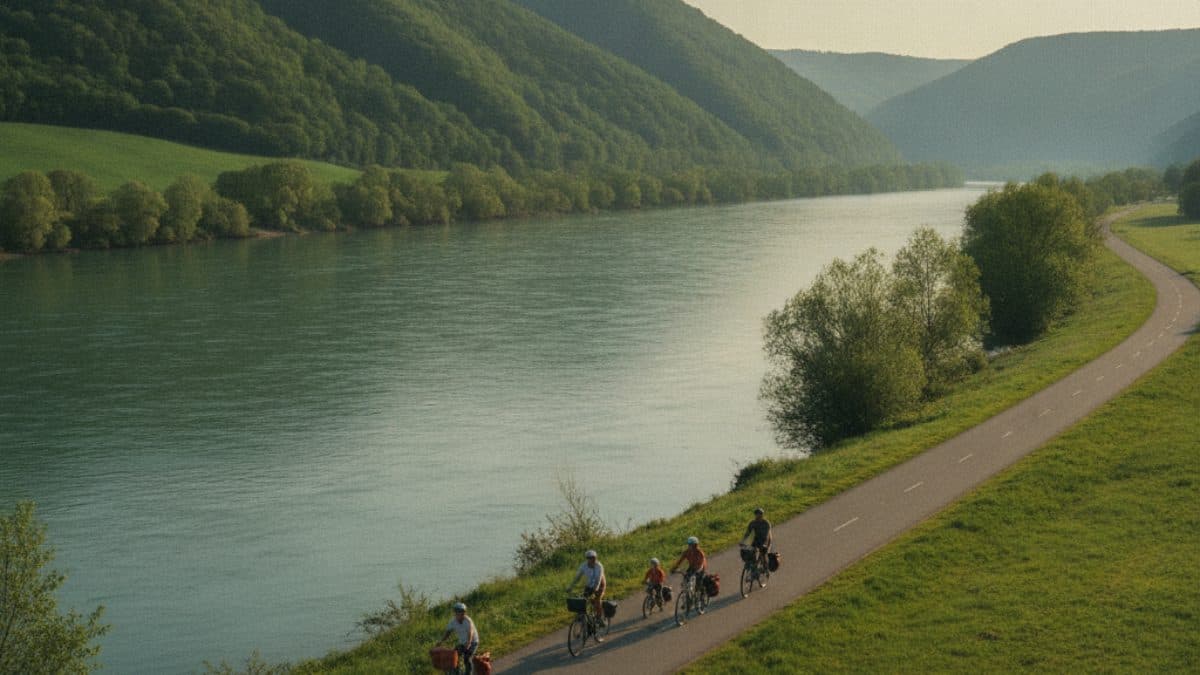
For families who prefer to split the journey into shorter legs, the Danube Family Tour from Passau to Linz covers the western half of the route, with the same kid-friendly distances and stops.
Beyond the Danube: alpine Austria by bike
Once you've ridden the classic route, Austria has more to offer. The Carinthian alpine valleys are the natural next step — still well-organised cycle infrastructure, but with a bit more elevation and a more dramatic landscape. For a spectacular cross-border descent, the Alpe Adria Classic from Salzburg to Grado takes you from the Alps to the Adriatic through Austria and into Italy.
Carinthia: alpine lakes loop
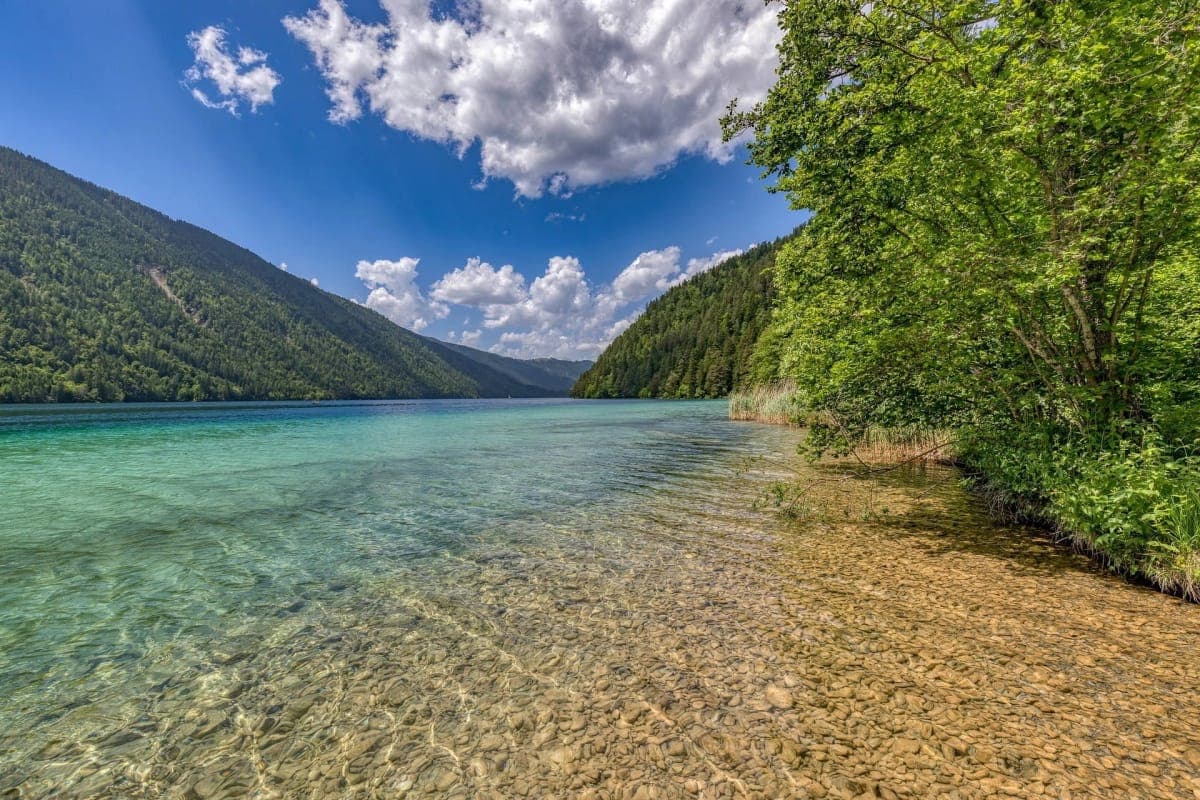
For riders who want more elevation and a quieter region, the Carinthian Lakes Loop from Villach is a 260 km circuit past six alpine lakes — Wörthersee, Ossiacher See, Millstätter See — with a few mountain passes that reward you with long descents.
When to cycle Austria
The season runs April to October. May, June and September are the best months: long daylight, comfortable temperatures, wineries open in the Wachau, and the cycle path uncrowded compared to peak summer. July and August are warmer (often 28°C+) and busier on the Danube route — book hotels well in advance. October brings the wine harvest in the Wachau — atmospheric but variable weather.
Practical tips for your Austria bike trip
Bike choice. Trekking and e-bikes are standard. The Danube route doesn't need a sports bike — comfort matters more than speed. For Salzkammergut and Carinthia, an e-bike makes the climbs effortless.
Daily distance. Danube stages are 35-65 km on level ground. Alpine routes are 40-60 km with 400-800 m of climbing.
Getting there. Rail to Passau, Salzburg, Linz or Villach is straightforward from anywhere in central Europe. Vienna and Salzburg airports are well-connected internationally.
Bike rental. Most tours include rental at the start point. Bring helmet, padded shorts, and a windproof jacket.
New for 2026: We have added several new routes to our Austrian cycling collection. The Alpe Adria Full Length from Salzburg to Trieste is a grand Alps-to-Adriatic traverse, and the Alpe Adria from Mallnitz to Trieste offers a shorter version starting deeper in the Austrian Alps. For families, the Danube Passau to Linz Family Tour is a perfect short break along the river.
Ready to ride Austria?
From the Danube classic to the alpine lakes, Austria is the most user-friendly country in Europe to cycle. Browse the full range of cycling holidays in Austria — Danube, Salzkammergut, Carinthia and the Alpe Adria — or speak with a consultant about pace, dates, and family-suitable options.
Coming from Prague? The Prague to Vienna Greenway is the natural complement to the Danube route — ride from the Czech capital to Vienna in eight days, then continue west along the Danube. The eleven-day Grand Greenway adds extra time in Moravia for a more complete Central European cycling experience.
Danube variants: choosing between the Passau-Vienna versions
Beyond the three classic itineraries above, we run three closely related versions of the same Passau-Vienna route, each tuned to a different pace and budget. The Danube Cycle Path Classic from Passau to Vienna is the benchmark eight-day, 325 km ride along the river; the Danube Half Strength from Passau to Vienna stretches the same 336 km distance over nine days with built-in rest days for a gentler daily effort; and the Danube Cycle Path Price Hit from Passau to Vienna compresses the route into seven brisk days and 318 km for travellers after the best value on this stretch of river.
Four more versions of the Passau-Vienna ride are built around a particular way of travelling. The Danube Light tour is the gentlest, spreading 256 km over ten days with stages of around 26 km; the Danube Bike & Relax tour covers the route in seven days and stays in 4-star wellness hotels with spa; the Danube Delicacies tour adds gourmet tastings and Wachau wine stops over eight days; and the Danube Deluxe tour takes nine days in upper 4-star hotels for travellers who want the most comfortable version of the classic.
More ways to ride Passau to Vienna: sporty, short, family and by ship
The Passau–Vienna corridor is so popular that it now comes in almost every format you could want. Five more itineraries cover the same river with a different rhythm.
Passau–Vienna Danube Cycling Tour is another eight-day take on the classic, around 288 km, flat and paved all the way, past vineyards, abbeys and the Schlögen loop with your bags waiting at each hotel.
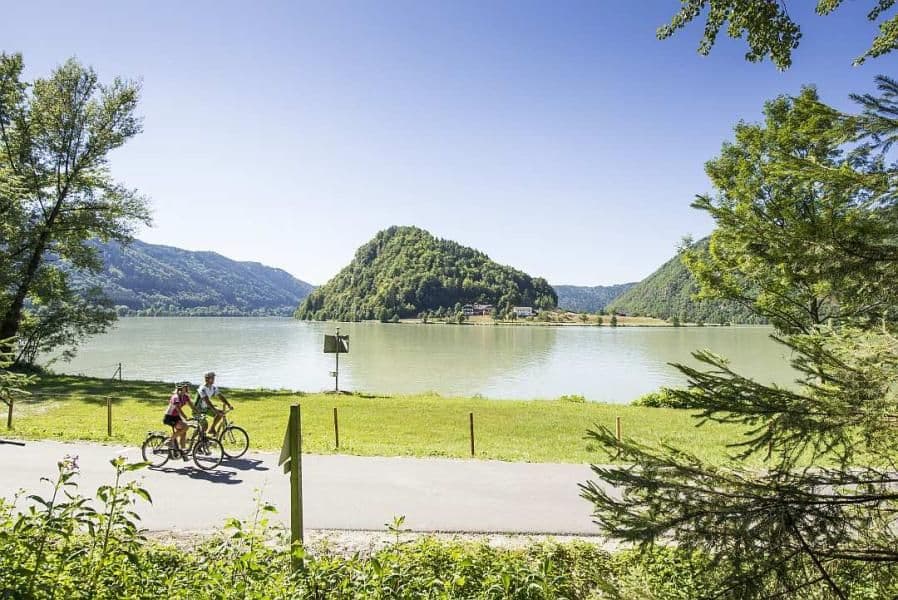
Danube Athletic Cycling Tour is for riders who want to cover ground: six days and about 321 km, with stages of around 80 km that still take in the Schlögen loop, the Wachau and Melk Abbey.
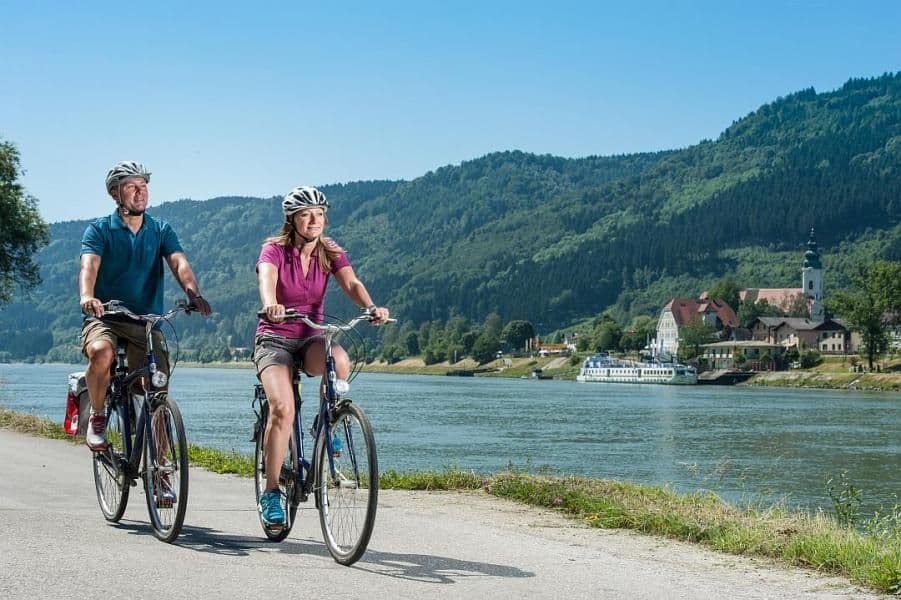
Linz to Vienna Danube Cycling Tour is the short version: five easy days and about 148 km through the wild Strudengau and the vineyard-clad Wachau, ideal if you only have a long week.
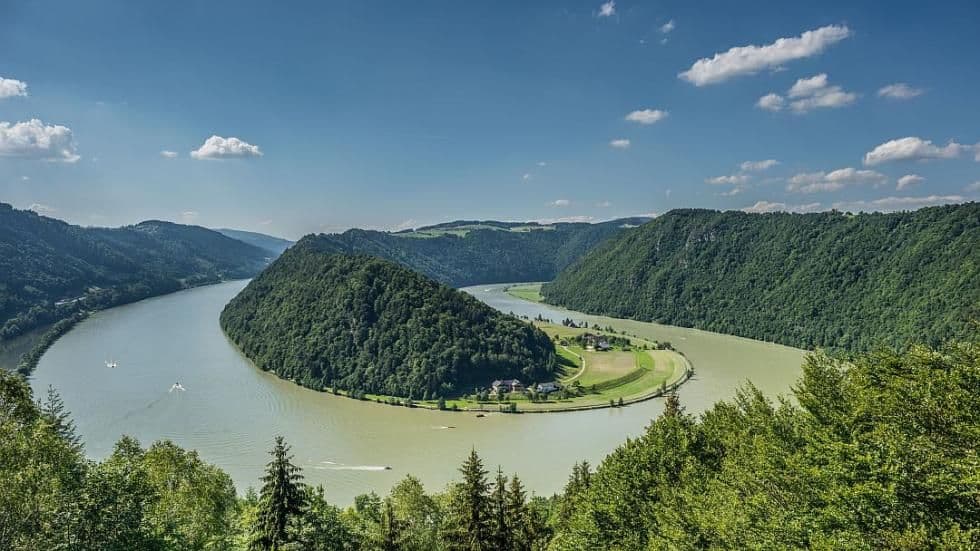
Danube Family Cycling Tour rides from Linz to Vienna over eight days on flat, traffic-free riverside paths, with a Celtic village, the world's oldest Ferris wheel and plenty of river swims for the children.
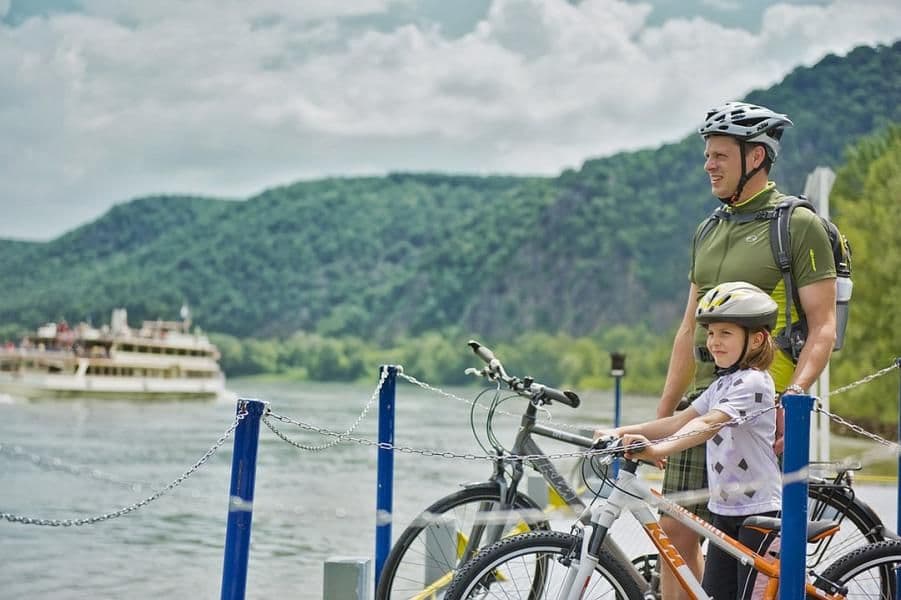
Danube Bike and Boat Cycling Tour pairs easy daily rides with nights aboard a premium river ship on a round trip from Passau to Vienna and back, so you unpack once and come back each evening to your cabin.
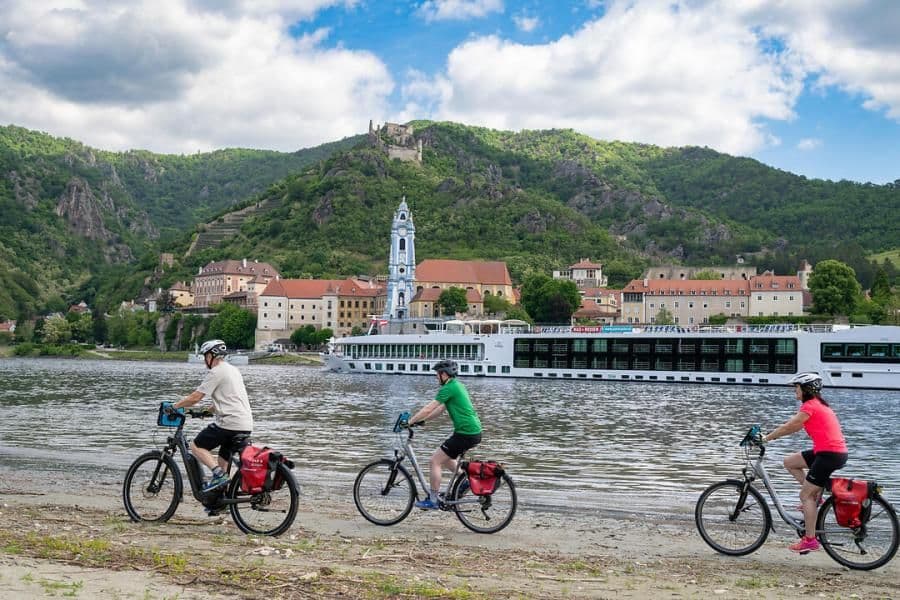
Two catamaran cruises offer the same unpack-once idea in a different length. The Austrian Danube Short Bike Cruise is the compact version: six days from Passau to Vienna and back, riding the Schlögen loop, the Wachau vineyards and the castles around Grein. The Danube Catamaran Bike Cruise keeps going past Vienna and Bratislava to Budapest, returning to Passau after eight days.
When you reach Vienna and want to keep going, our guide to cycling the Danube to Bratislava and Budapest covers every route east of the capital, through Slovakia and Hungary.
Two more Danube weeks: a short tour from Linz and Passau to Vienna via Enns
Danube Short Tour: Linz to Vienna is a compact six-day ride of about 219 km on the most beautiful part of the river: Grein, Melk Abbey, the UNESCO-listed Wachau with Dürnstein and Krems, and the garden city of Tulln before Vienna.
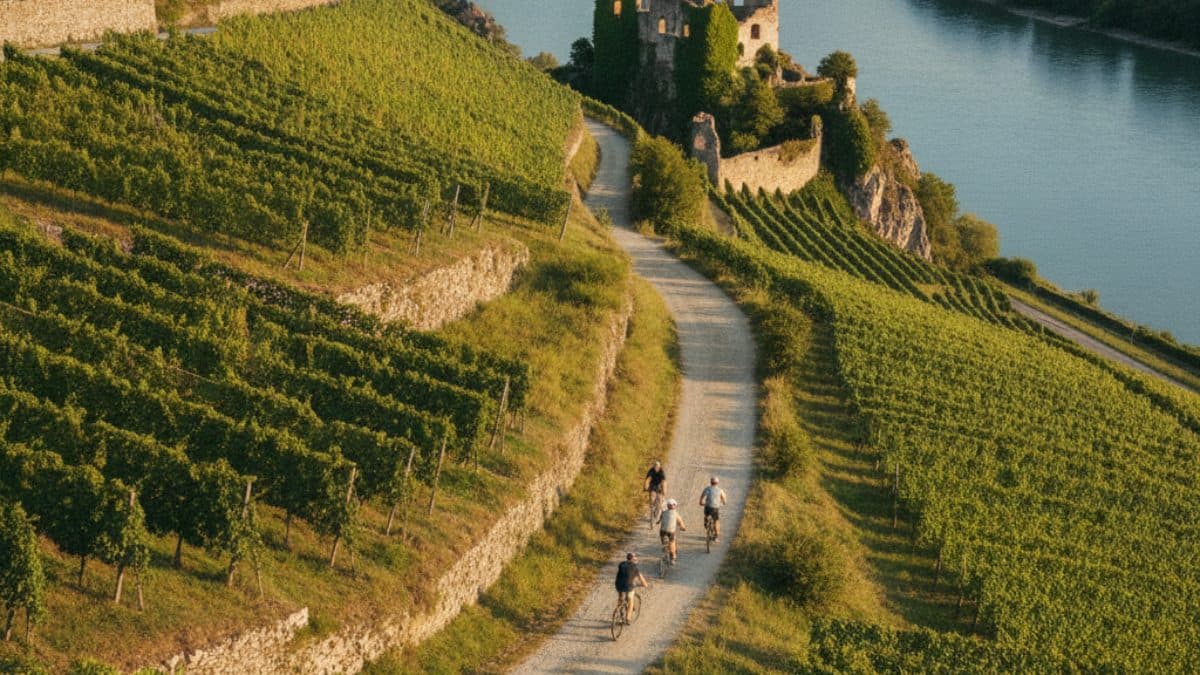
Danube Holiday Tour: Passau to Vienna via Linz and Enns covers about 327 km in seven days, with time for Passau, the Schlögener Schlinge, Linz and Enns, the oldest town in Austria, before Maria Taferl, Melk and the Wachau vineyards lead you to Tulln and Vienna.
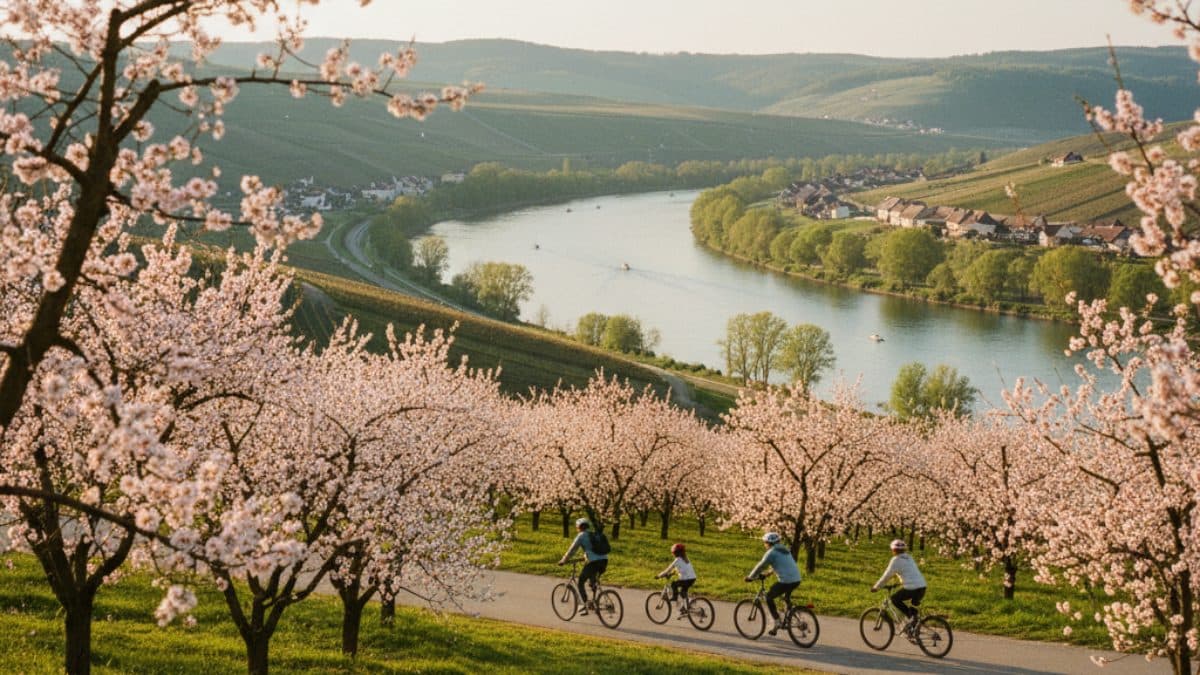
Several routes from the Czech capital end on this stretch of river, in Linz, Passau or Vienna. Our guide to cycling from Prague compares them all.