
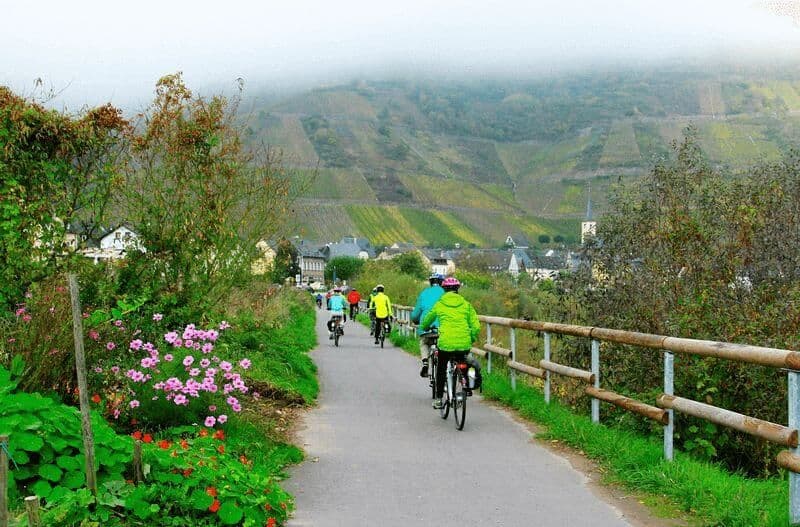
The Moselle is the river that wine lovers dream of cycling. It rises in the Vosges, flows north through French Lorraine, forms the border between Luxembourg and Germany, and then loops through a deep valley of slate terraces and half-timbered villages until it meets the Rhine at Koblenz. A cycle path follows its banks almost the entire way, flat, paved and rarely more than a few metres from the water.
The most comfortable way to ride it is by boat and bike: a river ship moves with you from town to town, and you cycle between moorings with a tour leader. This guide covers all seven Moselle routes in our catalogue, through France, Luxembourg and Germany. If you are new to the format, our complete guide to boat & bike holidays explains how it works.
Why Cycle the Moselle?
Three countries in a week. Starting in Metz, you ride through French Lorraine, cross into Luxembourg at Schengen, the village that gave its name to Europe's open-border agreement, and finish in the German wine heartland.
It is flat. The path hugs the river, so even though the valley sides rise steeply above you, the riding itself stays almost level. That makes it ideal for couples, mixed-ability groups and first-time cycle tourists.
Wine at every bend. The German Moselle has some of the steepest vineyards in Europe, planted mainly with Riesling. Tastings, cellar visits and riverside wine taverns are part of almost every day.
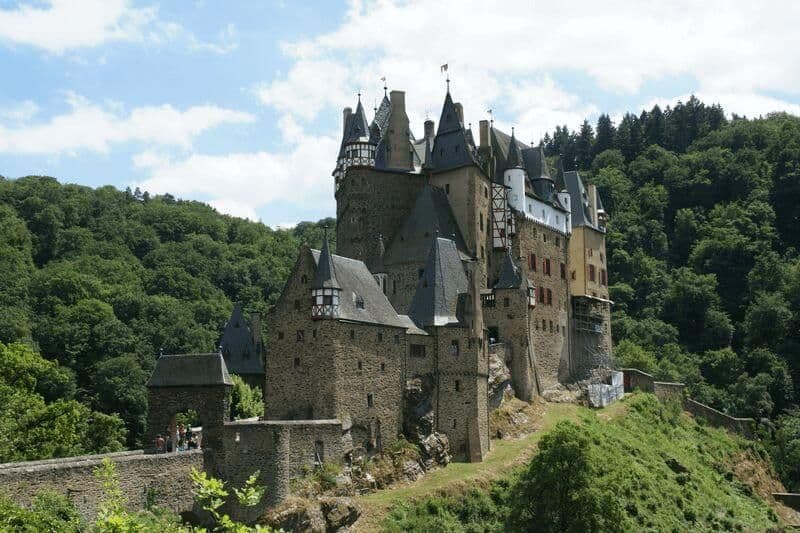
Two thousand years of history. Trier was a Roman imperial capital, and its Porta Nigra gate and Roman monuments are UNESCO-listed. Metz has one of France's great Gothic cathedrals, and castles crown the hills above Cochem.
Metz to Cochem: The Moselle Premium Cruises (8 days)
Two eight-day premium cruises ride the heart of the valley, around 215 km, with a tour leader cycling with the group every day and a premium ship as your floating hotel. Starting in Metz, you cross Luxembourg at Schengen, visit Roman Trier and the waterfall in the Saar town of Saarburg, ride through the wine villages of Bernkastel-Kues and Zell, and finish under the castle of Cochem. The reverse route starts in Cochem and finishes with the cathedral of Metz.

Moselle by Boat and Bike (9 days)
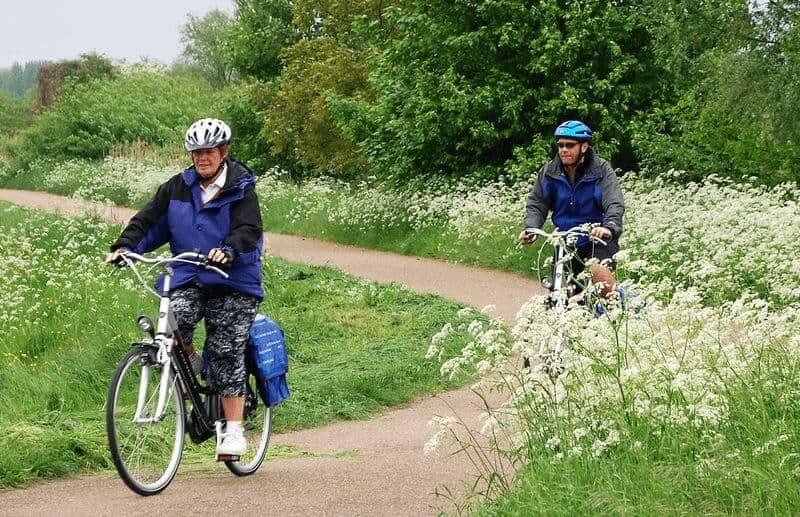
The nine-day version covers a similar distance, about 220 km, with an extra night in Metz and a guided walk through the city before you join the ship in Thionville. It suits riders who want more time in Lorraine and a slower pace overall. Tour leaders ride with you every day, and the reverse itinerary from Cochem finishes with a night in Metz.
Beyond the Moselle: The Rhine and the Main
Cochem and Koblenz are natural junctions, and three more boat and bike routes start or finish on the lower Moselle before continuing onto Germany's other great rivers.
Rhine & Moselle: Amsterdam to Cochem (8 days)
Two rivers and one floating hotel: you start in Amsterdam, sail up the Rhine into Germany and finish among the Moselle vineyards in Cochem. On the way you ride through Dutch heathland, the reinvented industrial landscapes of the Ruhr, Cologne, Bonn and the castle-lined Rhine valley, with daily stages of roughly 28 to 54 km.
Moselle, Rhine & Main: Cochem to Aschaffenburg (8 days)
From Cochem you follow the Moselle to Koblenz, turn up the Rhine through the gorge below the Loreley, then swing east onto the Main at Mainz and ride through Frankfurt to Aschaffenburg. About 223 km of flat, guided riding.
Rhine by Boat & Bike: Cologne, Castles and the Ruhr (8 days)
A round trip from Koblenz, where the Moselle meets the Rhine, with flat riverside riding to Cologne, Düsseldorf and Bonn and a day in the Ruhr's green industrial parks. Each day offers a shorter and a longer option.
For more on the Rhine itself, see our family guide to the Rhine Cycle Route, and for the rest of the country, our guide to cycling in Germany.
Highlights Along the Moselle
Metz
Capital of Lorraine, with a golden-stone old town and a Gothic cathedral famous for its vast stained-glass windows.
Schengen
A small Luxembourg wine village where France, Germany and Luxembourg meet, and where the Schengen Agreement was signed on a riverboat in 1985.
Trier
Germany's oldest city, with the Porta Nigra, Roman baths and an amphitheatre. A highlight of every Moselle tour.
Bernkastel-Kues and Zell
Classic Moselle wine towns, with half-timbered market squares and vineyards rising straight above the rooftops.
Cochem
The postcard finale: a riverside old town under a turreted castle on the hill.
How to Choose
Classic Moselle, one week: the Moselle Premium Cruise, Metz to Cochem or the reverse. More time in Metz: the nine-day Moselle by Boat and Bike. Two rivers: Amsterdam to Cochem or Cochem to Aschaffenburg. Rhine focus, round trip: Cologne, Castles and the Ruhr from Koblenz.
All seven routes are guided, with a tour leader cycling every day, and you can stay on board on any day you would rather not ride.
When to Go
The river cruise season runs from spring to autumn. May and June are green and fresh; September and October bring the grape harvest and wine festivals in the villages, and some of the best light on the terraces.
Frequently Asked Questions
Is the Moselle cycle path hard?
No. It follows the river and is almost flat, with paved surfaces and short daily stages, so it suits beginners and occasional cyclists.
How far is it from Metz to Cochem by bike?
On our boat and bike tours you ride around 215 to 220 km over the week, with the ship covering some sections between moorings.
Do I need to speak German or French?
No. Tour leaders guide every ride and the ship's crew speak English.
Can I bring my own bike?
Bikes are provided on board, with e-bikes available on most departures. Check each tour page for details.
Ready to Ride the Moselle?
Roman cities, Riesling terraces and a ship waiting at the end of every ride: the Moselle is one of Europe's most rewarding river journeys. Compare dates on our Luxembourg, Germany and France pages, or browse the full tour catalogue.