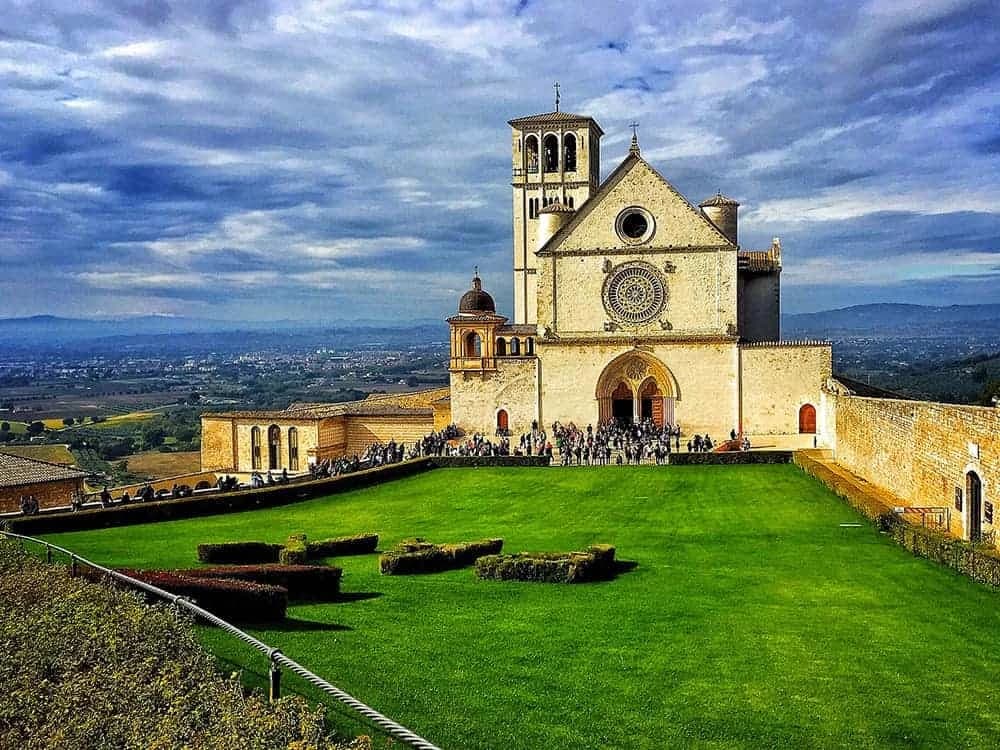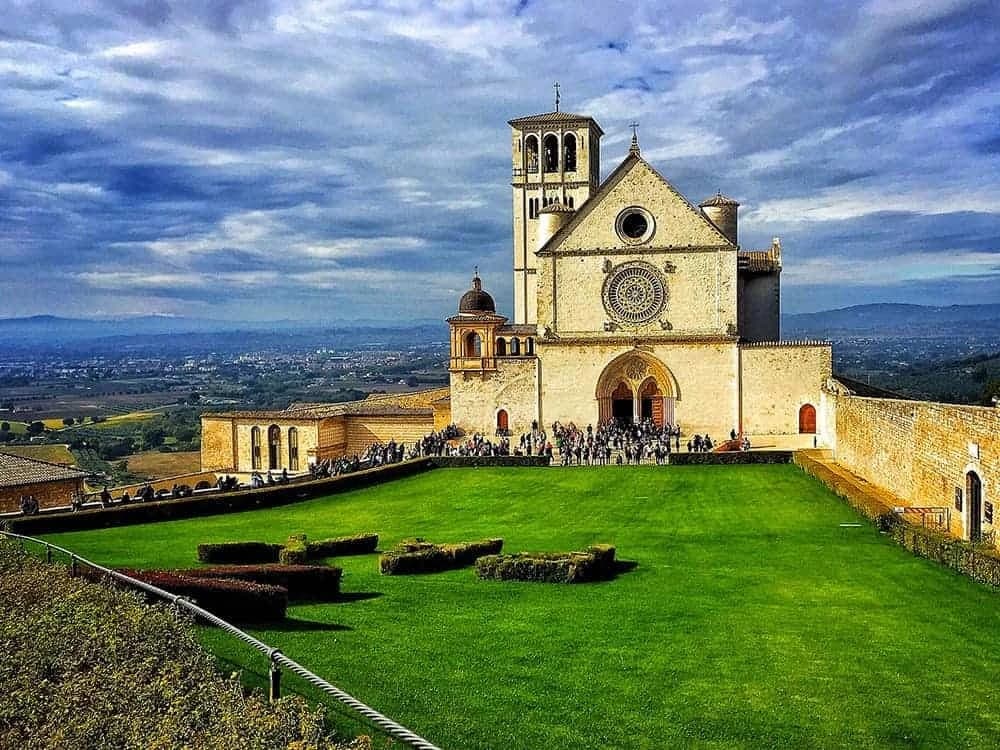

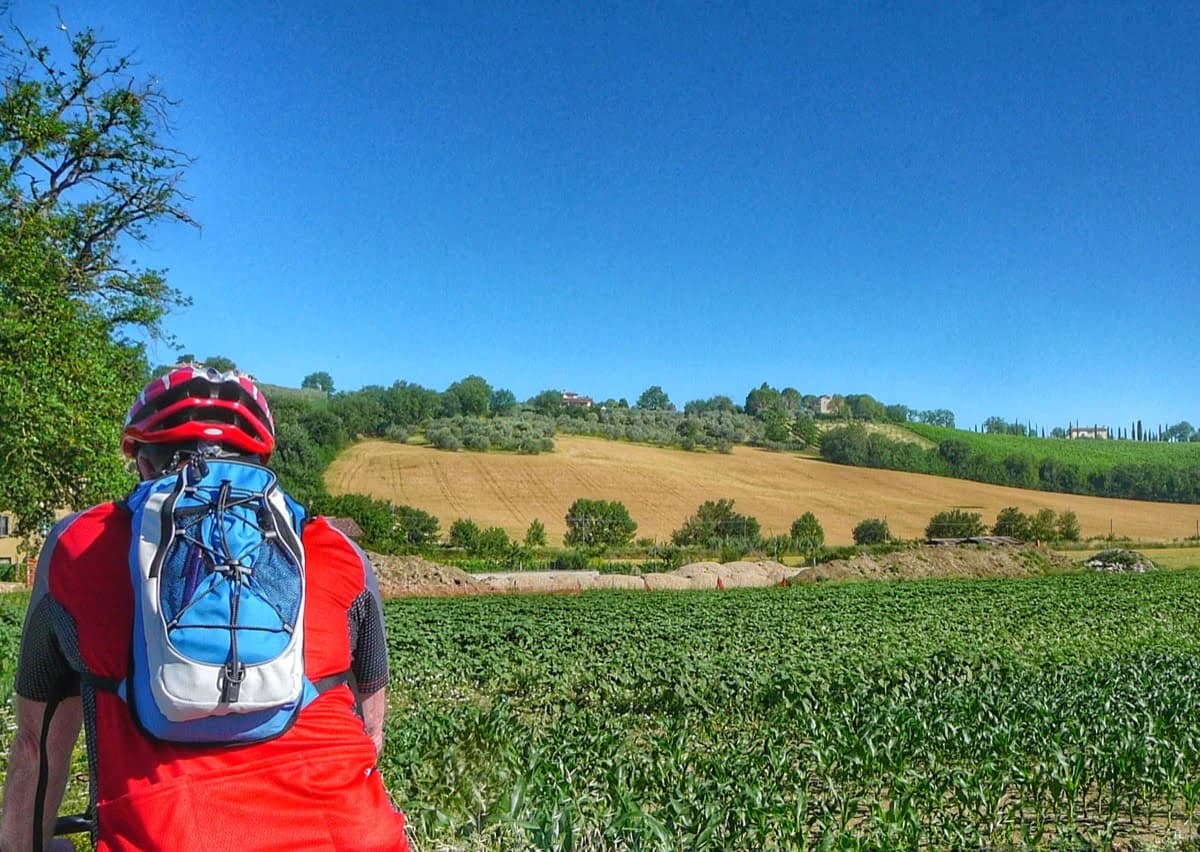
Umbria is called the green heart of Italy for good reason. Sitting just south of Tuscany and just north of Rome, it is a region of olive groves, vineyards, hilltop towns, and quiet medieval villages — and it happens to be one of the easiest, most rewarding regions in Italy to cycle. The Umbrian Valley between Assisi, Spoleto, and Montefalco is mostly flat, threaded with cycle paths along old rail lines, and dense with the kind of stops cycling holidays are built around: Sagrantino vineyards, frescoed basilicas, and family-run trattorias. This guide walks through every self-guided Umbria tour we offer — plus the Via Francigena that links Tuscany to Rome — and helps you choose the right one.
Why Cycle Umbria
Three things make cyclists fall for Umbria. First, the terrain: the Umbrian Valley floor is wide and flat, perfect for easy daily distances with a hill town or two thrown in. Second, the towns: Assisi, Spello, Bevagna, Montefalco, Torgiano, and Spoleto are all within an hour's ride of one another, and each is the kind of place where you want to linger over lunch. Third, the wine: Montefalco's Sagrantino is one of Italy's most distinctive reds, and the vineyards are written into the route itself. Umbria also feels quieter than Tuscany — fewer tour buses, fewer crowds, slightly better value, and the same calibre of art and food.
The Umbrian Valley Cycle Route
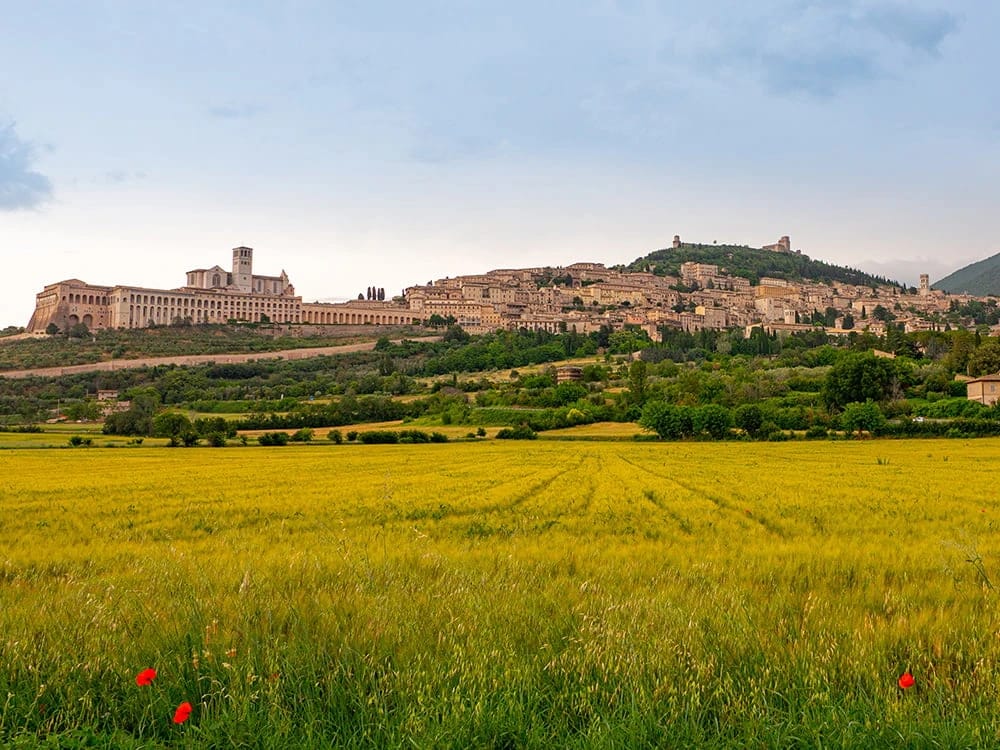
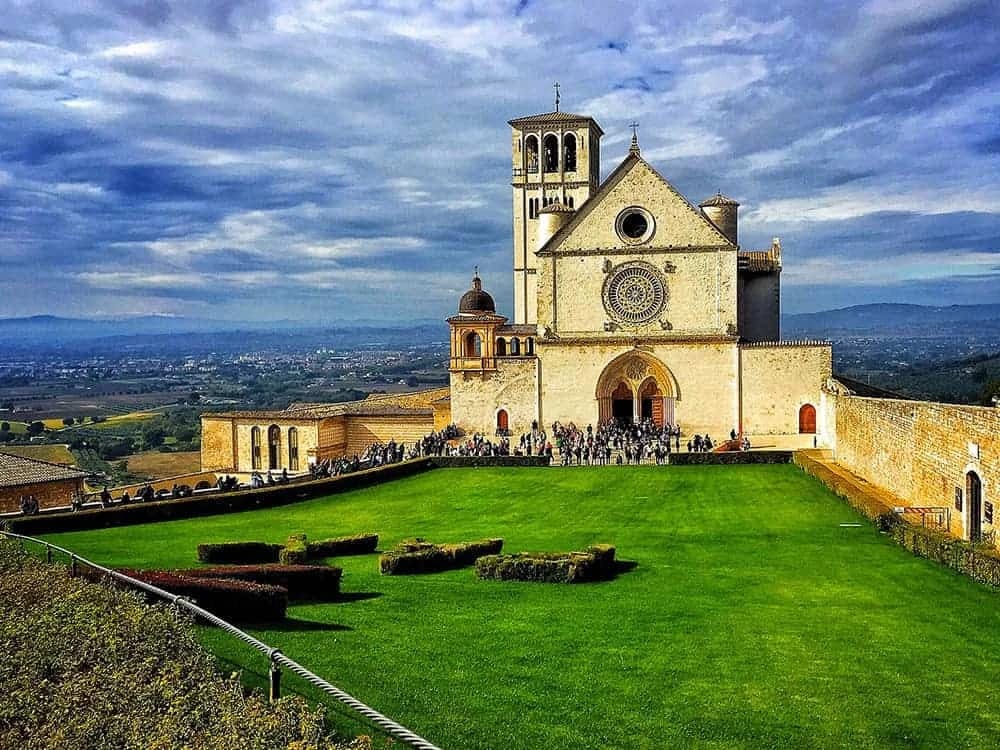
The backbone of most Umbria tours is the network of cycle paths and quiet lanes along the flat valley floor between Assisi and Spoleto, at around 200–300 m elevation, with the medieval towns perched on hills above. You spend most of the day on sheltered, gently graded paths, then climb 100–200 m at the end of each stage to your hilltop hotel. The towns you will want to hit: Assisi (Basilica di San Francesco), Spello (Roman walls and infiorate), Bevagna (a perfect medieval square), Torgiano (wine museum), Montefalco (Sagrantino vineyards), Spoleto (cathedral and Roman aqueduct), and Perugia if you have an extra day.
What makes the riding special is how the landscape and the history interlock. You roll across the flat valley between cultivated fields and vineyards, then a medieval town rises on its hill — Assisi glowing pink at sunset, Spello draped in its June flower carpets, Bevagna with its Roman mosaics and artisan workshops. The distances are short enough that you can stop for a long lunch, a cellar visit, or an hour in a frescoed church and still reach the next town by mid-afternoon. It is cycling shaped around discovery rather than mileage, which is exactly why Umbria suits first-time bike travellers and seasoned riders alike.
Short Breaks: 4 to 5 Days
If you have a long weekend, or want to combine cycling with a city stop in Rome or Florence, Umbria works beautifully as a short break. The four-day Short Break in the Umbrian Valley is a relaxed loop from Spello covering the signature towns — Assisi, Bevagna, and Torgiano — on mostly flat terrain. The slightly longer five-day Short Break in the Umbrian Valley adds an extra stage and more time in the wine country, again as an easy loop from Spello.
The Classic Week: Assisi to Spoleto
For the full Umbrian experience, ride the linear route from Assisi to Spoleto through the heart of the valley. The five-day Surprising Umbria tour covers the marquee towns on quiet country roads at an easy pace, while the seven-day Surprising Umbria tour extends the same journey with more riding and more time to explore Spello, Torgiano, and Bevagna along the way.
Loops with a Vineyard Focus
If the wine country is the priority, the five-day Umbrian Valley loop through Assisi, Spoleto, and Montefalco combines moderate distances with the climb to Montefalco's Sagrantino hills — a slightly more challenging ride through the green heart of Italy. For a richer, more relaxed exploration of the same valley, the seven-day Journey in Valle Umbra covers 262 km between hilltop towns, olive groves, and Romanesque churches, starting and based around Assisi.
The Full Immersion: 8 Days
To slow right down and see everything — Spello, Spoleto, Montefalco, Bevagna, Torgiano, and Perugia — the eight-day Journey Through the Umbrian Valley is the most complete option, riding through vineyards and medieval towns on quiet country roads with time to actually stop and explore each one.
Extending into Tuscany: The Via Francigena to Rome
If Umbria leaves you wanting a bigger Italian pilgrimage, the neighbouring Tuscany route is the natural next step. The twelve-day Via Francigena from Lucca to Rome follows the ancient pilgrim road for 430 km across the Tuscan hills — San Gimignano, Monteriggioni, the white roads of the Val d'Orcia, the thermal waters of Bagno Vignoni — into Lazio and along the Tiber to St Peter's Square. It is hillier and longer than the Umbrian Valley rides, on a mix of paved and white gravel roads, and pairs naturally with an Umbria trip for cyclists exploring central Italy.
What to Eat and Drink Along the Way
Umbria takes food seriously and casually at once. Wild boar ragù, hand-rolled strangozzi pasta, black truffles in season, and grilled meats from the inland forests are the building blocks of a typical meal. Olive oil from Trevi and Spello is among Italy's best — every cycling stage passes at least one frantoio (oil mill). On wine, Montefalco Sagrantino is the headline grape: full-bodied, tannic, and age-worthy, with lighter Trebbiano Spoletino and Grechetto whites perfect for warm afternoons. In Tuscany, the Via Francigena adds Chianti, Vernaccia di San Gimignano, and the Brunello country near the Val d'Orcia. Most vineyards welcome cyclists for tastings — check opening hours before riding up.
Best Time to Cycle
The season runs April to October. May and June are exceptional — wildflowers everywhere, perfect riding temperatures, and Spello's Infiorata flower festival in early June. September and October are equally good: warm, dry, and during the harvest the vineyards are alive with activity, with the Sagrantino harvest in October the most evocative time for a wine-focused trip. July and August are hot, often above 33°C, so start early or save Umbria for the shoulder seasons.
Practical Tips and Getting There
A trekking or hybrid bike is ideal for the flat valley routes, and e-bikes make the climbs to Assisi and Montefalco effortless; gravel bikes work well on the rail trails and white roads of the Via Francigena. Expect 25–40 km per day in the Umbrian Valley, shaped more by the towns than the kilometres. Reach Umbria by train to Foligno or Assisi from Rome (about two hours) or Florence (about two and a half); Perugia airport has flights from several European hubs. For the Via Francigena, start in Lucca, easily reached by train from Pisa (30 minutes) or Florence (80 minutes). Most stages end in a converted convent, agriturismo, or boutique hotel inside a medieval town — book early in May, June, September, and October. Every tour is self-guided, with route notes, GPS tracks, and luggage transfers included.
Frequently Asked Questions
Is Umbria suitable for beginners?
Yes — it is one of the most welcoming regions in Italy for a first bike trip. The Umbrian Valley floor is flat, with only short climbs to the hilltop towns, and e-bikes are available on most tours to make those effortless.
Are the tours guided or self-guided?
All the tours in this guide are self-guided. You get detailed route notes and GPS tracks, ride at your own pace, and your luggage is transferred between hotels so you only carry a day bag.
How is Umbria different from Tuscany for cycling?
Umbria is flatter, quieter, and better value, with the same quality of art, food, and wine. Tuscany — best experienced here on the Via Francigena — is hillier and more famous, with the iconic Val d'Orcia landscapes. Many cyclists combine the two into a single central-Italy trip, riding the gentle Umbrian Valley first and then the longer pilgrim road to Rome.
What kind of bike should I choose?
Trekking and e-bikes suit the flat Umbrian Valley; e-bikes are popular for the climbs to Assisi and Montefalco. Gravel bikes are the best choice for the white roads of the Via Francigena.
Can I do a short Umbria trip?
Yes. The four- and five-day short breaks from Spello cover the highlights in a long weekend, with no luggage transfers between bases — ideal as a standalone trip or an add-on to Rome or Florence.
When is the best time to go?
Late spring (May–June) and early autumn (September–October) offer the best riding, with wildflowers, the Infiorata festival, or the grape harvest depending on the month.
Ready to Cycle Umbria?
Whether it is a four-day short break or a full week through vineyards and frescoes — or a twelve-day pilgrimage across Tuscany to Rome — central Italy is the most welcoming part of the country for a bike trip. Browse all our cycling tours in Italy to compare itineraries, durations, and routes, and find the trip that fits your time and your taste.