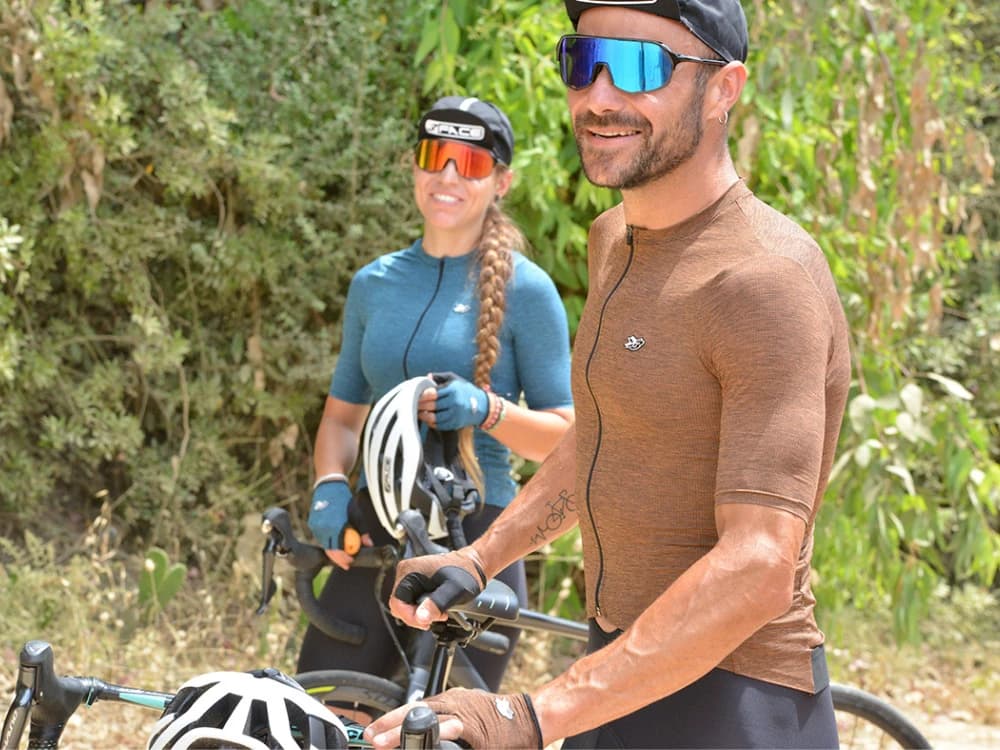
The short answer: good cycling glasses block 100% of UVA and UVB rays, fit snugly with adjustable temples and nose pads, resist fogging and impacts, and — ideally — let you adapt to changing light, either with interchangeable lenses or with photochromic lenses that darken and lighten on their own.
Cycling glasses are an essential accessory for anyone who rides. They protect the eyes not only from sun, wind and insects, but also from grit and debris thrown up along the road.
With so many models and materials on the market, though, choosing can feel daunting. So we asked our friends at Threeface, who have been making quality cycling clothing and accessories since the 1970s, to help. Together we put together this guide: first the features to look for, then a comparison of two models and the materials they're made from.
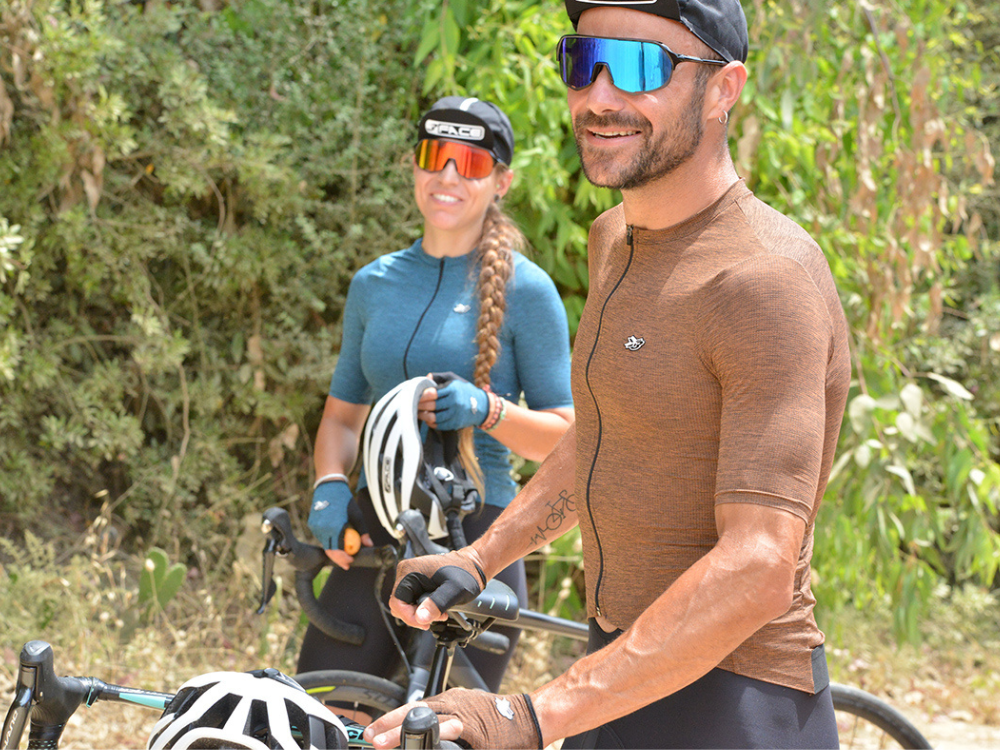
Cycling glasses: 5 key features
1. UV protection
UV protection is the most important feature. On long rides, sunlight can damage unprotected eyes. Make sure the glasses block 100% of UVA and UVB rays. Polarized lenses are also worth considering: they cut glare and improve contrast.
2. Fit and comfort
Look for lightweight glasses with adjustable temples and nose pads that adapt to the shape of your face. Adjustable temples let you fine-tune the fit, while the nose pads stop the glasses sliding down as you pedal. Always try several models to find one that doesn't cause discomfort or pressure points — and check that the arms don't clash with your helmet.
3. Breathability
Sweating is normal during intense effort. Glasses with good ventilation or anti-fog lenses keep air moving and the lenses clear, even on the hardest climbs.
4. Impact resistance
Whether training or on a bike trip, glasses can take knocks or fall. Choose a pair with good impact resistance: materials such as polycarbonate and nylon are widely used for cycling lenses because they combine lightness with strength.
5. Interchangeable lenses
Light can change many times over a ride of several hours. Glasses with interchangeable lenses let you adapt: clear lenses for low light, dark lenses for sunny days — without needing a second pair.
Polarized vs photochromic: two models compared

These features come together in two Threeface models, Space and Jupiter, compared below.
Technical characteristics
Both models have a snug fit that keeps the glasses in place while riding, adjustable nose pads for comfort, and a choice of colours.
Space has polarized lenses that eliminate reflections and improve visibility in strong sunlight. The lenses also carry an anti-reflective coating that reduces eye fatigue.
Jupiter has photochromic lenses that adapt automatically to the light: they darken in bright sun and clear in low light, with no need to swap lenses.
Materials
Space has a Grilamid TR90 frame — light, shock-resistant and resistant to sun and water, so the glasses last longer — with polarized polycarbonate lenses. Jupiter has a polycarbonate frame, light but less resistant than Grilamid TR90; its polycarbonate lenses are equally shock-resistant and offer total UV protection.
Which model should you choose?
If you mainly ride in strong sun and want the most protection from glare, Space is the better choice: polarized lenses and an anti-reflective coating reduce eye strain and improve visibility.
If you ride through changing light — early starts, forests, tunnels, afternoons in the sun — Jupiter is the more practical pick, because its photochromic lenses adjust on their own.
Either way, the right bike glasses balance function and personal fit. Think about the riding you'll actually do, and try several models before you buy.
Frequently Asked Questions
Are polarized or photochromic lenses better for cycling?
Polarized lenses are best for strong, steady sunlight, where glare is the main problem. Photochromic lenses are better when the light keeps changing, because they lighten and darken automatically. Note that polarized lenses can make some bike computer and phone screens harder to read.
Do I really need cycling glasses?
Yes, for comfort and safety: they shield your eyes from UV rays, wind, insects and road debris, all of which can make you blink or lose focus at speed.
What lenses should I use on cloudy days or in the evening?
Clear or lightly tinted lenses, or photochromic lenses, which stay light in low-light conditions.
How do I stop cycling glasses from fogging up?
Choose frames with good ventilation or lenses with an anti-fog treatment, and make sure the glasses sit slightly away from your face so air can circulate.
Looking for spectacular scenery for your next big ride? On the Mallorca Road Bike tour you'll ride the island's classic loop on full-distance stages, including the Sierra de Tramuntana and the Sa Calobra descent — with hotels booked, luggage transferred and route notes for every day.