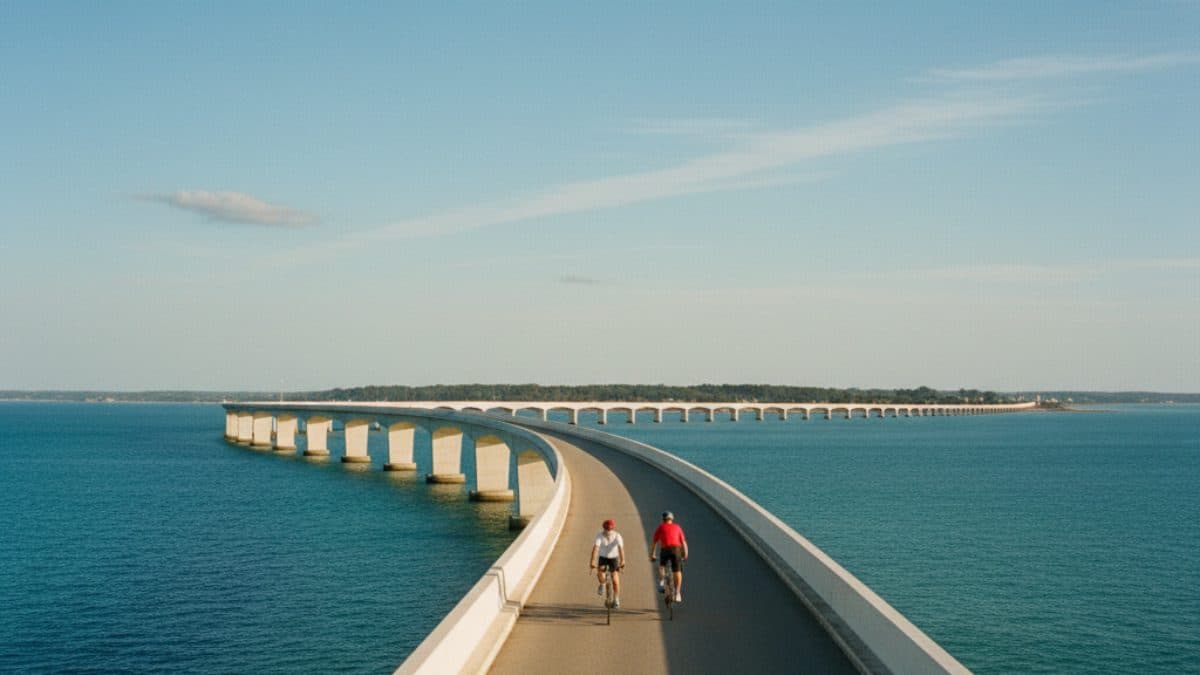


The Vélodyssée is France's longest signposted cycle route and one of the great coastal rides of Europe. Running down the Atlantic seaboard, it threads pine forests, surf beaches, oyster ports, salt marshes, and island causeways on a network of dedicated, largely traffic-free paths. It is flat, well-marked, and endlessly varied — which makes it one of the most beginner-friendly long-distance cycling routes anywhere, while still offering enough length to fill two weeks of riding. This guide explains how the Vélodyssée works, walks through every self-guided tour we offer along the Atlantic coast, and gives practical advice on highlights, timing, and choosing the right section.
If the Loire tempts you inland, the Orléans-to-Angers château route makes a natural companion trip along the Loire à Vélo.
What Is the Vélodyssée?
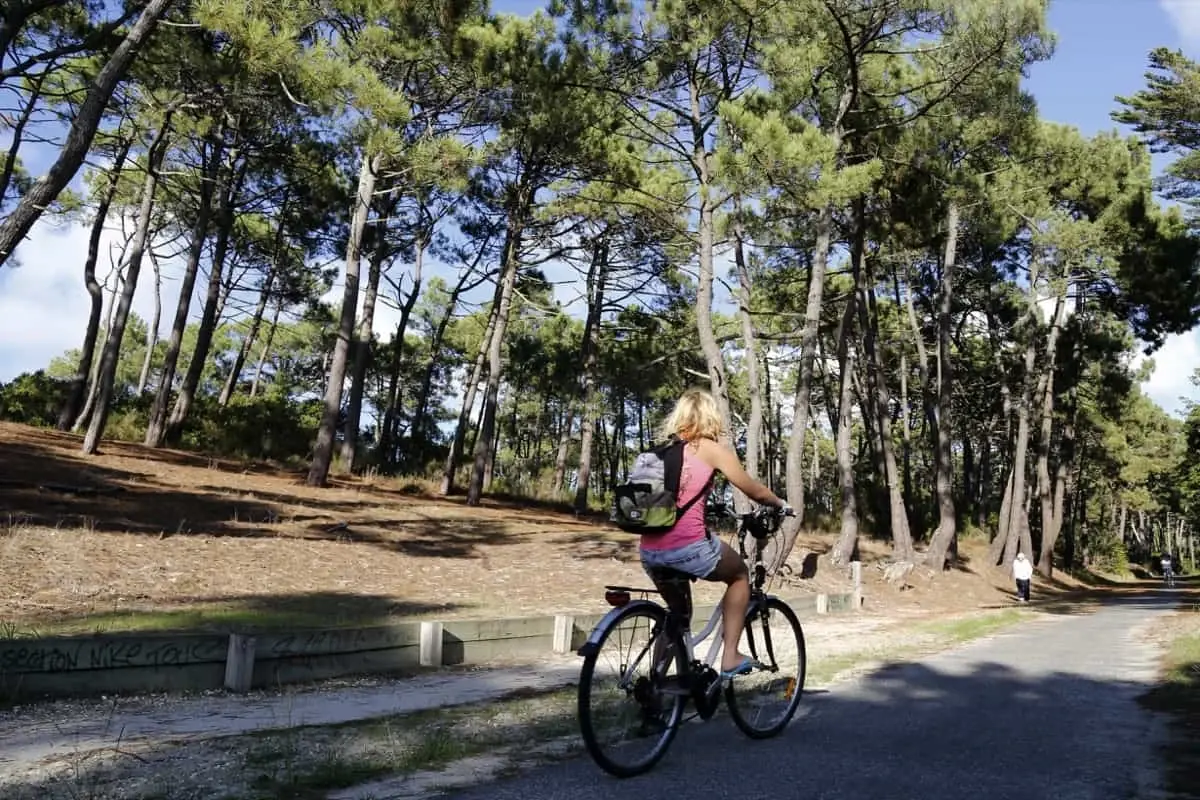
The Vélodyssée is the French portion of the EuroVelo 1 (Atlantic Coast Route), running for more than 1,200 km down the western edge of the country. The stretch our tours cover — from the Loire estuary at Nantes through the Vendée, Charente-Maritime, the Gironde, the Landes, and into the Basque Country at Biarritz — is the most scenic and the most cycle-friendly. The riding is almost entirely flat, much of it on converted railway lines and purpose-built coastal paths separated from traffic, shaded by the vast Landes pine forest and punctuated by ferry crossings of estuaries and bays.
Because the route is built around the regional rail network, most tours start and finish at towns with direct train connections, and on self-guided trips your luggage is moved between hotels each day. You ride from one seaside resort to the next with just a day bag — and a swim is rarely more than a short detour away.
Riding the Vélodyssée Section by Section
The beauty of the Vélodyssée is that you can ride a single section or string several together into a longer journey. From the north, the eight-day Nantes to La Rochelle tour follows the Loire estuary and the wild Vendée coast, crossing the mythical Passage du Gois — a 4.2 km road submerged by the tide — to Noirmoutier Island, then continuing past the surf beaches of Les Sables d'Olonne to historic La Rochelle.
The central section, the seven-day La Rochelle to Arcachon tour, takes in the car-free Île de Ré, Rochefort's remarkable transporter bridge, a ferry across the Gironde estuary, and the wild Médoc coast before reaching the oyster ports of Arcachon Bay. From there, the six-day Arcachon to Biarritz tour climbs the Dune du Pilat — the tallest sand dune in Europe — and rolls through the Landes lakes and forests to the surf capitals of Hossegor and Capbreton, finishing in the Basque resort of Biarritz.
If you want the whole thing in one go, the eleven-day La Rochelle to Biarritz tour rides the complete southern Vélodyssée — 510 km from the Charente-Maritime coast through the Médoc, Arcachon Bay, and the Landes into the Basque Country, with both estuary and bay ferry crossings included.
Bordeaux to Biarritz: The Wine-to-Surf Ride
One of the most popular Vélodyssée journeys links the wine capital of Bordeaux with the surf capital of Biarritz, riding out from the city through the Landes forest to the coast. We offer two versions of this classic route. The eight-day Bordeaux to Biarritz tour covers around 355 km past the Dune du Pilat, the Landes lakes, and the Basque coast, with the Arcachon Bay ferry included. The alternative eight-day Vélodyssée by Bike from Bordeaux to Biarritz follows a similar 318 km line with an optional final stage on to Hendaye, for riders who want to reach the Spanish border. Both are flat, forest-shaded, and finish in the heart of surf country.
The Charente Coast and Its Islands
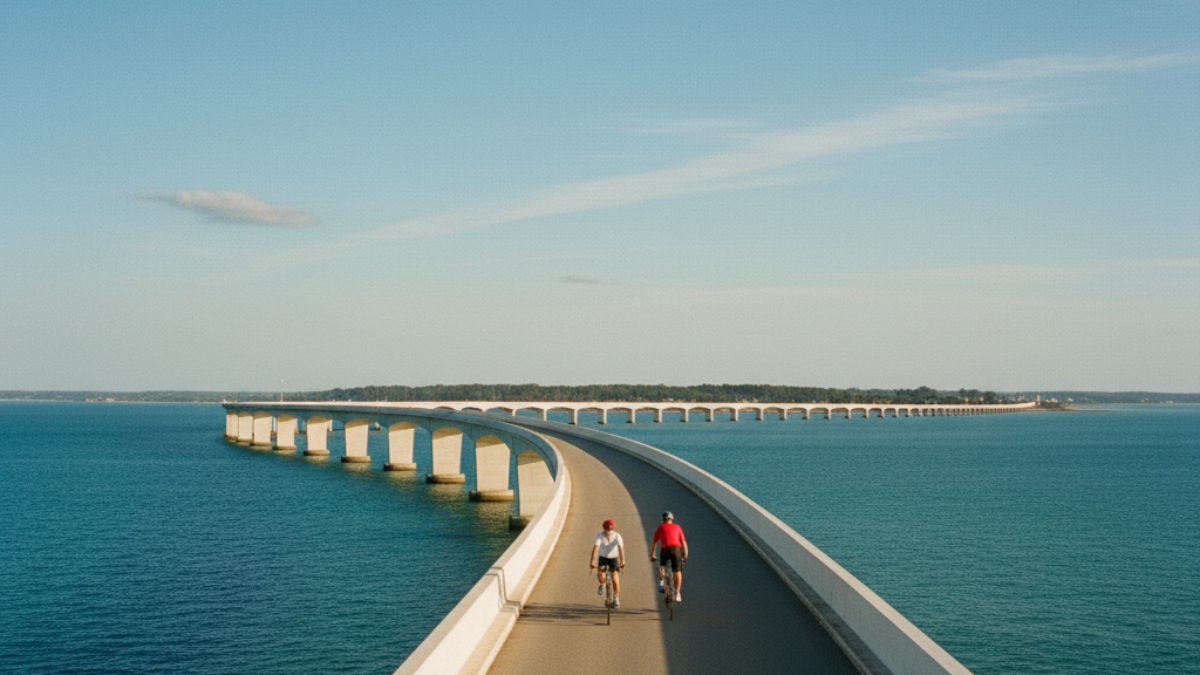
The Charente-Maritime is one of the richest stretches of the whole Atlantic coast, and two tours focus on it. The eight-day Charente Islands tour island-hops from La Rochelle to Royan, taking in the three great islands of the coast — Île de Ré, the car-free Île d'Aix with its views of Fort Boyard, and Île d'Oléron with its oyster route — a relaxed week of beaches, seafood, and Atlantic light. For a route that pairs the coast with the vineyards, the seven-day La Rochelle to Bordeaux tour follows the Charente shore and the Gironde estuary cliffs past Talmont-sur-Gironde and the Vauban citadel of Blaye, then crosses the estuary by ferry to finish among the Margaux and Haut-Médoc vineyards in Bordeaux.
The Flow Vélo: Cycling the Charente River Inland
If you would rather trade the open ocean for a gentle river valley, the Flow Vélo offers a quieter, greener counterpart to the coastal Vélodyssée. This signposted route follows the Charente River as it winds inland, linking comic-book Angoulême with the Atlantic at Rochefort. Our six-day Flow Vélo tour from Angoulême to Rochefort covers 252 km on easy, gently graded paths, with a stop in the world-famous brandy town of Cognac, a day in the Roman city of Saintes — known for its amphitheatre and Romanesque Abbaye-aux-Dames — and a finish at Rochefort, Colbert's old naval arsenal and home of the replica frigate Hermione. The trip ends with a ferry day out to the car-free Île d'Aix, a classified natural site laced with quiet lanes.
Because the Flow Vélo reaches the coast at Rochefort, it slots neatly alongside the seaward Vélodyssée and the Charente island routes. Riders who want a complete river-to-sea week can combine it with a coastal section, swapping vineyard villages and Romanesque churches for oyster ports and Atlantic beaches over a single journey. It is a flat, low-traffic introduction to one of France's most characterful river valleys — and an easy choice for anyone who prefers inland scenery and small-town gastronomy to the surf and the dunes.
Highlights Along the Coast
The Vélodyssée strings together an extraordinary run of landmarks. The Île de Ré is a car-light island of whitewashed villages, salt marshes, and oyster beds, laced with cycle paths. The Passage du Gois to Noirmoutier is a tidal causeway passable only at low tide. The Dune du Pilat rises more than 100 metres above Arcachon Bay, the tallest sand dune in Europe. The Landes forest — the largest in France — shades much of the southern route, with freshwater lakes for swimming just inland of the ocean. And the finish in the Basque Country, through Hossegor, Capbreton, Bayonne, and Biarritz, swaps pine forest for surf culture and Basque cuisine. Oysters, from Marennes-Oléron to Arcachon, are a constant temptation along the way. Add the belle-époque resorts of Royan and Mimizan, the bird reserves of the Baie de l'Aiguillon and Le Teich, and the Vauban citadel of Blaye, and you have a coast where the cycling, the history, and the seafood are equally memorable.
How to Choose the Right Route
Choose by how much time you have and which landscapes appeal most. For the wild Vendée coast, islands, and the Passage du Gois, ride the Nantes to La Rochelle section. For the Charente islands and oyster country, the Charente Islands tour or La Rochelle to Bordeaux are ideal. For an inland alternative of river valleys, vineyards, and Romanesque towns, the Flow Vélo from Angoulême to Rochefort is the quiet choice. For pine forests, the Dune du Pilat, and surf beaches, the Arcachon to Biarritz section is the highlight reel. For the classic wine-to-surf journey, pick one of the Bordeaux to Biarritz tours. And if you want to ride the whole southern coast end to end, the eleven-day La Rochelle to Biarritz is the complete experience. Every tour is self-guided, flat, and beginner-friendly, with route notes, GPS tracks, and luggage transfers included, and e-bikes available throughout.
Best Time to Cycle the Vélodyssée
The season runs from April to October. May, June, and September offer the most comfortable riding — warm days, long light, and quieter paths — and are the reliable favourites. July and August are warmer and busier, ideal if you want the full beach-resort atmosphere and warm ocean swimming, though the popular resorts and ferries are at their fullest. Spring brings wildflowers across the dunes and salt marshes, while early autumn stays mild on this Atlantic-tempered coast well into October. The flat, shaded terrain makes the route comfortable even in high summer.
Getting There and Back
The Atlantic coast is easy to reach by train. Nantes, La Rochelle, Bordeaux, and Biarritz all sit on the high-speed TGV network — Bordeaux is around two hours from Paris, and Biarritz connects via Bordeaux. Arcachon and Royan are reachable by regional trains, Angoulême sits on the Paris–Bordeaux TGV line, and most tours are designed so you can travel car-free from your start point to your finish. Because several routes are linear, open-jaw travel (arriving at one city and leaving from another) usually works well.
Frequently Asked Questions
Is the Vélodyssée suitable for beginners and families?
Yes — it is one of the best long-distance routes in Europe for beginners and families. It is almost entirely flat, much of it on dedicated traffic-free paths, with moderate daily distances and frequent towns, beaches, and swimming spots along the way.
Are these tours guided or self-guided?
All the Vélodyssée and Flow Vélo tours in this guide are self-guided. You receive detailed route notes and GPS tracks, ride at your own pace, and your luggage is transferred between hotels so you only carry a day bag.
Are the ferry crossings included?
On the routes that cross the Gironde estuary or Arcachon Bay, the relevant ferry crossings are included in the package. A few optional island ferries, such as the boat to the Île d'Aix, are paid locally.
What kind of bike should I choose?
Trekking bikes and e-bikes are well suited to the flat terrain, and gravel bikes are available on several routes. E-bikes are popular for the longer end-to-end rides and for riders who want to relax into the scenery and the headwinds.
Can I ride just one section?
Yes. The route divides naturally into sections — Nantes to La Rochelle, La Rochelle to Arcachon, Arcachon to Biarritz, and the Bordeaux spur — so you can ride a single week or combine several into a longer trip, up to the full eleven-day La Rochelle to Biarritz.
What is the difference between the Vélodyssée and the Flow Vélo?
The Vélodyssée hugs the Atlantic coast, with beaches, dunes, pine forest, and ferry crossings. The Flow Vélo runs inland along the Charente River through vineyards, Romanesque towns, and Cognac country, reaching the sea at Rochefort. The two meet on the Charente coast, so they can be ridden separately or combined into a river-to-sea trip.
When is the best time to go?
Late spring (May–June) and September offer the best balance of warm weather, long days, and quiet paths. July and August are best if you want the lively beach-resort atmosphere and warm sea swimming.
Start Planning Your Atlantic Coast Ride
From an island-hopping week in the Charente to the full eleven-day Atlantic crossing from La Rochelle to Biarritz, and from the riverside calm of the Flow Vélo to the surf-and-pine finish at Biarritz, there is a route here for every level and every interest — beaches, forests, islands, vineyards, rivers, and surf. Browse all our cycling tours in France to compare itineraries, durations, and routes, and find the trip that fits your time and your taste.