
Valencia is one of Europe's most underrated cycling cities. With over 150 km of dedicated bike lanes, a mild Mediterranean climate year-round, and a spectacular converted riverbed park that runs through the heart of the city, it rewards two-wheeled exploration like few other European destinations. Whether you are adding a city break to a longer cycling tour or spending a weekend pedaling between futuristic architecture and ancient plazas, Valencia belongs on your list. It also pairs well with our cycling tours in Spain if you want to turn the city break into a longer ride.
Why Valencia Is Ideal for Cycling
Valencia has invested heavily in cycling infrastructure over the past two decades. The city is flat, compact, and connected by a network of well-maintained bike lanes that link the beach, the old town, and the surrounding parks. The climate is warm but not extreme — average temperatures range from 12°C in winter to 30°C in summer, making it comfortable to ride in every month of the year.
Unlike many European cities where cycling feels like a battle with traffic, Valencia has embraced the bicycle as a genuine transport option. Locals commute by bike, tourists rent them by the hour, and the city's layout makes it easy to navigate without a map. For anyone arriving from a European cycling tour, Valencia feels immediately familiar and welcoming.
The Turia Gardens: A Bike Path Through the City
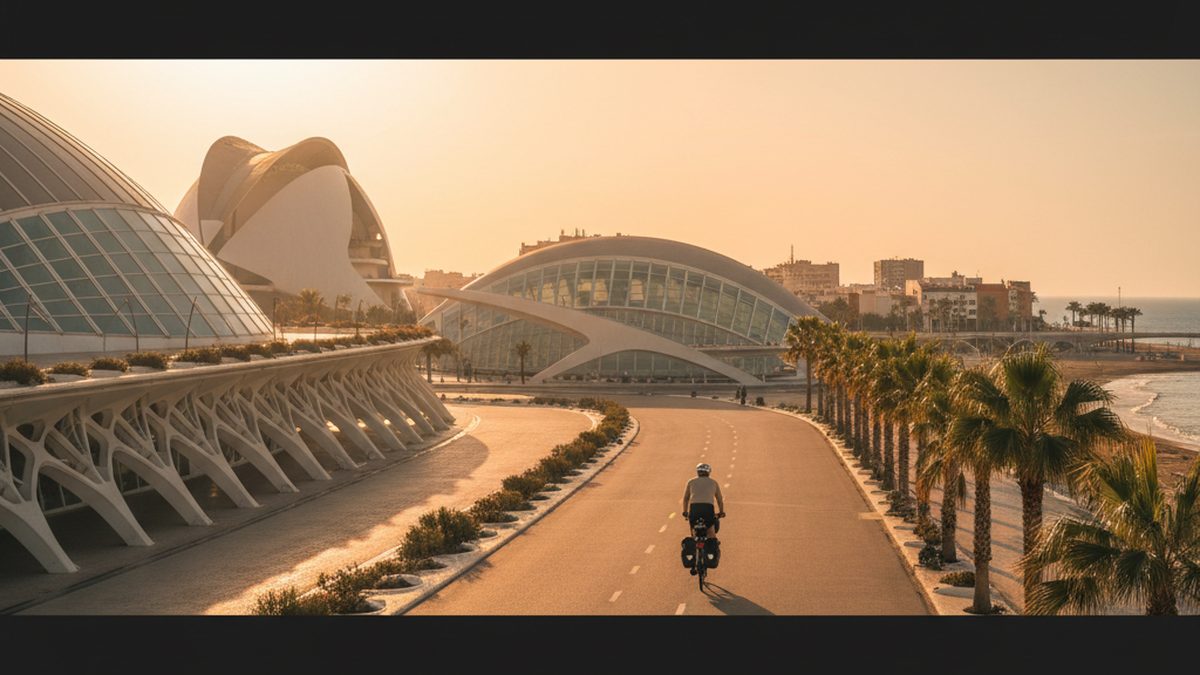
The Jardines del Turia is Valencia's most remarkable cycling asset. When the Turia river was diverted after devastating floods in 1957, the old riverbed was transformed into a 9 km linear park that winds through the city from west to east. Today it is a continuous green corridor with dedicated cycling paths, shaded by trees and crossed by historic stone bridges.
Riding through the Turia Gardens, you pass from medieval gates to modernist masterpieces without touching a single road. The park connects several of the city's key landmarks, making it the perfect spine for a cycling day trip. Families will appreciate the Gulliver playground — a giant reclining figure that children can climb — while architecture enthusiasts will find themselves stopping repeatedly to photograph the bridges above.
The City of Arts and Sciences
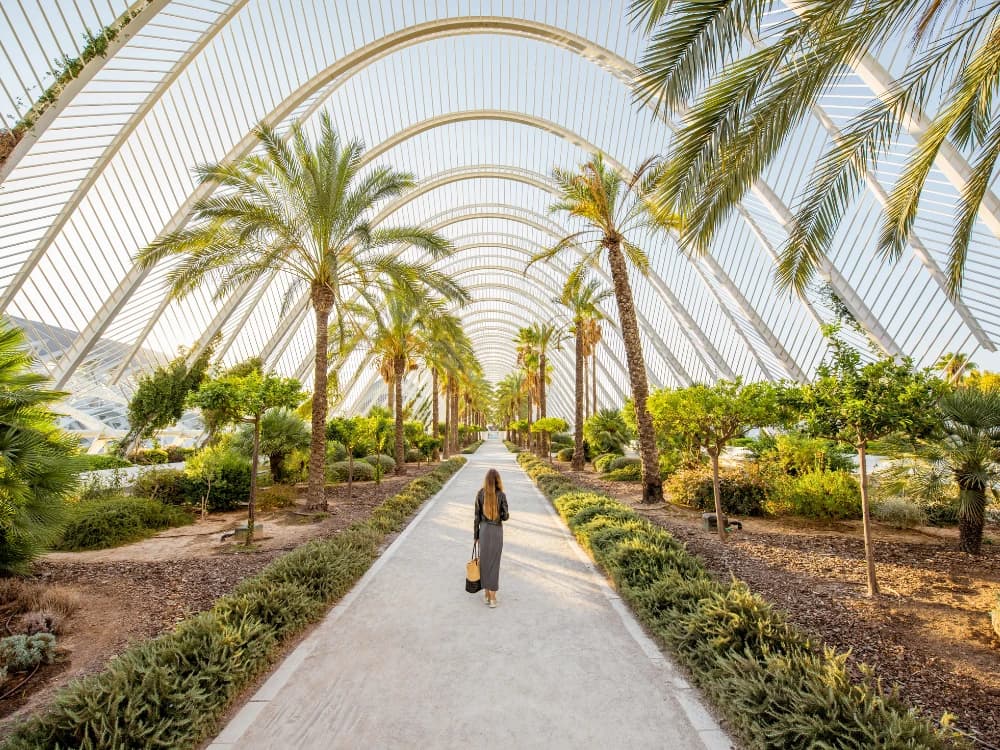
At the eastern end of the Turia Gardens, the park opens into Valencia's most iconic landmark: the City of Arts and Sciences. Designed by Santiago Calatrava and Félix Candela, this futuristic complex of white concrete and glass includes five major structures: the Oceanogràfic (Europe's largest aquarium), the Hemisfèric (an IMAX cinema shaped like a giant eye), the Science Museum, the Palau de les Arts opera house, and the Umbracle walkway lined with Mediterranean plants and contemporary sculpture.
Arriving by bike along the riverbed park, the complex appears gradually — white curves rising from reflecting pools. It is one of those rare architectural experiences that is genuinely more impressive in person than in photographs.
The Historic Centre by Bike
Valencia's old town is compact enough to explore on foot but more enjoyable by bike. The key landmarks are within a few minutes' ride of each other: the Cathedral (which claims to hold the Holy Grail), the Plaza de la Virgen with its pink marble pavement and Turia fountain, the La Lonja silk exchange (a UNESCO World Heritage Site), and the Torres de Serranos — a pair of medieval gate towers that offer panoramic views over the city.
The narrow streets of the Barrio del Carmen are best navigated slowly, weaving past street art, small plazas, and tapas bars. Sunday mornings are ideal for cycling the old town when traffic is minimal and the Mercado Central is in full swing.
The Beach and Port
From the City of Arts and Sciences, the bike path continues east to the Malvarrosa and Cabanyal beaches. The seafront promenade is flat and wide, perfect for a relaxed ride with the Mediterranean on one side and a line of paella restaurants on the other. The port area, rebuilt for the 2007 America's Cup, features the striking Veles e Vents building by David Chipperfield.
A full loop — old town, Turia Gardens, City of Arts and Sciences, beach, and back — covers roughly 20 km and takes 2–3 hours at a leisurely pace, including stops.
Albufera Natural Park: A Detour into Wetlands
About 20 km south of the city centre, the Albufera Natural Park offers a completely different landscape: rice paddies, freshwater lagoons, and reed-lined paths where herons and flamingos wade. This is the birthplace of Valencian paella — the original version, made with rabbit, snails, and locally grown rice, is served in the small lakeside village of El Palmar.
The ride from Valencia to Albufera follows flat roads and bike paths through farmland, making it an easy half-day excursion. The sunset boat rides on the lagoon are legendary — time your visit for late afternoon if you can.
Practical Tips for Cycling in Valencia
Bike rental is widely available. The city's public bike-share system (Valenbisi) has 275 stations, though for a full day of exploration, renting from a private shop gives you a better bike and more flexibility.
Best time to visit: March to June and September to November. July and August are hot (35°C+), though early morning and evening rides are still pleasant. The Fallas festival in March is spectacular but extremely crowded.
Safety: Valencia is generally very safe for cyclists. The dedicated bike lanes are well-separated from traffic. Standard precautions apply — use a lock when parking, especially near the beach and tourist areas.
If Valencia whets your appetite for a longer ride, consider extending your trip into a multi-day cycling tour. The Mediterranean coast south of Valencia offers quiet roads through orange groves, while inland Andalusia and the Balearic Islands are within easy reach. Browse our self-guided cycling tours in Spain, our full tour collection for European cycling routes, or learn how self-guided tours work.
Frequently Asked Questions
Is Valencia a good city for cycling?
Valencia is one of the best cycling cities in Europe. It has over 150 km of dedicated bike lanes, flat terrain, and a converted riverbed park that provides a car-free route through the entire city. The mild climate makes it rideable year-round.
How long does it take to cycle around Valencia?
A full loop covering the old town, Turia Gardens, City of Arts and Sciences, and the beach is roughly 20 km and takes 2–3 hours at a relaxed pace with photo stops. Add the Albufera excursion for a full day of 50–60 km.
Can I rent a bike in Valencia?
Yes. The Valenbisi public bike-share system has 275 stations across the city. For longer rides or better bikes, several private rental shops in the old town and near the beach offer day and multi-day rentals, including e-bikes.
What is the best time to visit Valencia by bike?
Spring (March–June) and autumn (September–November) are ideal, with temperatures between 18–28°C. Summer is hot but manageable with early starts. Winter is mild and quiet, with average highs around 16°C.
Is the Turia Gardens bike path free to use?
Yes. The Jardines del Turia is a public park with free access. The 9 km cycling path runs the full length from the Bioparc zoo to the City of Arts and Sciences, with multiple entry and exit points along the way.
Available cycling tours from Valencia. The Costa Blanca route from Alacant to Valencia rides into the city along the Mediterranean coast. For a longer week, the Valencia: Land of Contrasts tour explores the Valencian hinterland and finishes at the city.