
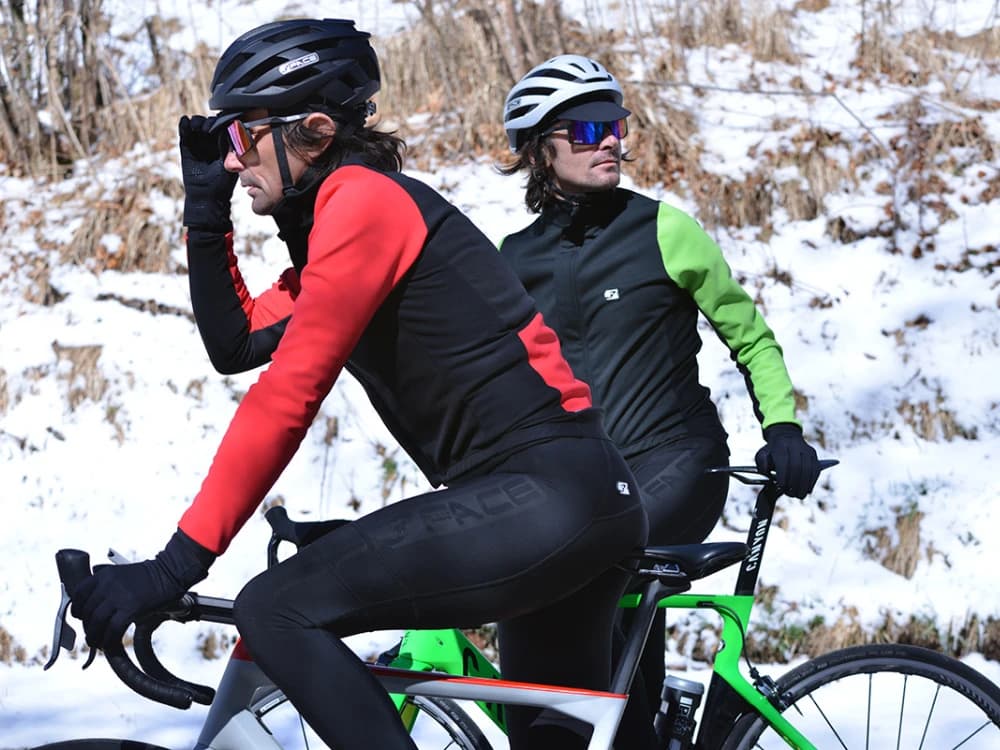
The short answer: dress in layers — a thermal base layer next to the skin, an optional mid layer, and a windproof, water-repellent winter jacket on top — then cover your hands, feet, head and neck, which lose heat first. Start the ride feeling slightly cool: it takes about 15 minutes of pedalling for your body to warm up.
Winter is a difficult season for cycling and bike touring enthusiasts: short days, low temperatures and uncertain weather are far from ideal conditions for taking the bike out. With the right technical clothing, though, these difficulties can be overcome. That's why we put the question "How should you dress for cycling in winter?" to experts in the field.
Threeface, an Italian brand that has been making cycling clothing since 1977, gave us practical advice on how to protect yourself from the cold, and explained how their winter garments are designed to help you choose well.
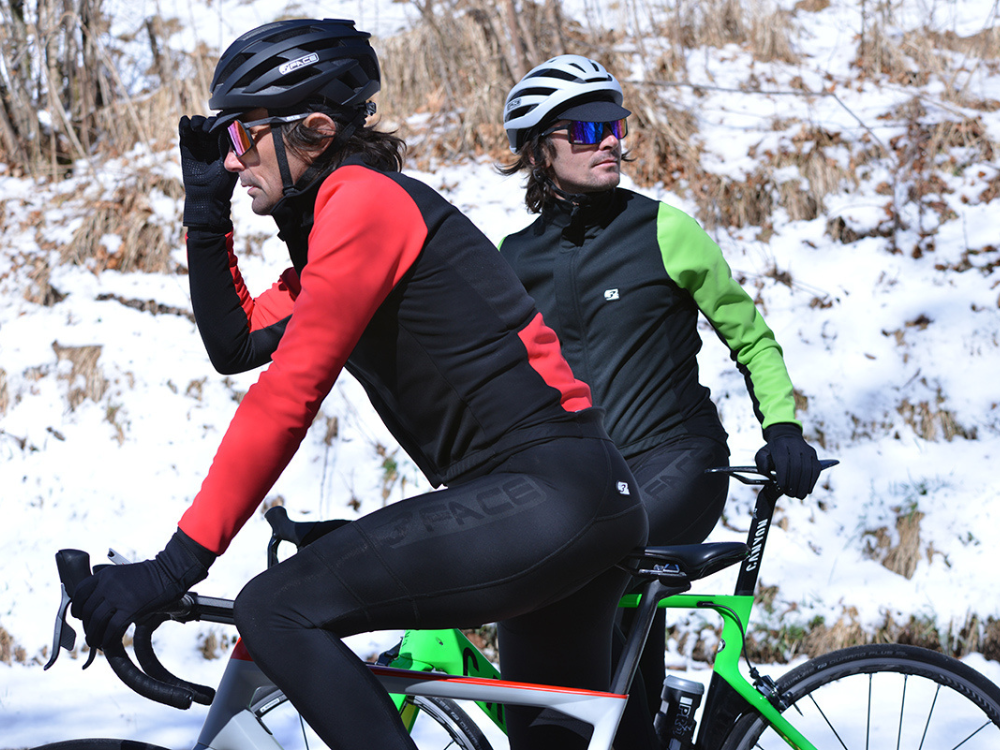
Winter cycling clothing at a glance
- Thermal winter jacket — windproof, water-repellent and breathable outer layer: from about -2 °C to 10 °C.
- Long thermal trousers (or a winter bib with leg warmers): from 0 °C to 15 °C.
- Long-sleeved jersey — mid layer in deep winter, outer layer in spring and autumn: from 10 °C to 18 °C.
- Gloves, overshoes, neck warmer and under-helmet cap — whenever it's cold, because the extremities cool fastest.
These ranges are Threeface's guidance. Everyone perceives cold differently, so experiment to find what works for you: start well dressed, in layers you can remove if you get too warm.
1. Protect yourself from rain and wind
Winter cycling jackets are highly technical garments made from a bonded fabric: a soft fleece layer on the inside and a breathable polyester layer on the outside. Between the two sits a windproof, water-repellent membrane that still lets moisture escape, keeping the body dry.
These jackets are designed to be worn over a single long-sleeved thermal base layer, or a short-sleeved one when it's a little milder. If you feel the cold a lot, add a mid layer between the base layer and the jacket.
A thermal winter cycling jacket is designed for temperatures from around -2 °C up to 10 °C.
2. Keep your legs warm
Winter cycling trousers are made from a thermal fabric that is soft to the touch and very stretchy, giving a comfortable, warm feel when worn.
Long cycling trousers are used in winter, and in spring and autumn too if you feel the cold: the recommended range is from 0 °C to 15 °C.
An alternative is to pair a winter cycling bib with thermal leg warmers, a versatile solution: you can take the leg warmers off once you've warmed up.
3. Add a mid layer
Long-sleeved cycling jerseys are made from a fabric with a light fleece lining. In spring and autumn they work over a thermal base layer; in the coldest months they become the extra layer between base layer and jacket.
They suit both mountain biking and road cycling, and are recommended from 10 °C to 18 °C.
4. Cover the extremities
Winter gloves are essential, because the hands are one of the most sensitive parts of the body. Good winter gloves use the same membrane as winter jackets: they block the cold while staying light and not bulky. If your hands get cold easily, wear a thin mid-season glove underneath.
Feet are just as sensitive, which is why overshoes are recommended: their windproof, water-repellent membrane and fleece lining insulate the foot and keep it warm. Reflective details on the back improve visibility in the short winter daylight. In colder weather, add winter socks.
The head and neck are also very exposed. Use a thermal neck warmer with a thermal under-helmet cap, or switch to a thermal balaclava.
Where to keep riding in winter
Winter is an important season for keeping the fitness you've built up, and for arriving ready for spring adventures. If you'd rather trade some layers for a light jacket, head south: Mallorca has one of the longest cycling seasons in the Mediterranean, and its flatter coastal roads are ridable even in January and February. Our Mallorca cycling guide covers the route, the best months and the two ways to ride it.
Frequently Asked Questions
How many layers should I wear for winter cycling?
Usually two or three: a thermal base layer and a windproof winter jacket, plus a long-sleeved jersey as a mid layer on the coldest days or if you feel the cold a lot.
Should I feel cold at the start of a winter ride?
Slightly, yes. It takes about 15 minutes of pedalling for your body to warm up, so dressing to feel warm while standing still usually means overheating later. Layers you can remove solve the problem.
How do I keep my hands and feet warm on the bike?
Use windproof winter gloves, with a thin liner glove underneath if needed, and windproof overshoes over winter socks. Hands and feet cool fastest, so they deserve the most protection.
What should I wear on my head under a helmet?
A thermal under-helmet cap with a neck warmer, or a thermal balaclava that covers head, ears and neck in one piece.
You'll find Threeface's full winter range on threeface.it. And if you're looking for route ideas for the warmer months, Life on a Bike has hundreds of self-guided cycling tours across Europe.