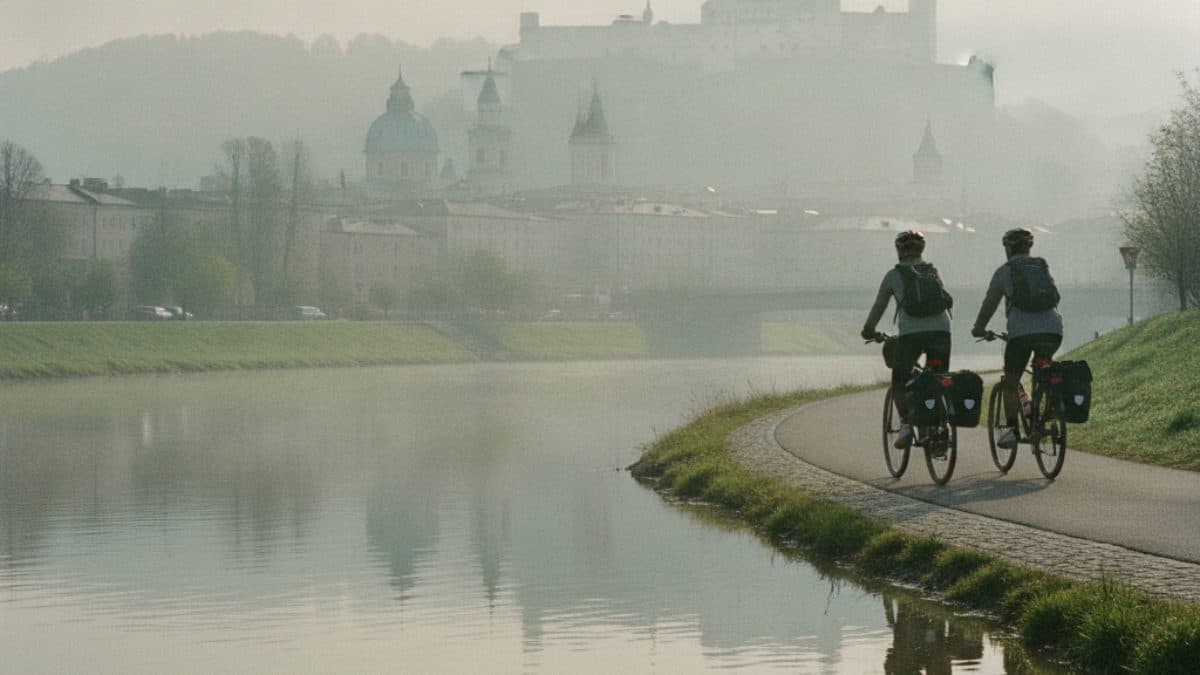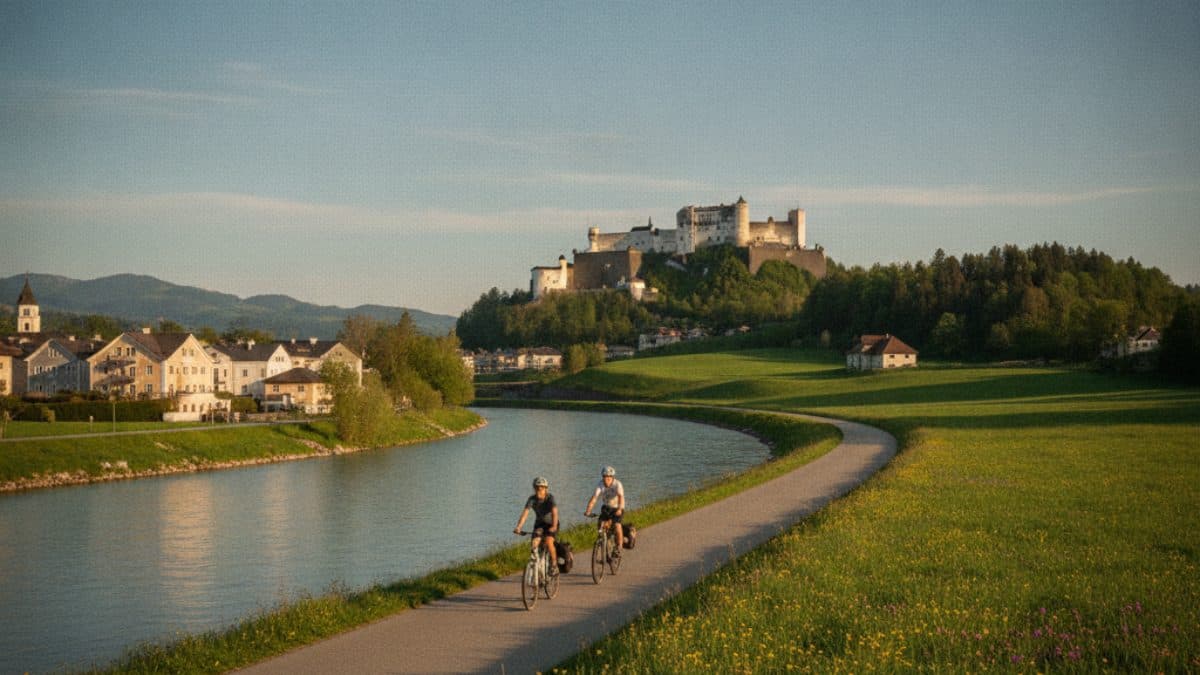
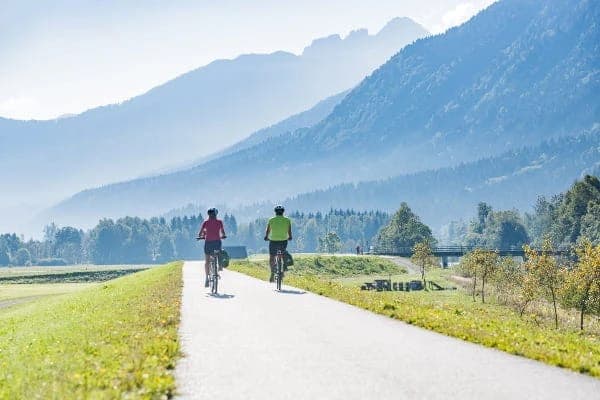
The Alpe Adria cycle path is one of the great achievements of European bike-route engineering — a continuous, mostly-downhill ribbon from Salzburg in the Austrian Alps to the Adriatic Sea at Grado, Italy. Over roughly 410 kilometres it crosses three landscapes that almost no other route stitches together: the high Tauern mountains, the green valleys of Carinthia, and the warm Friulian plain. And it does most of it in a steady descent. If you've ever wanted to ride from the Alps to the sea — and not crawl up a mountain to do it — this is the route.
This guide explains the Alpe Adria as a complete cycling experience and walks you through the seven self-guided versions we offer, from a sportive three-day finish to a slow eleven-day immersion.
Why ride the Alpe Adria
The route is special for three reasons. First, the gradient: the Alpe Adria is the only major Alpine crossing where the heavy lifting is done by train. You ride from Salzburg into the Hohe Tauern range, take a short rail transfer through the Tauern tunnel, and then descend on a beautifully engineered cycle path all the way to the sea. The total cycling elevation gain across the full route is unusually low for a multi-country alpine trip.
Second, the surface: most of the route is on dedicated, paved cycle path — often built on former railway corridors. Surface quality is excellent, signage is multilingual, and the path stays well separated from car traffic for most of the trip.
Third, the landscape arc. In one trip you cross from the baroque streets of Salzburg through Hohe Tauern National Park, glide down past the lakes of Carinthia, cross the Italian border at the Pontebba and Val Canale, ride through the vineyards of Friuli, and finish either at the lagoon beaches of Grado or on the seafront of Trieste. Few routes in Europe deliver such a dense sequence of landscape changes.
The Alpe Adria route in three chapters
Austria — Salzburg to the border. Through Hohe Tauern National Park, with the optional train transfer at the Tauern tunnel, then down past the Möll and Drau valleys to Villach.
Italy — the Val Canale and Friuli. Crossing the border at Pontebba, the path follows an old railway down through the Carnic Alps, past Tarvisio, Venzone and Gemona, into the vineyards of Friuli Venezia Giulia.
The Adriatic — Grado or Trieste. The route finishes either at the lagoon beaches of Grado (the relaxed option) or by extending across the Karst plateau to the Habsburg port city of Trieste.
Salzburg is a cycling hub in its own right. If you would rather stay among the lakes than head south, the Salzburg Lakes Cycling Tour is a seven-day loop through the Salzkammergut; heading east instead, the Salzburg to Vienna UNESCO Cycling Tour links the city with the Wachau and Vienna in eight days.
Choose your Alpe Adria route
The full crossing: Salzburg to Trieste
The complete Alpe Adria — Mozart's city to Habsburg Trieste — is one of the most ambitious one-week cycling holidays in Europe. Nine days, around 420 km, three countries from baroque to Adriatic.
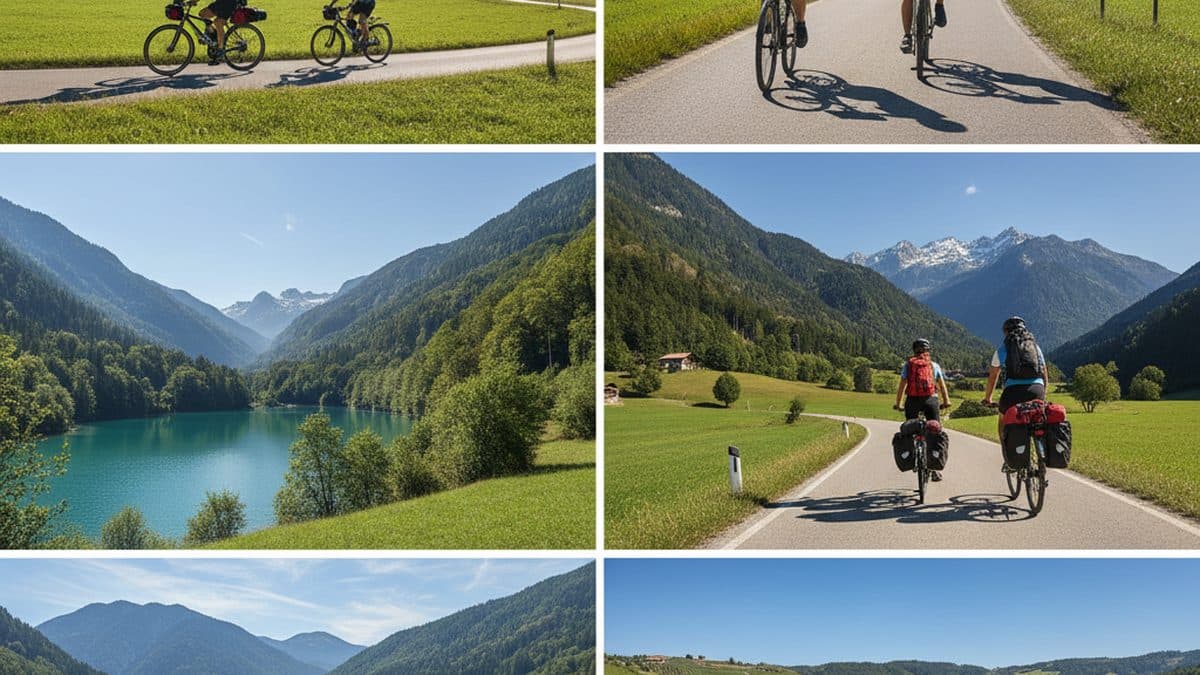

Salzburg to Grado: the classic eight-day version
If you want the alpine crossing without the extra Karst stages to Trieste, the Salzburg-to-Grado route is the headline trip. Eight days, 345 km, finishing on the white-sand lagoon of Grado for a beach day.
The slow version: eleven days
For travellers who'd rather pedal 35-50 km a day and have time for swimming, sightseeing and lunches in the wine villages, the slow eleven-day version of Salzburg-to-Grado is the perfect fit.
Villach to Trieste: skip the high Tauern
For riders who want the Adriatic finish but not the mountain start, beginning in Villach skips the high Tauern section and takes you straight into the river-valley cycling toward the sea.
Villach to Grado: the easy half
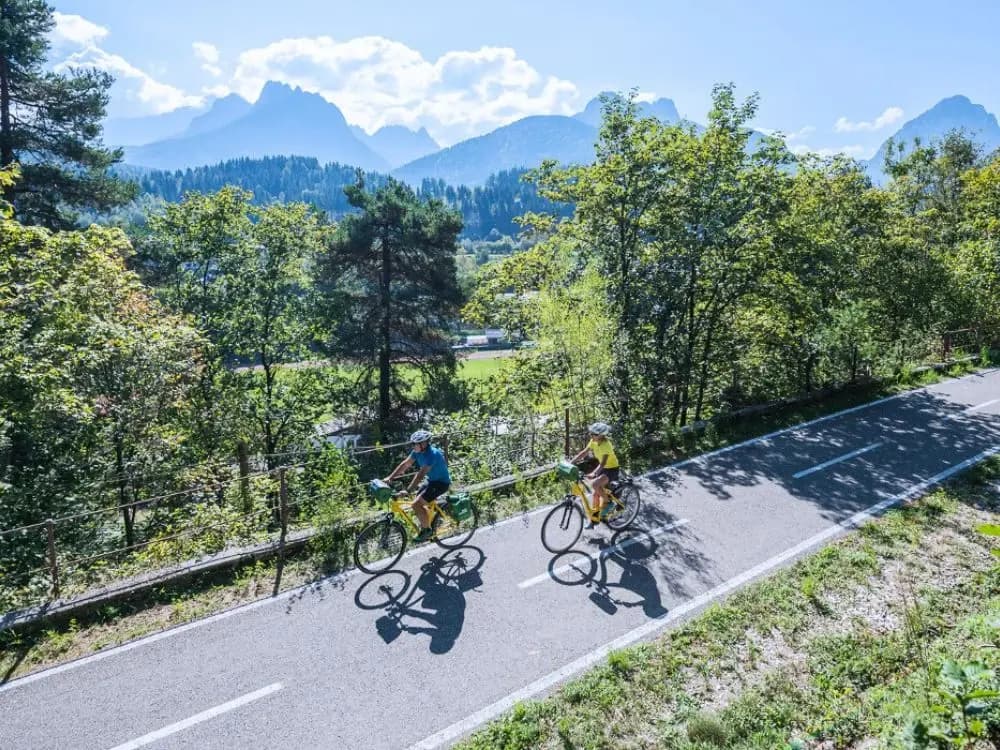
The same idea, finishing at the beaches of Grado instead of in Trieste. Six days, around 210 km, almost entirely descending. The easiest long-distance alpine cycling route in Europe.
The sportive version: three powerful riding days
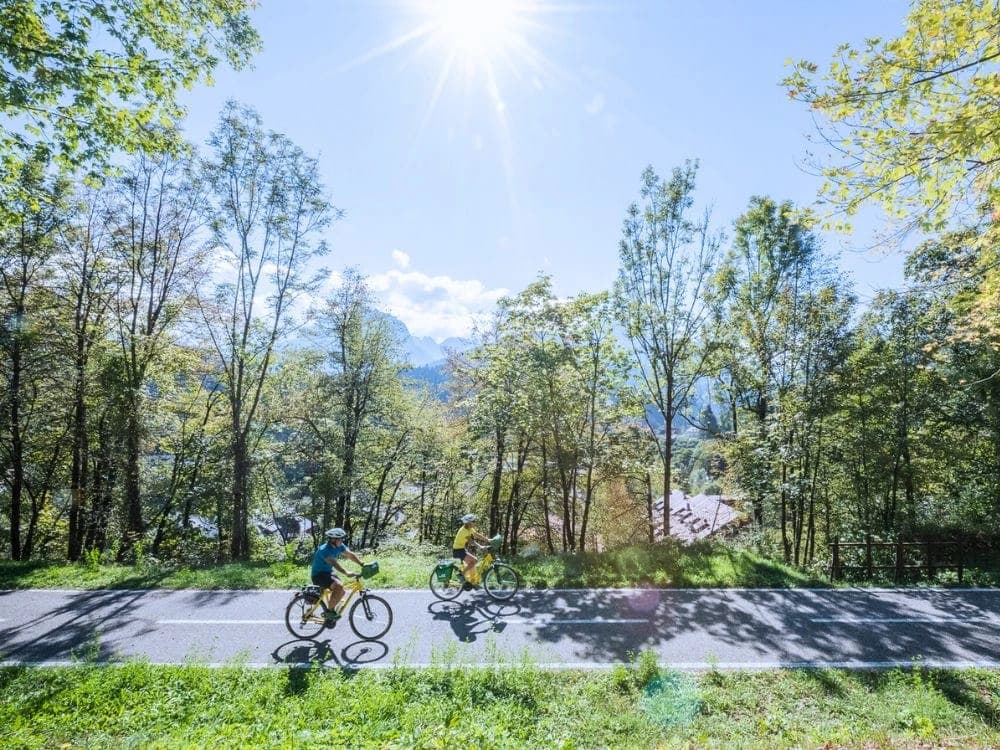
If you have a long weekend rather than a full week — or you want to ride faster and longer per day — the sportive version condenses Villach to Grado into three big days.
The Slovenian detour
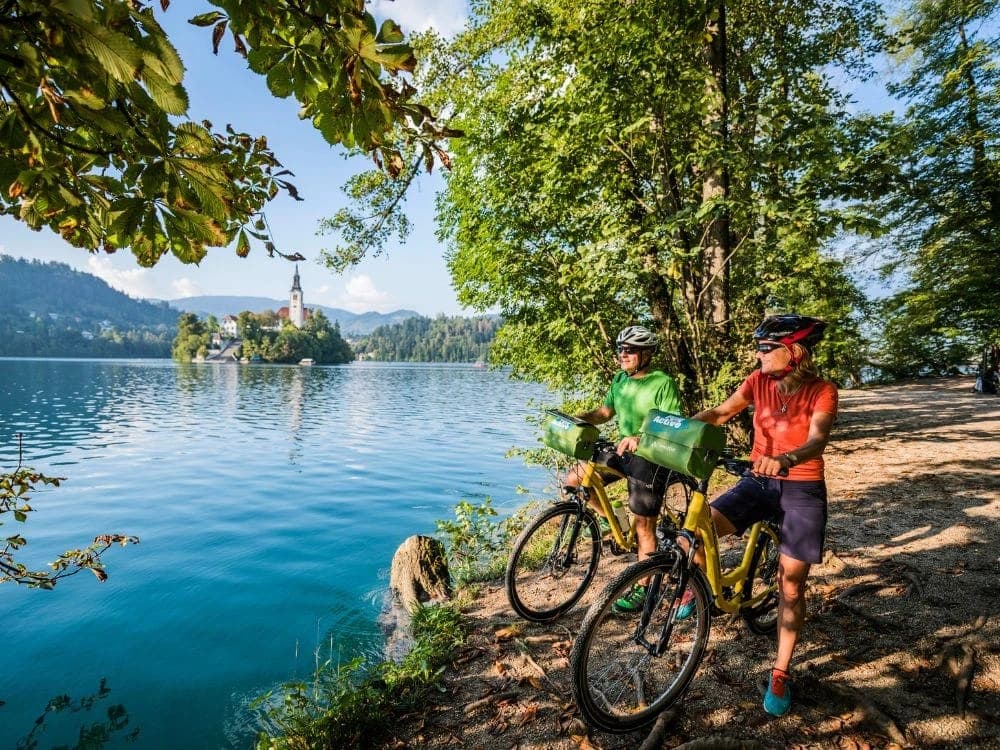
For riders who want to add a third country, the Slovenian variant of the Alpe Adria weaves from Villach through the Julian Alps, past fairy-tale Lake Bled, through the capital Ljubljana, and on to the Postojna caves before finishing in Trieste.
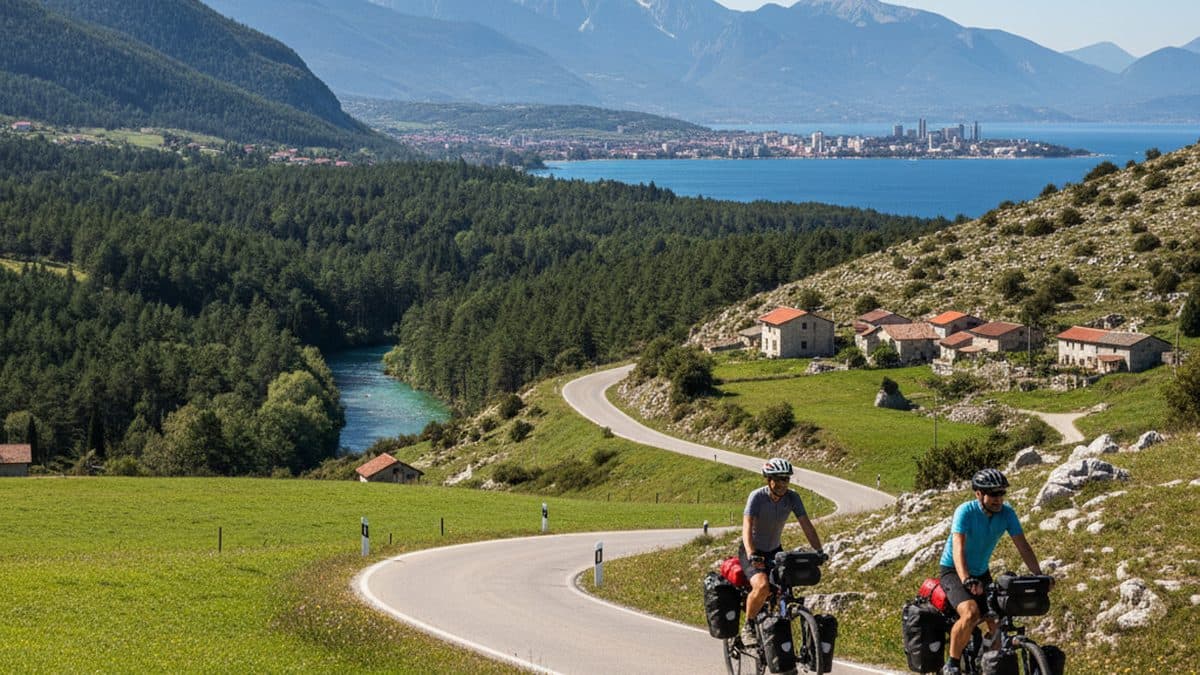
If you'd rather explore the Slovenian heartland at a gentler pace, the Lakes and Cities tour from the Slovene Alps to the capital covers Bled, Bohinj and Ljubljana in a dedicated five-day ride — an ideal standalone break or an extension before or after the Alpe Adria.
When to cycle the Alpe Adria
The window runs from May to October. June, July and September are best: mountain stages snow-free and warm, the Adriatic finish hot enough for swimming, and the Friulian wineries open. May and October are quieter but bring the risk of cold weather on the high Tauern stages — pack layers and check forecasts. August is hot on the coast and busy on the lagoon — book accommodation well in advance.
Practical tips for your Alpe Adria trip
Bike choice. A trekking or hybrid bike is ideal. E-bikes are a great choice if you'd rather not pedal hard on the long flat sections — the descent does most of the climbing work for you, but the wind on the plains can be relentless.
Daily distance. Standard tours cover 45-65 km per day. The sportive version pushes to 80-100 km on three days.
Getting there. Trains from Munich, Frankfurt and Vienna reach Salzburg and Villach easily. From the south, fly into Trieste or Venice and reach the start by train.
Finish-line logistics. All tours include return transfers from Grado or Trieste to the start point or a transit hub. Most riders fly home from Venice or Trieste airports.
Ready for the Alpe Adria?
From a sportive long weekend to a leisurely eleven-day immersion, the Alpe Adria offers more route variants than almost any other long-distance European cycle path. Browse the full cycling tour catalogue or talk to a consultant — we'll match the daily pace, the fitness level, and the dates to your group.
For riders starting further into the Austrian Alps, there is a shorter way to reach the same Adriatic finish. The Alpe Adria from Mallnitz to Grado begins deep in the Hohe Tauern, skipping the Salzburg-to-Mallnitz stages, and covers 313 km over seven days — a compact way to enjoy the same descent through Carinthia, the Val Canale and Friuli to the lagoon beaches of Grado.
More Alps-to-Adriatic routes: spring versions, Bavaria, Bled and Vienna
The Alpe Adria is the best-known way from the mountains to the sea, but it is not the only one. Several more routes in our catalogue end on the same Adriatic coast, starting from Bavaria, the Dolomites or Vienna.
Spring departures without the Tauern tunnel
In spring 2027 the Tauern car-train tunnel is closed for works, so two special versions of the route replace the rail crossing with a shuttle bus from Schwarzach to Spittal an der Drau. Alpe Adria: Salzburg to Trieste without the Tauern Tunnel is a nine-day crossing of around 355 to 385 km, and Alpe Adria: Salzburg to Grado without the Tauern Tunnel covers about 315 km in eight days, with an e-bike recommended for the shorter format. Both are sold only for departures between May and early July 2027.
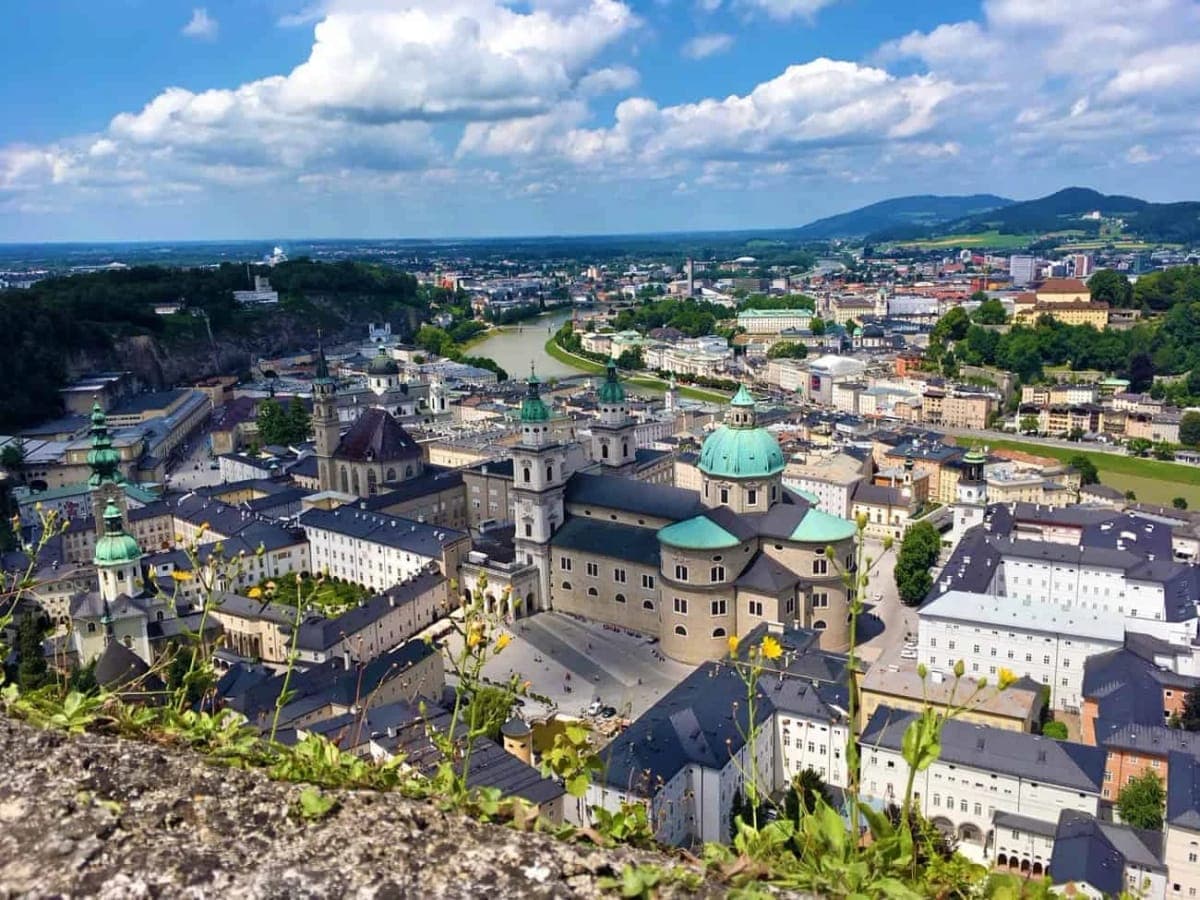
From Bavaria: Lake Chiemsee to Lignano
A nine-day self-guided crossing of around 410 to 420 km from Bernau am Chiemsee in the Bavarian lake district to the beaches of Lignano, on cycle paths and quiet roads, with the hardest sections covered by included transfers.
From the Dolomites: Two Nights at Lake Bled
An eight-day ride through three countries, from Dobbiaco in the eastern Dolomites to Trieste, around 260 to 285 km through the Drava and Gail valleys, across Slovenia and through the Collio wine country, with two nights and a full rest day at Lake Bled.
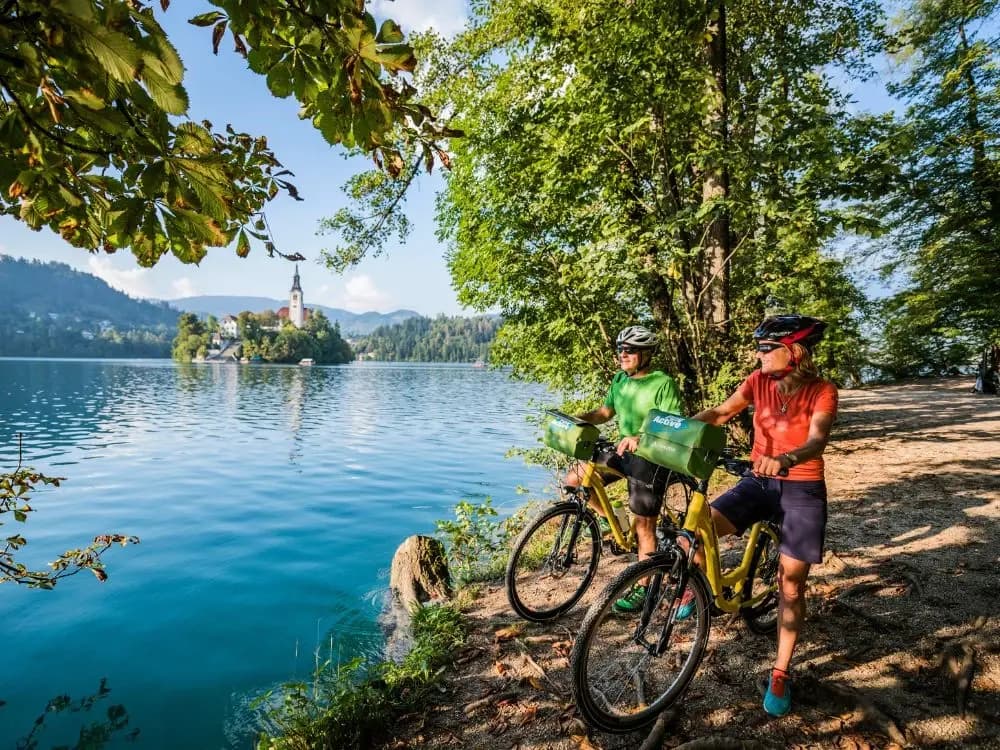
From Vienna: Five Habsburg Cities
The longest approach: ten days and around 540 km from Vienna to Trieste, linking five Habsburg cities across Austria, Slovenia and Italy, past Styrian vineyards and the karst caves to the Adriatic.
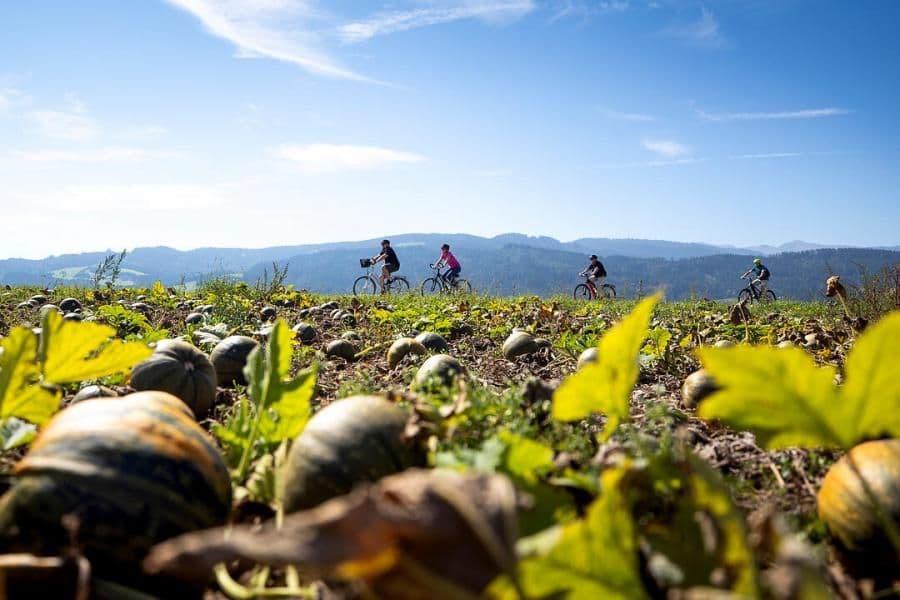
Friuli's Other Cycleways
The Alpe Adria crosses two more Friulian routes that make excellent standalone weeks. The Pedemontana Cycleway rides about 270 km in seven days from Vittorio Veneto, at the foot of the Prealps, through Maniago, Spilimbergo, San Daniele and Cividale to Trieste. The Saint Anthony Cycleway is a seven-day pilgrimage route of around 250 to 260 km from the sanctuary at Gemona del Friuli to the Basilica of Saint Anthony in Padua, through art towns and the Venetian foothills.
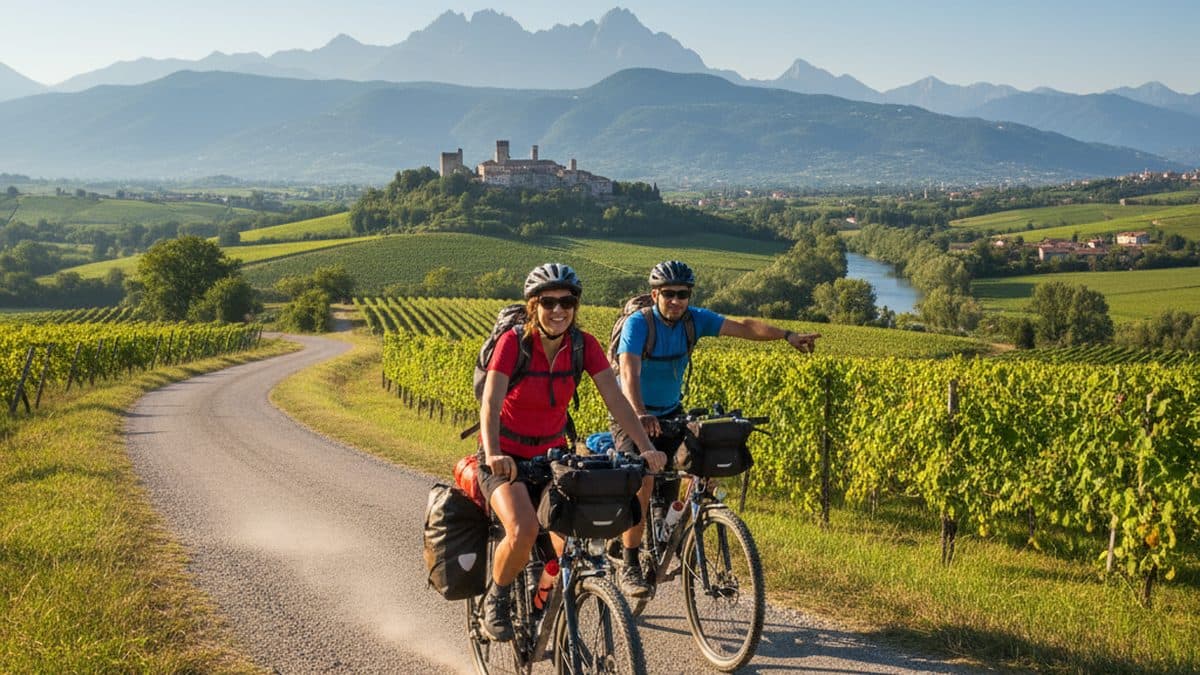
For more Alpine routes that cross borders, see our guide to alpine cycling across Austria, Slovenia and Croatia, and for the classic crossing from Bavaria, Munich to Venice by bike.
Three more ways to Grado: full length, leisure and short & sweet
Three more self-guided versions finish on the Grado lagoon, each with a different starting point and pace.
Alpe Adria Full Length: Salzburg to Grado rides the whole cycle path in nine days, about 405 km along the Salzach, beneath the Tauern by train, through the Drava and Gail valleys of Carinthia, down the car-free Fella valley and across Friuli. Parking in Salzburg and the Tauern crossing are included.
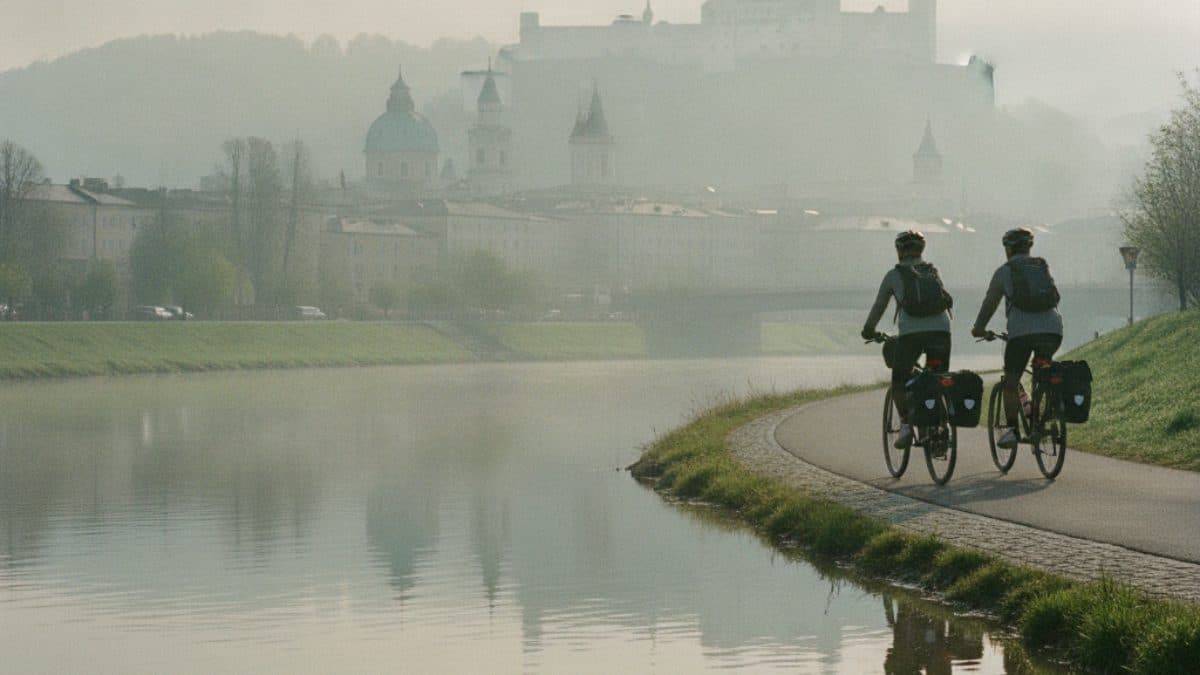
Alpe Adria Leisure Tour: Mallnitz to Grado takes the route at a relaxed pace: about 295 km over eight days from Mallnitz in the Hohe Tauern, with shorter stages, an extra night in Villach, Udine, Palmanova and Roman Aquileia. A welcome dinner and parking in Mallnitz are included.
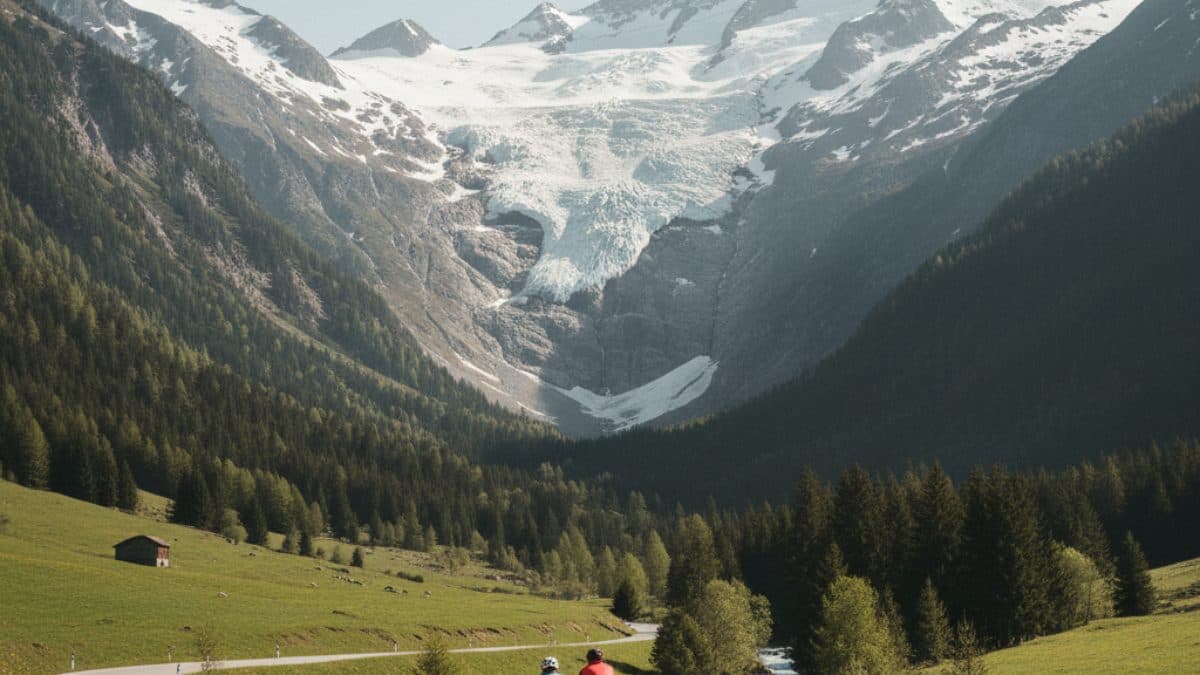
Alpe Adria Short & Sweet: Villach to Grado is the compact version, about 218 km in six days on the old Fella railway line, along the Tagliamento to Udine, and through Palmanova and Aquileia to the lagoon.
The Alpe Adria with Slovenia: from Lake Bled, or to it
Two more self-guided tours tie the Alpe Adria to Slovenia's Julian Alps, one heading for the sea and one heading for the lake.
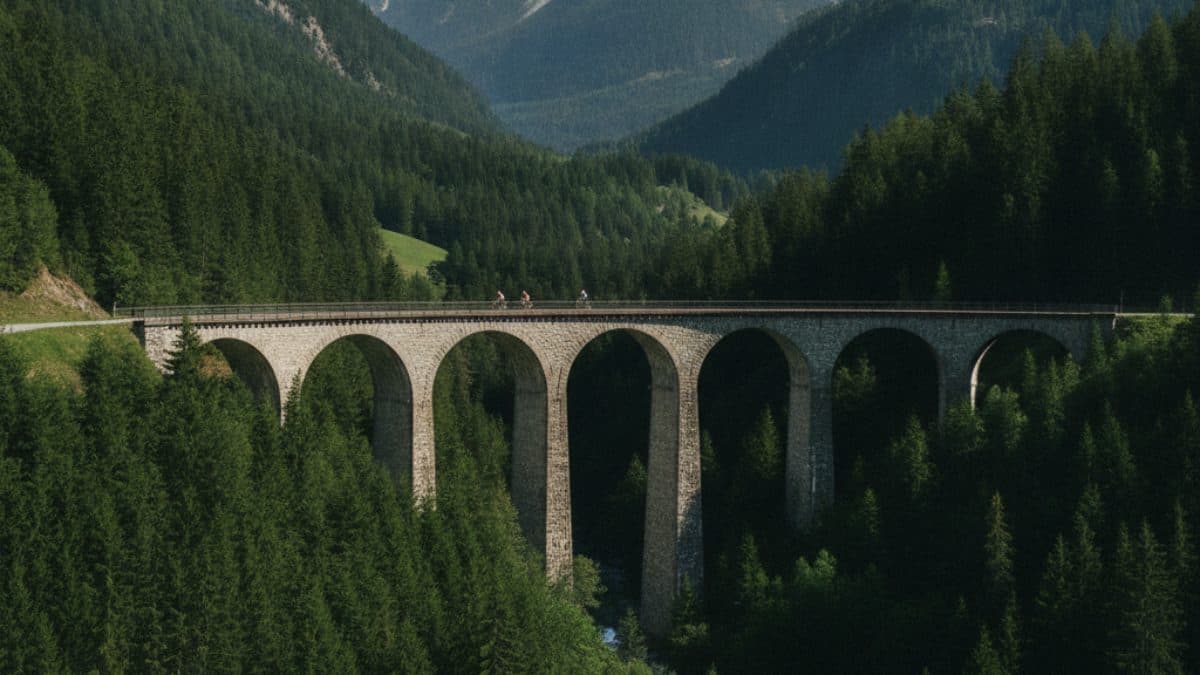
The Alpe Adria Cycling Tour starts at Lake Bled instead of in Austria and rides about 216 km in six days to the Grado lagoon: from the Julian Alps into Friuli on the old railway viaducts and through its cool tunnels, then past the vineyards and Roman Aquileia to the sea. It is the easiest way to add a third country to the descent.
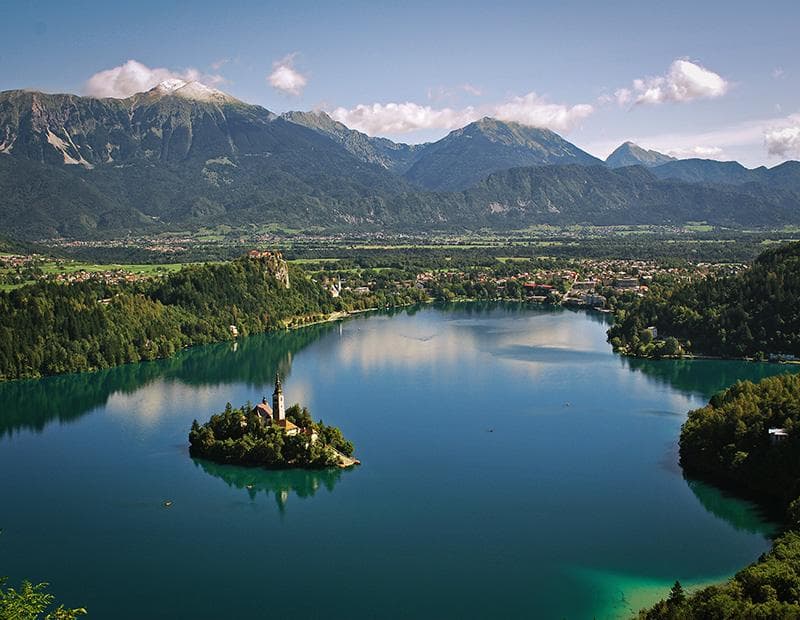
The Salzburg to Bled Cycling Tour starts where the classic route does, in Salzburg, but turns towards Slovenia: eight days and around 300 km across the Austrian Alps and a corner of Italy, following alpine rivers past castles and gorges, to finish beside Lake Bled.
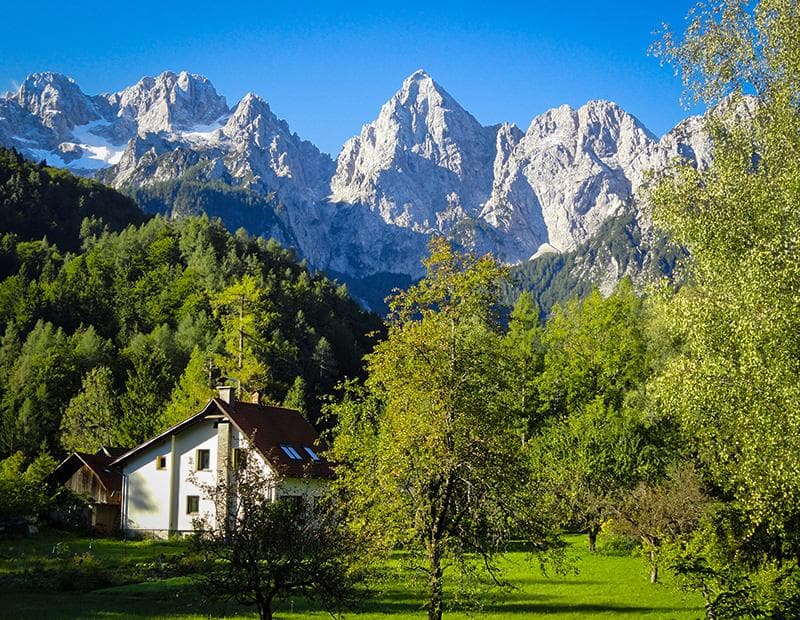
For every other route around Bled, the Soča Valley and the Slovenian coast, read our guide to cycling in Slovenia.