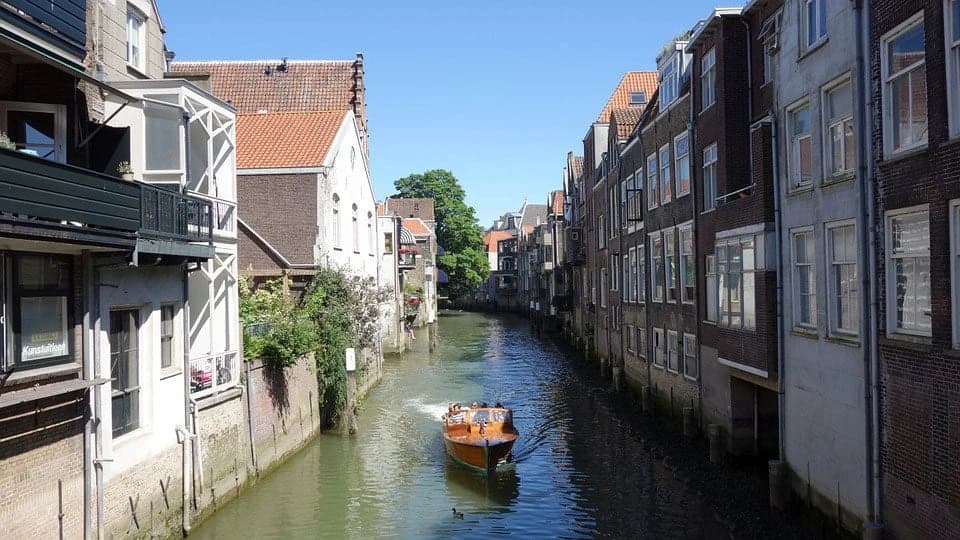
The Netherlands is the most bike-friendly country in Europe, with over 35,000 km of dedicated cycle paths connecting every city, village, and nature reserve. It is also, despite its reputation for flat monotony, a surprisingly photogenic country. Beyond the canals of Amsterdam, the Dutch landscape offers waterways reflecting centuries-old architecture, vast coastal dunes, tulip fields that stretch to the horizon, and wetlands teeming with birdlife. Here are five destinations that reward both the camera and the pedals.
Dordrecht: The Oldest City on Water
Dordrecht is one of the oldest cities in the Netherlands, entirely surrounded by water where three rivers meet. The old town is a web of narrow streets, medieval churches, and merchant houses with ornate facades reflecting in the harbour. For photographers, the port area in late afternoon light is exceptional — the golden hour turns the waterfront into a painting.
The cycling routes around Dordrecht follow the riverbanks through polder landscapes where windmills still pump water, herons stand in ditches, and the horizon stretches endlessly. The Biesbosch national park (see below) is just a short ride east, making Dordrecht an ideal base for a multi-day cycling trip through South Holland.
Zeeland: Beaches, Dunes and Storm Barriers
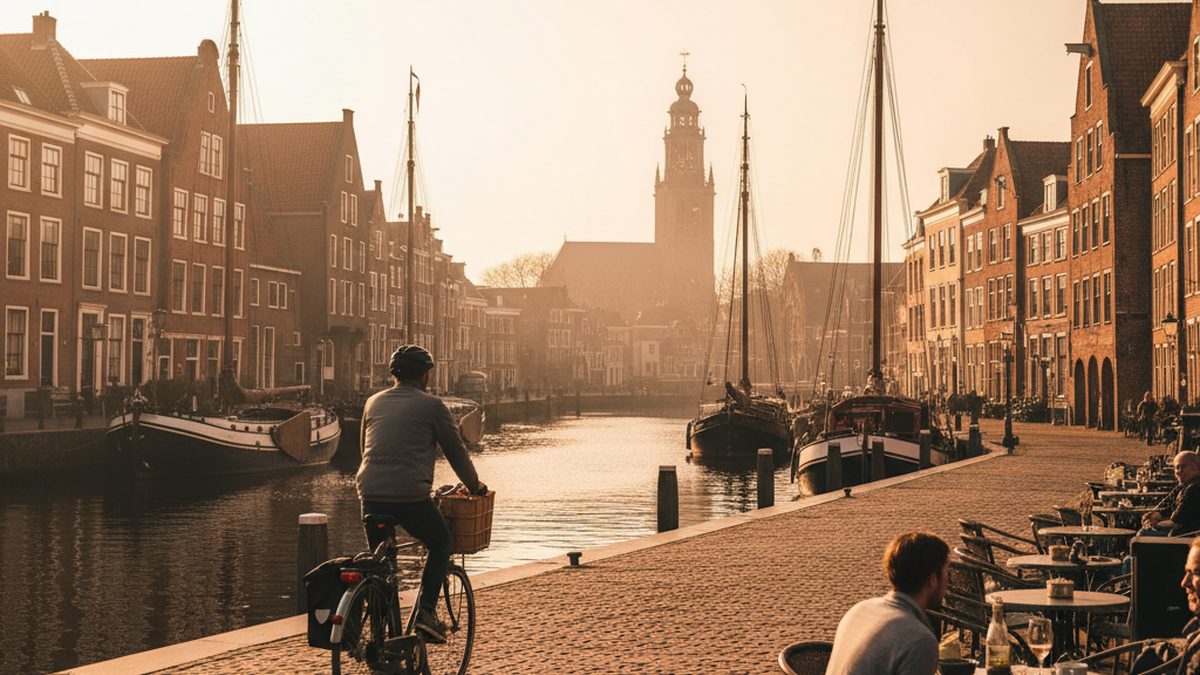
Zeeland is the southwestern province where land and sea merge into a landscape of extraordinary drama. Formed from former islands now connected by dams and bridges, the region offers wide sandy beaches backed by high dunes, tidal mudflats alive with wading birds, and the monumental Delta Works — one of the great engineering achievements of the 20th century.
The cycling in Zeeland is flat and wind-exposed (pack a windbreaker), but the reward is a constantly changing coastal landscape with almost no traffic. The cycle paths follow the dune tops, offering panoramic views of the North Sea on one side and the polders on the other. For photography, the combination of big skies, dramatic clouds, and the play of light on water makes every stop a potential composition.
If you would rather ride this coast than day-trip it, the Historic Towns and coastal Holland sail-and-bike week sails from Antwerp aboard the three-master Elizabeth and strings together the Zeeland dunes, the Delta Works and the fortified towns of the delta — 224 km of flat riding between moorings.
De Biesbosch National Park: A Freshwater Wilderness
De Biesbosch is Europe's largest freshwater tidal wetland — 8,000 hectares of willow forests, reed beds, and a labyrinth of creeks and waterways. It feels wild and remote despite being sandwiched between Dordrecht and Breda. Beavers were reintroduced here in the 1980s and have thrived, reshaping the landscape in visible ways.
Cycling paths run along the edges of the park, with boardwalks and observation hides extending into the wetland for birdwatching. Kingfishers, marsh harriers, and spoonbills are regular sights. Bring a telephoto lens if you have one — the wildlife photography opportunities are genuinely excellent for such an accessible location.
Keukenhof: Tulips Beyond Imagination
Keukenhof needs little introduction. Each spring (mid-March to mid-May), these 32 hectares near Lisse explode with seven million tulips, daffodils, and hyacinths in an almost absurd display of colour. The gardens are world-famous, and the photographic opportunities are obvious — but the real treat for cyclists is the surrounding Bollenstreek (bulb region).
The cycle paths through the bulb fields between Lisse, Hillegom, and Noordwijkerhout pass through kilometre after kilometre of striped flower fields in red, yellow, pink, and purple. Early morning rides (before 8am) offer the best light and the fewest tourists. This is the iconic Dutch landscape that postcards are made of, and it is best experienced from a bicycle saddle at 15 km/h.
De Blauwe Kamer: Wild Horses and Rhine Meadows
De Blauwe Kamer (the Blue Room) is a rewilded floodplain along the Rhine near Wageningen, where the river has been given space to reclaim its natural course. The result is a wild, open landscape of meadows, shallow pools, and sandy banks where Konik horses and Galloway cattle roam freely.
The cycling through this area is flat and easy, following the riverbank on well-maintained paths. In spring, the meadows fill with wildflowers; in winter, flocks of geese descend by the thousands. The Konik horses — sturdy, semi-wild ponies of Polish origin — are the photographic highlight, especially when framed against the wide river and big Dutch skies.
If the Netherlands inspires you to plan a longer cycling trip, browse our full tour collection for routes across Europe, explore our self-guided cycling tours in the Netherlands, or learn how self-guided bike tours work.
Frequently Asked Questions
Is the Netherlands good for cycling holidays?
The Netherlands is arguably the best country in the world for cycling. It has 35,000+ km of dedicated cycle paths, flat terrain, excellent signage (the numbered junction system), and a cycling culture that makes riders feel welcome everywhere. Distances between towns are short, and the infrastructure is flawless.
What is the best time to cycle in the Netherlands?
April to June is ideal. April and May offer tulip season and mild temperatures (12–18°C). Summer (July–August) is warmer but busier. Autumn is quiet and atmospheric. Winter cycling is possible but cold and windy.
Do I need a special bike for cycling in the Netherlands?
No. The terrain is entirely flat, so any comfortable bike works. Dutch rental bikes ("fietsen") are heavy, upright city bikes designed for comfort rather than speed — perfect for sightseeing. E-bikes are widely available if you want to cover longer distances.
Can I cycle to these places from Amsterdam?
Keukenhof and De Blauwe Kamer are within day-trip cycling distance from Amsterdam (40–60 km each way). Dordrecht, Zeeland, and De Biesbosch are better reached by train (bikes welcome on Dutch trains outside rush hour) and then explored by bike locally.
What camera gear should I bring on a cycling trip?
A mirrorless camera or a high-quality smartphone covers most situations. For wildlife in De Biesbosch, a telephoto lens (200mm+) is useful. For landscapes, a wide-angle lens captures the big Dutch skies. Keep gear in a padded handlebar bag for easy access while riding.
See three of these places in one itinerary. The Holland Southern Tour — explore Dordrecht, Kinderdijk and Zaanse Schans by bike and boat covers Kinderdijk's UNESCO windmills, the open-air museum of Zaanse Schans, and the South Holland canal-side cities in a single 8-day Saturday-to-Saturday week aboard a traditional Dutch river barge. Daily rides are 20-58 km on flat traffic-free paths.
Ride through Dordrecht and Kinderdijk on one itinerary. The Best of Holland and Belgium bike and barge tour from Amsterdam to Bruges passes through both Dordrecht and the Kinderdijk UNESCO windmills as part of an 8-day cruise along the waterways of the Netherlands and Belgium. You cycle 20–56 km per day on flat terrain, with the barge carrying you and your luggage between stages.
Discover Holland's UNESCO treasures by bike and boat. The Discover Holland's UNESCO Treasures deluxe guided tour rides the Zaanse Schans windmills and Amsterdam's canals alongside the UNESCO World Heritage sites of North Holland, Friesland and the Wadden Sea.
Sail the IJsselmeer and ride the old Zuiderzee towns. The Sail & Bike IJsselmeer & National Parks tour leaves Amsterdam aboard a traditional sailing ship and crosses the calm inland sea over eight days, with flat rides through the canal village of Giethoorn, two national parks and the harbour towns of the former Zuiderzee. The 217 km are spread over short daily stages on signposted, traffic-free paths.
Sail the Wadden Sea and cycle its islands. The Sail & Bike Wadden Sea tour pairs a traditional Dutch sailing ship with flat, well-signposted rides on the North Sea islands of Texel and Terschelling. Cross the UNESCO-listed Wadden Sea, explore the old harbour towns of Friesland, and watch for seals on the sandbanks across an 8-day voyage from Enkhuizen.