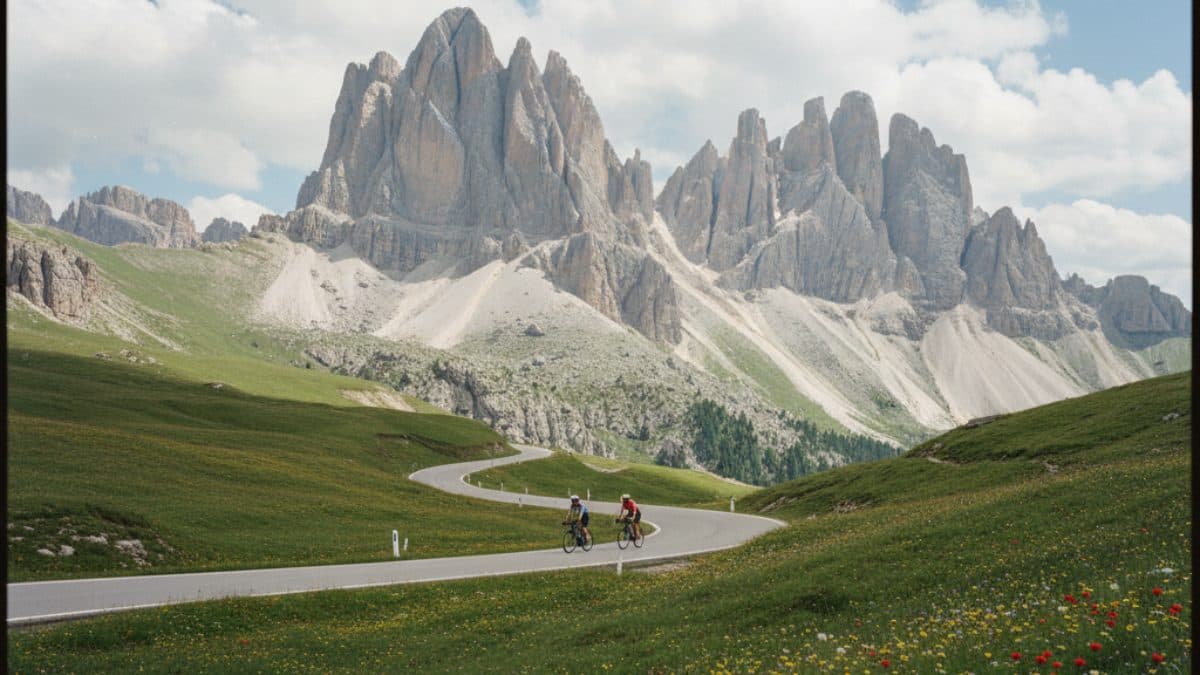
The Dolomites are the most spectacular mountain range in the Alps for one simple reason: the rock itself. The pale, vertical, almost-coral cliffs of these UNESCO-listed peaks rise out of green alpine valleys like a different geological era — and they do, in fact, belong to one. Add the road bike heritage of the Giro d'Italia, world-class gravel routes on old military roads, and serious mountain bike terrain in three natural parks, and the Dolomites are quietly the most complete cycling destination in Italy.
This guide covers cycling the Dolomites on every kind of bike — road, gravel and mountain — and explains how to ride them on a holiday-pace itinerary instead of a self-suffering camp. We'll show you the four tours we offer and which one fits your bike and your legs.
Why cycle the Dolomites
Two things make the Dolomites special. First, the scenery: Tre Cime di Lavaredo, the Marmolada glacier, the Sella massif, the Catinaccio range. You're cycling through one of the most photographed landscapes in Europe. Second, the road and trail network: alpine valleys are well-paved and well-signed, the high passes are paved and famous (Pordoi, Sella, Gardena, Falzarego), and an extensive network of military service roads from World War I has been converted into some of the best gravel and MTB riding on the continent.
Add UNESCO protection (since 2009), excellent food (a fusion of Italian and Austrian-Tyrolean cuisine), and a dense network of family-run rifugi, and you have a region where every kind of cyclist can plan a holiday.
The Dolomites: a primer
The Dolomites span three Italian regions — Trentino-Alto Adige, Veneto and Friuli-Venezia Giulia — and are bordered by Austria to the north. The signature peaks rise from valley floors at 600-1,200 m to summits above 3,000 m. The highest road passes — Pordoi, Stelvio (technically Eastern Alps but adjacent), Giau, Fedaia — sit between 2,000 and 2,800 m and feature in nearly every grand tour of cycling.
From the saddle, the Dolomites can be either a brutally demanding road bike playground or a long, gentle descent on a former railway path — depending on which route you choose. Our tours cover both ends of that spectrum.
Choose your Dolomites bike trip
Road bike: the grand tour loop
If you ride road, the Grand Tour of the Dolomites is the headline trip. Eight days, 530 km, looping through the central massif and ticking off most of the famous passes that the Giro d'Italia rides every spring. Cortina d'Ampezzo, Tre Cime di Lavaredo, the Valsugana descent, Trento, and back via Bolzano and Bressanone. Serious climbing — over 8,000 m of elevation across the week — but you ride at your pace, and luggage transfer between hotels means you're not carrying anything heavy.

Road bike: Dolomites to Venice
For riders who want the spectacle of the high mountains and a finish on the lagoon, the Dolomites-to-Venice route is unbeatable. Start in the Alta Pusteria, cross the legendary passes, conquer Monte Grappa, descend through the Prosecco hills, and roll into Venice eight days later. 570 km, similar climbing to the Grand Tour, but with the magical Venetian payoff.
Gravel: Dolomites to Jesolo on mixed terrain
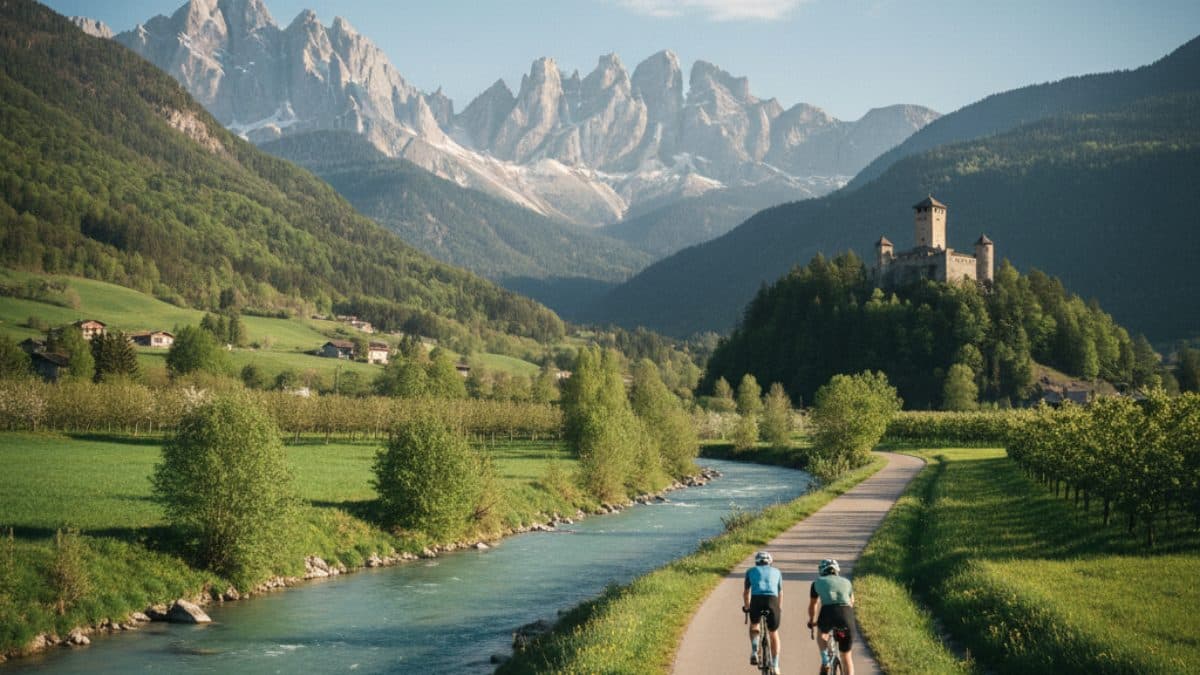
If you'd rather ride mixed surfaces — a gravel bike or sturdy MTB — the route from Dobbiaco to the Adriatic Sea at Jesolo uses some of the most beautiful gravel paths in the Alps. The old Calalzo-Dobbiaco railway, the Lunga Via delle Dolomiti, sections through Prosecco country, and a final descent to the Venetian lagoon beaches. 270 km in six days, much less climbing than the road routes, and arguably the most scenic single bike route in the region.
Mountain bike: the three natural parks
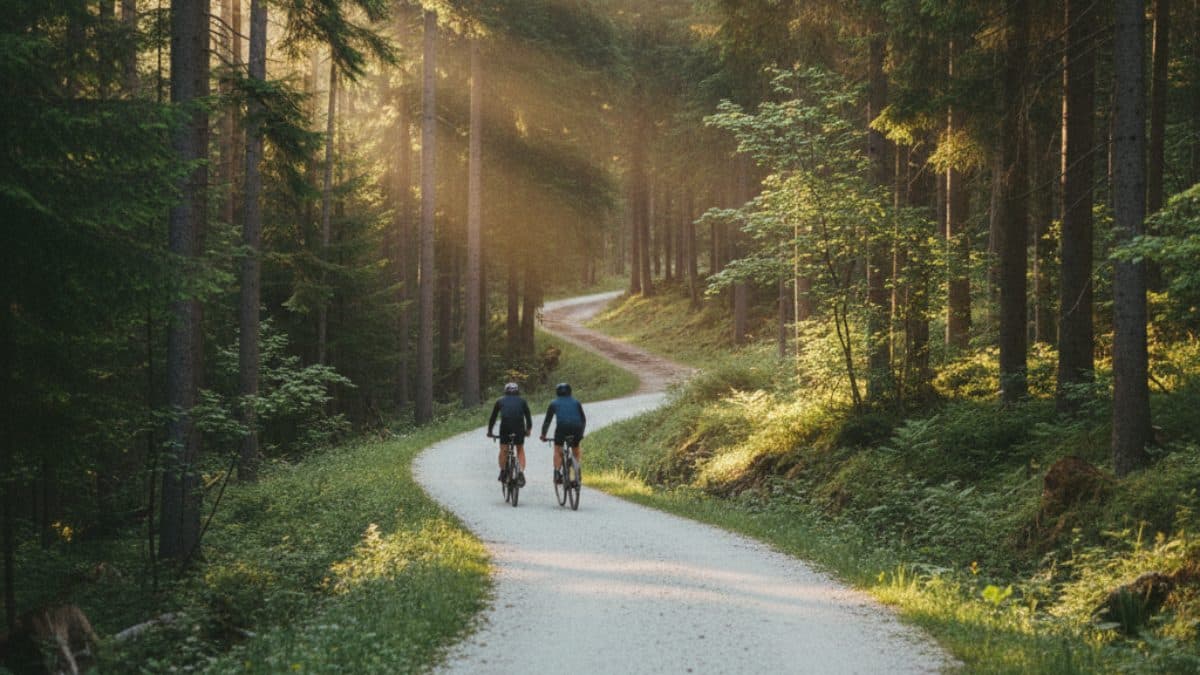
For MTB riders, the Dolomites Natural Parks MTB tour is a week of riding through three UNESCO nature parks on old military service roads. From Villabassa to Cortina and back, via Plan de Corones, the Cinque Torri rifugio, and the high alpine meadows of Prato Piazza. Demanding climbs, technical descents, and the kind of scenery that justifies every metre of altitude.
Mountain bike: RODA, ride on the Dolomites with lifts
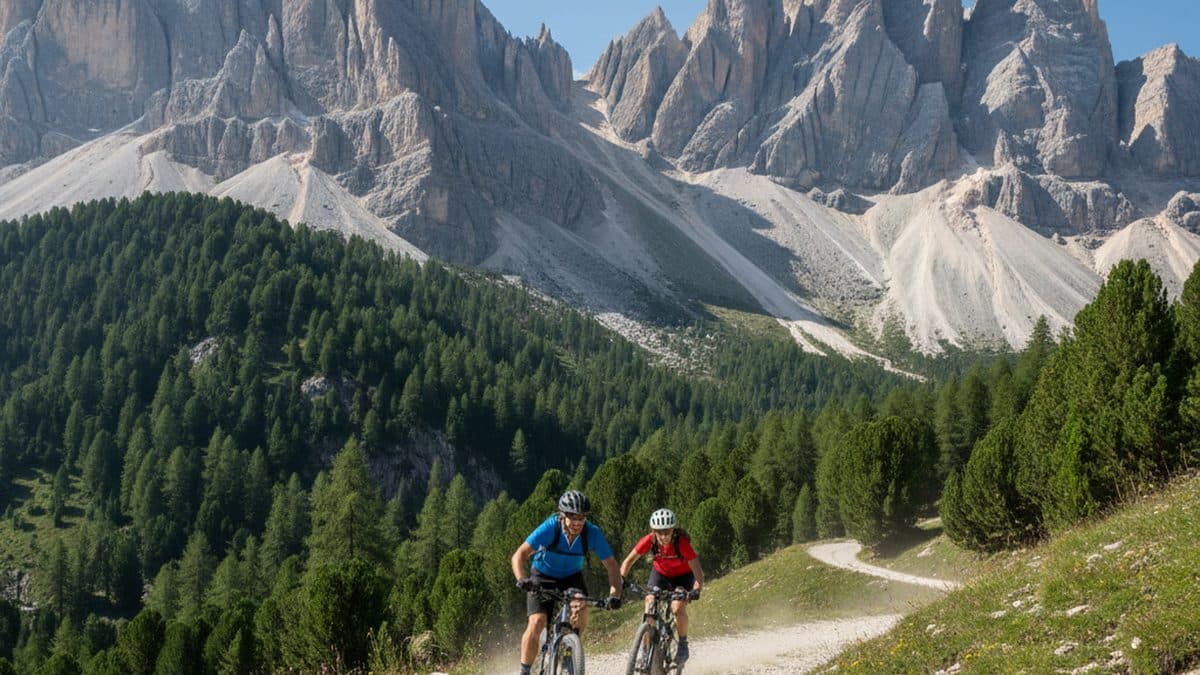
For a bigger mountain bike week, RODA: Ride on the Dolomites Alps is an eight-day self-guided loop from Dobbiaco in which every stage begins with a cable car. You ride up, leave the valleys behind and start the day where the views are, covering around 330 to 425 km of singletrack and panoramic routes across the Catinaccio, the Sciliar, the Sella, the Puez-Odle and the Fanes-Sennes-Braies plateaux. All lift tickets are included, and the tour is recommended for riders in good physical condition; e-MTBs are available.
When to cycle the Dolomites
The window is short and unforgiving. The high passes typically open in late May or early June and close in early October. The sweet spot is mid-June to mid-September: warm valley temperatures, snow-free passes, and the alpine flora at its peak. Late September and early October bring the larches turning gold — the most photographed week of the year — but expect cooler mornings and the risk of early snow on the highest passes.
July and August are warm in the valleys (often 28°C+) and cool at altitude (10-15°C on passes). Sudden afternoon thunderstorms are common — start early and watch the sky.
Practical tips for your Dolomites bike trip
Bike choice. Road for the grand tours, gravel for mixed routes, MTB for the natural parks. E-MTBs are increasingly common and worth considering — they make a multi-day trip in the high mountains achievable for riders who couldn't otherwise do it.
Daily distance. Road tours typically cover 60-90 km per day with 1,500-2,500 m of climbing. Gravel and MTB tours cover less ground but the elevation profile is similar.
Getting there. Train to Bolzano, Bressanone, or Cortina (via Venice or Calalzo). Innsbruck airport is closest from the north; Venice and Verona from the south.
Hotels. Alpine hotels and family-run rifugi are the norm. Quality is high, food is excellent, and the regional cuisine — speck, canederli, polenta, strudel — is reason enough to ride here.
Ready for the Dolomites?
Road, gravel or mountain bike — the Dolomites reward serious riders and reasonable holiday cyclists alike, as long as you accept that the mountains are the main character of the trip. Browse our Italian cycling tours or speak with a consultant about which itinerary matches your fitness, bike and dates.
Heading on from the Dolomites to the sea? Our guide to cycling the Alpe Adria includes a route from Dobbiaco to Trieste with two nights at Lake Bled.