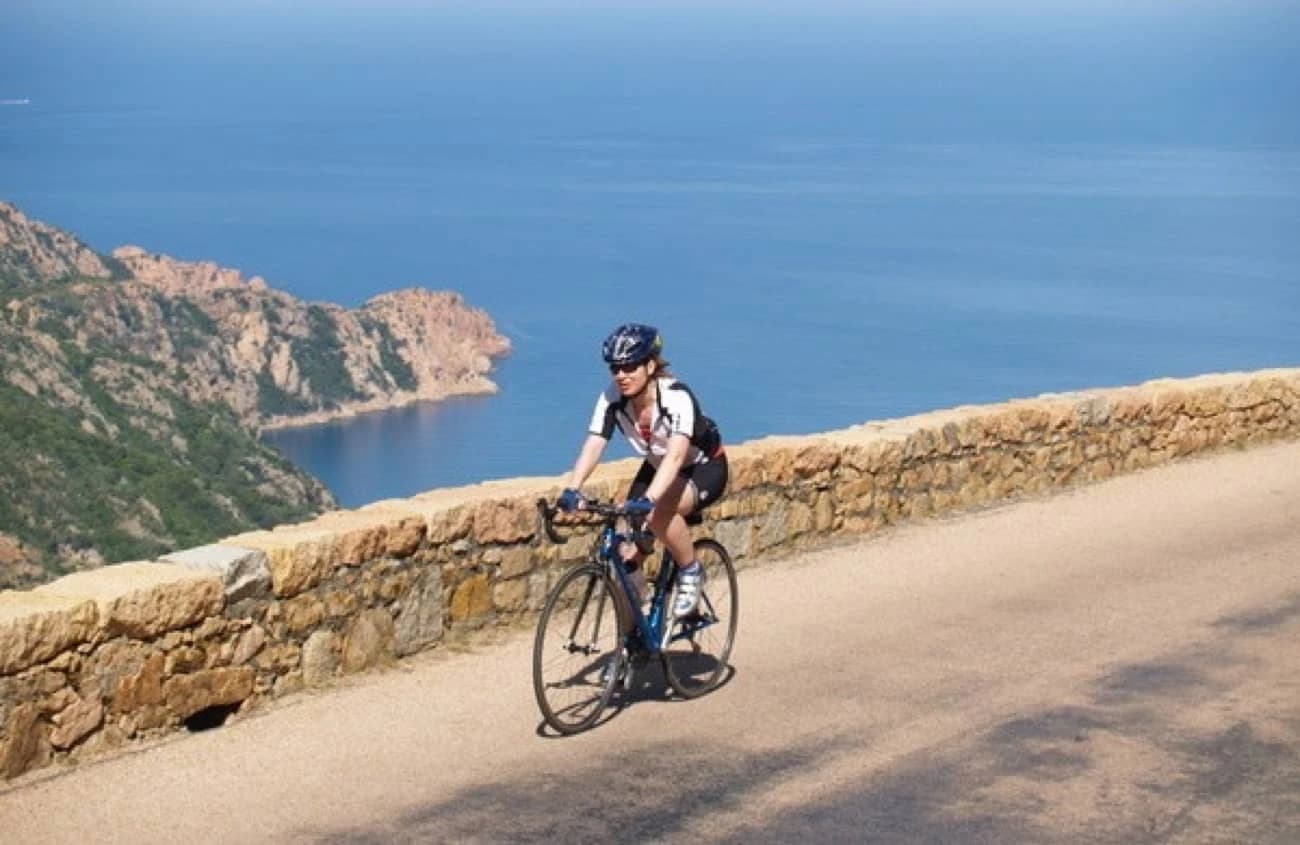
Corsica is the most dramatic cycling destination in France, and one of the most spectacular in the Mediterranean. The "Island of Beauty" packs mountain passes that rival the Alps, a coastline of red-granite cliffs and turquoise bays, ancient forests, and hilltop villages into a compact island you can traverse in a week. At its heart is the legendary GT20 — the Grande Traversée à Vélo — but there is far more to ride here, from gentle Cap Corse loops to brutal road-bike challenges. This guide explains how cycling Corsica works, walks through every self-guided tour we offer on the island, and helps you choose the right route for your legs and your time.
Cycling Corsica: The Lay of the Land
Corsica is mountainous — there is no way around it. A granite spine runs the length of the island, topping out above 2,700 metres, and the roads rarely stay flat for long. That is exactly what makes it so rewarding: every climb is repaid with a descent to a hidden bay, a perched village, or a sweep of forested ridgeline. The riding ranges from accessible coastal loops with one pass a day to sustained mountain traverses with thousands of metres of climbing.
Most of our Corsica tours are suitable for trekking bikes, e-bikes, and road bikes alike, while the most demanding traverses are designed specifically for road cyclists. Bastia, Calvi, and Ajaccio have airports and ferry links to the mainland, and the tours are built so your luggage is transferred between hotels each day — leaving you free to focus on the road and the views.
The reward for the climbing is an island that feels like several countries in one. You ride past Genoese watchtowers and lobster ports on the coast, through the scented maquis scrubland, beneath ancient Lariccio pines in the high forests, and into stone villages where Corsican charcuterie, brocciu cheese, and chestnut specialities are still made the traditional way. Few cycling destinations pack this much variety into so small a space.
The GT20: Corsica's Grande Traversée à Vélo
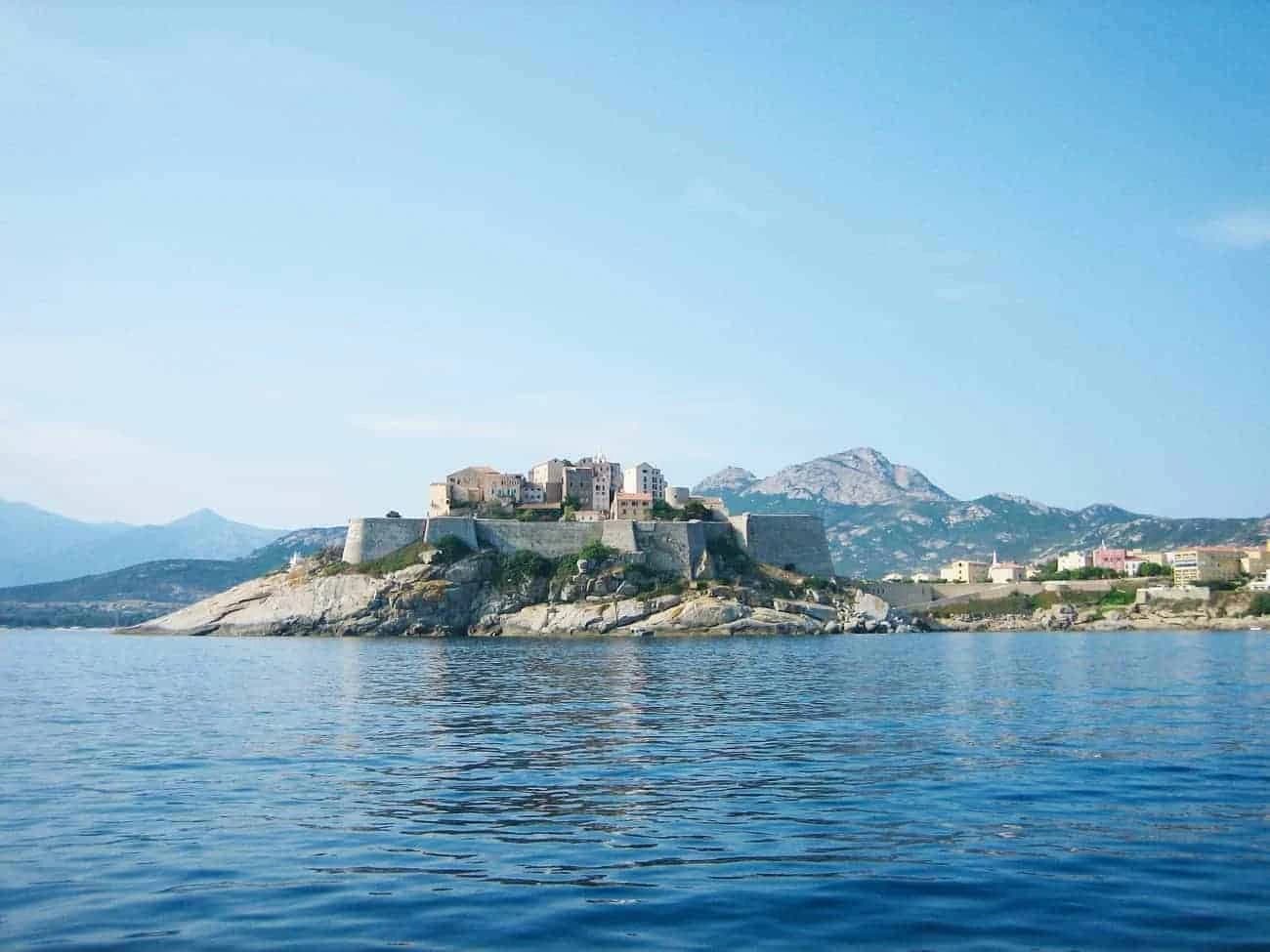
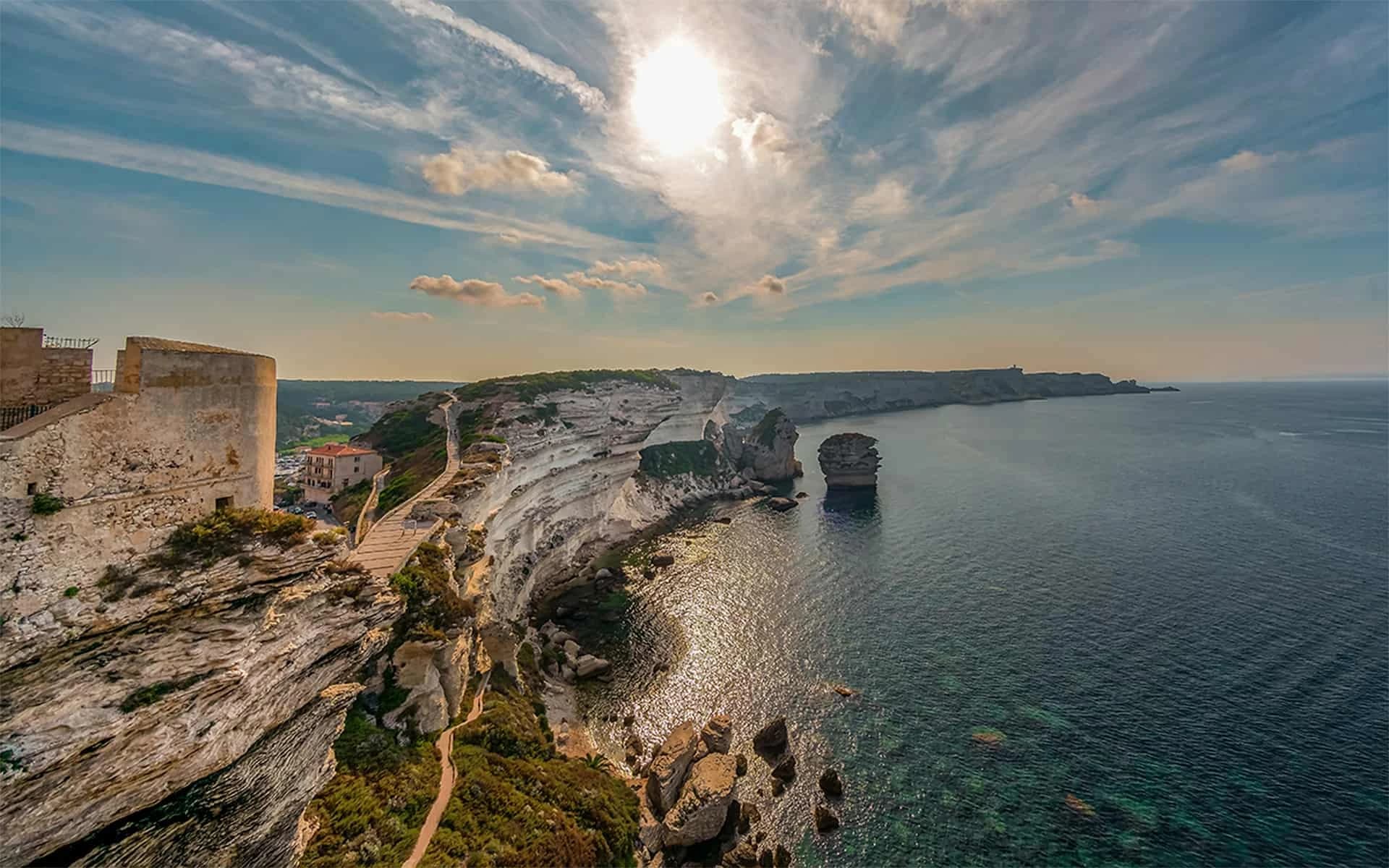
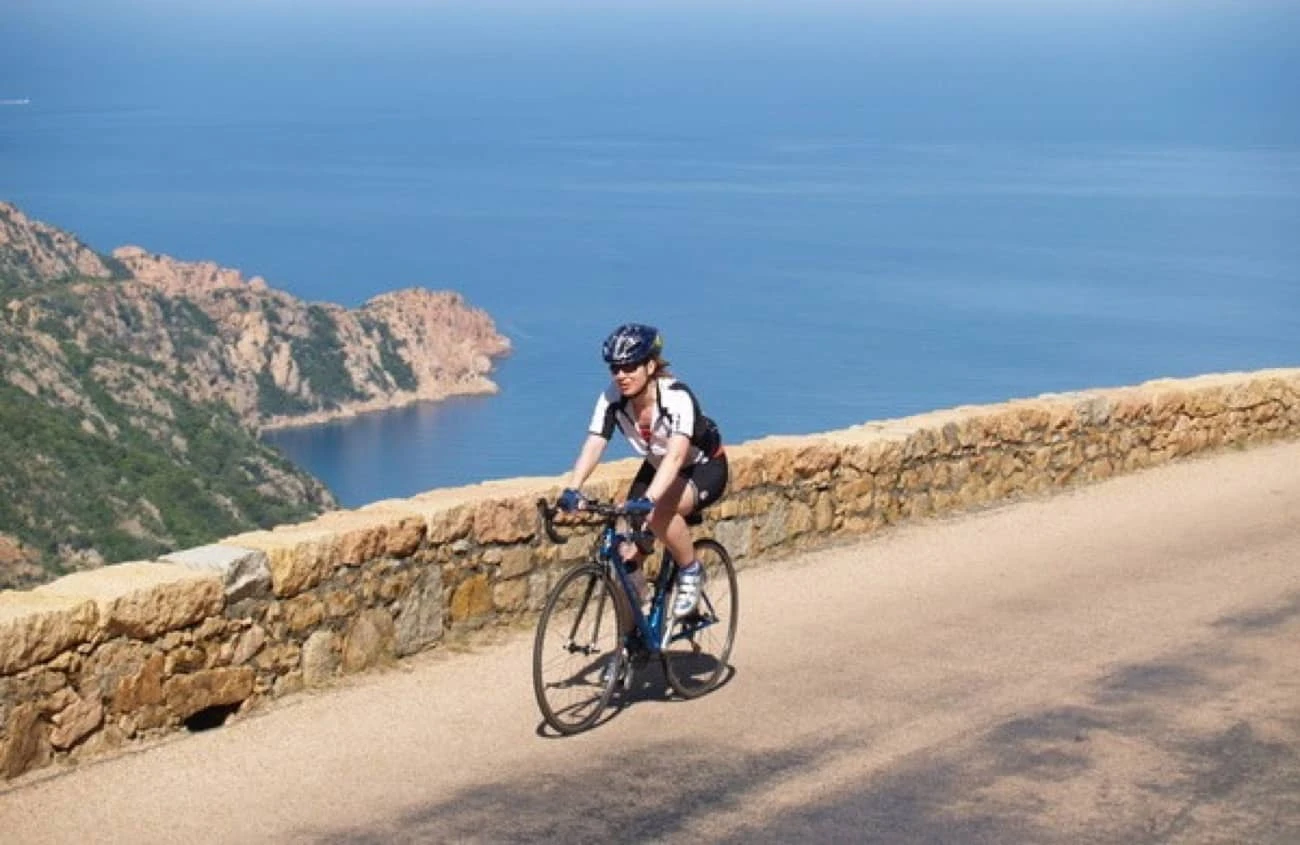
The GT20 is Corsica's signature ride — a grand traverse of the entire island from north to south, along mountain passes, coastal roads, and timeless villages. We offer it in three self-contained chapters so you can ride one or link them all. The northern chapter, the seven-day GT20 from Bastia to Calvi, crosses the wild Cap Corse peninsula, the Désert des Agriates, and the hilltop villages of the Balagne, ending at Calvi's Genoese citadel. The central chapter, the seven-day GT20 from Calvi to Corte, dives into the island's interior — the Calanques de Piana, the Aïtone forest, and the Vergio Pass, the highest point on the route — to the mountain capital of Corte. The southern chapter, the six-day GT20 from Corte to Bonifacio, climbs through the Alta Rocca and beneath the Bavella Needles before the white cliffs of Bonifacio, with nearly 5,000 metres of climbing for strong riders.
For experienced road cyclists who want the whole traverse in one shot, the eight-day GT20 Challenge from Bastia to Bonifacio is the ultimate test — the complete Grande Traversée by road bike, nearly 600 km and over 11,000 metres of climbing across the island's most spectacular roads.
The West Coast and the Tour de France Roads
Some of Corsica's most famous cycling follows the western coastline, where the 2013 Tour de France raced its opening stages. The eight-day Bastia to Ajaccio tour traverses the entire west coast, climbing the Col de Teghime out of Bastia, riding through the Patrimonio vineyards and the Désert des Agriates, then following one of Europe's most scenic coastal roads past the UNESCO landscapes of Scandola and the Calanques de Piana, all the way to Napoleon's birthplace at Ajaccio. It is a balanced blend of climbing and coastal cruising, on a mix of bikes.
North Corsica Road Bike Adventures
Northern Corsica concentrates the island's finest climbing into a region you can ride deeply. The eight-day Northern Corsica road bike tour links Cap Corse, the Balagne, the legendary Calvi–Porto coast road, and the Col de Vergio at 1,477 metres, finishing across the chestnut forests of the Castagniccia — daily distances of 75 to 107 km for strong road cyclists. For the most complete immersion, the fifteen-day Grand Tour of North Corsica is a two-week journey around Cap Corse, the Balagne, the Scandola reserve, the Vergio Pass, Corte, and the Costa Verde, with three rest days woven in — the deepest exploration of the island's north we offer, suitable for trekking, e-bike, gravel, and road riders.
Cap Corse: Tower to Tower
If you want Corsica's drama without the hardest climbing, the seven-day Cap Corse tour circles the island's wild northern peninsula on quiet coastal roads. It passes Genoese watchtowers, the stone lanes of Erbalunga, the lobster port of Centuri, and the clifftop village of Nonza with its black beach, finishing through the Patrimonio vineyards and over the Col de Teghime. With daily distances averaging around 30 km and mostly gentle terrain — plus one satisfying pass — it is the most accessible way to experience the island.
How to Choose: Road Bike or Trekking Bike
Your choice of tour depends on experience and ambition. The full GT20 Challenge and the Northern Corsica road bike tour are demanding road-cycling routes with serious daily climbing, best for fit, experienced riders. The three GT20 chapters and the Bastia to Ajaccio west coast tour are more flexible — challenging but rideable on trekking bikes and e-bikes as well as road bikes, with the e-bike a great equaliser on the passes. The Cap Corse loop is the most relaxed, ideal for confident riders who want scenery over suffering. And the fifteen-day Grand Tour suits those with time to savour the island at a steadier pace. Every tour is self-guided, with route notes, GPS tracks, and luggage transfers included.
When to Ride Corsica
The Corsican cycling season runs from April to October. May, June, and September are the sweet spot — warm but not scorching, with quieter roads and the maquis in bloom or the light turning golden. July and August are hot, especially on the inland climbs, and the coast is at its busiest with summer visitors; early starts are wise if you ride in high summer. April and October can still see snow lingering on the highest passes such as Vergio, so the highest mountain routes are best ridden from late spring to early autumn. The coast and Cap Corse are comfortable across the whole season.
Getting There and Back
Corsica is reached by air or sea. Bastia, Calvi, and Ajaccio all have airports with connections to mainland France and other European cities, and ferries run from Nice, Marseille, and Toulon as well as from Italy. Because the tours start and finish at these gateway towns, getting to your start point and home from your finish is straightforward, and the island's compact size keeps transfers short. Most tours are linear, so open-jaw travel — arriving at one town and leaving from another — usually works best.
Frequently Asked Questions
How hard is cycling in Corsica?
Corsica is mountainous, so most routes involve real climbing. The Cap Corse loop is the gentlest, the GT20 chapters and west coast tour are challenging but manageable (especially on an e-bike), and the full GT20 Challenge and Northern Corsica road tour are demanding routes for fit, experienced cyclists.
What is the GT20?
The GT20 — Grande Traversée à Vélo — is Corsica's signature long-distance cycling route, a north-to-south traverse of the island. You can ride it in three chapters (north, centre, south) or as a single continuous challenge from Bastia to Bonifacio.
Are these tours guided or self-guided?
All the Corsica tours in this guide are self-guided. You receive detailed route notes and GPS tracks, ride at your own pace, and your luggage is transferred between hotels so you only carry a day bag.
Should I bring a road bike or use an e-bike?
The dedicated road-bike tours are designed for road bikes, but most routes can also be ridden on trekking bikes or e-bikes. An e-bike makes the passes far more accessible and is increasingly popular even on the mountain stages.
When is the best time to go?
Late spring (May–June) and September offer the best balance of warm weather, quiet roads, and clear passes. Avoid the very highest mountain routes in early April and late October, when snow can linger on Vergio and the other high cols.
How do I get to Corsica?
Fly into Bastia, Calvi, or Ajaccio, or take a ferry from mainland France or Italy. Tours begin and end at these gateway towns, so travel to your start and from your finish is simple.
Ready for Corsica?
From a relaxed week around Cap Corse to the full GT20 traverse from Bastia to Bonifacio, there is a Corsican cycling route for every level — coastal cruising, mountain passes, and Tour de France roads. Browse all our cycling tours in France to compare itineraries, durations, and difficulty, and find the trip that fits your time and your legs.