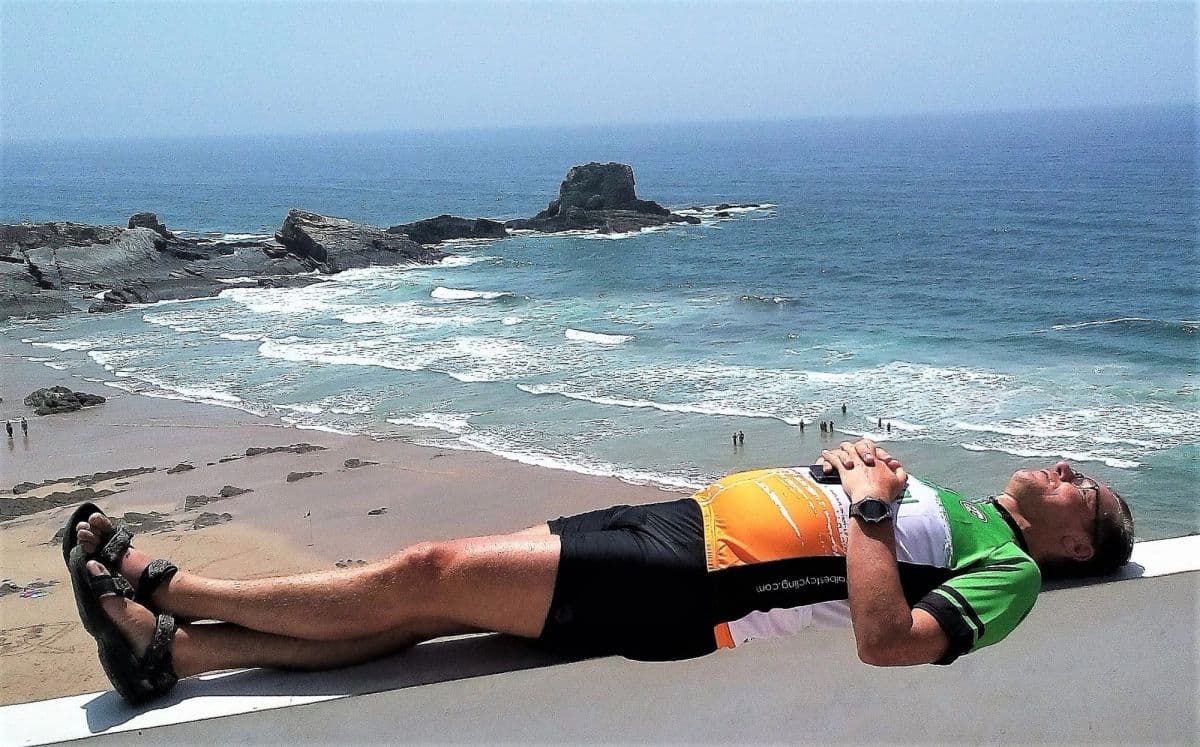

The Algarve is one of Europe's most rewarding cycling destinations. Portugal's southern coast combines dramatic cliff-top scenery, quiet inland roads through cork oak forests, and a climate that allows comfortable riding for at least nine months of the year. Whether you follow the Ecovia do Litoral along the coast or explore the hillside villages of the interior, the Algarve delivers the kind of cycling that makes you want to extend your trip by another week.
Why the Algarve Is Perfect for Cycling
Three factors make the Algarve stand out. First, the weather: average temperatures range from 15°C in January to 28°C in July, with over 300 days of sunshine per year. Second, the terrain: the coastal strip is gently undulating rather than mountainous, with manageable hills that reward effort with sweeping ocean views. Third, the infrastructure: Portugal has invested heavily in cycling routes, and the Algarve now has a network of signed paths that connect its major towns without requiring riders to share busy highways.
The Ecovia do Litoral — Algarve's Coastal Cycling Route
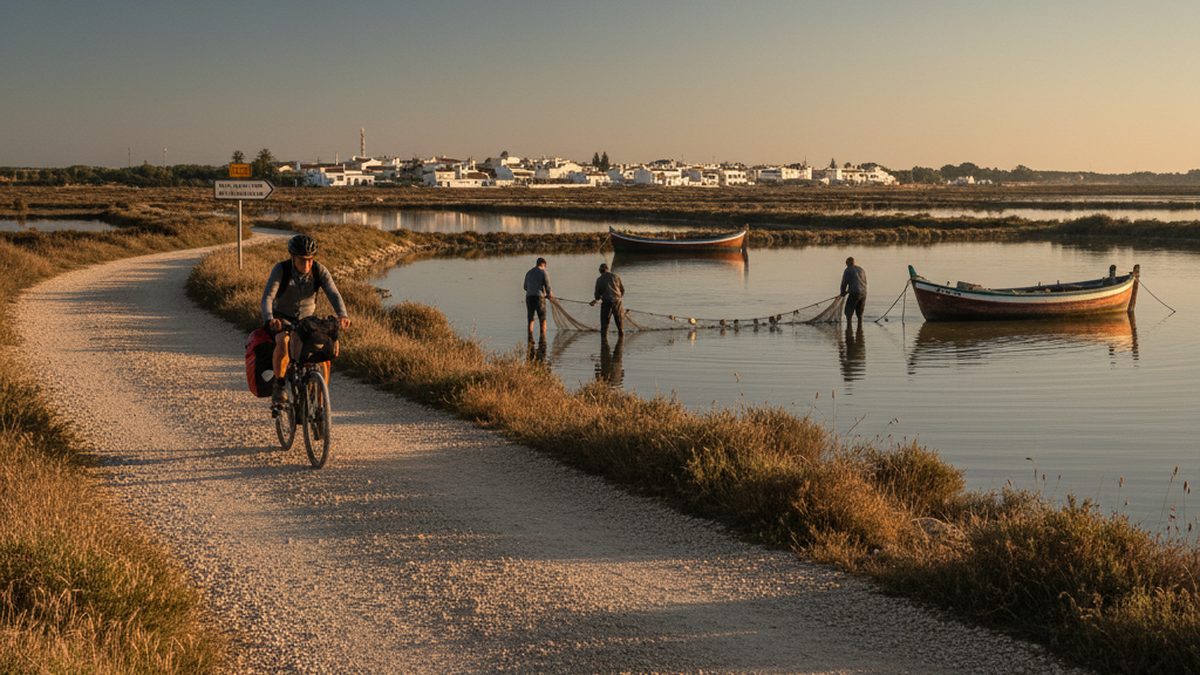
The Ecovia do Litoral is the Algarve's signature cycling route, running approximately 214 kilometres from Cabo de São Vicente at the southwestern tip of Portugal to the Spanish border at Vila Real de Santo António. The route follows a mix of dedicated cycle paths, quiet country roads, and coastal tracks. It passes through Lagos, Portimão, Albufeira, Faro, Olhão, and Tavira — each with its own character, from the buzzing marina of Lagos to the quiet fishing harbour of Olhão. The terrain is mostly flat along the coast, with occasional short climbs when the path diverts inland around cliff sections.
The Inland Algarve — Serra do Caldeirão
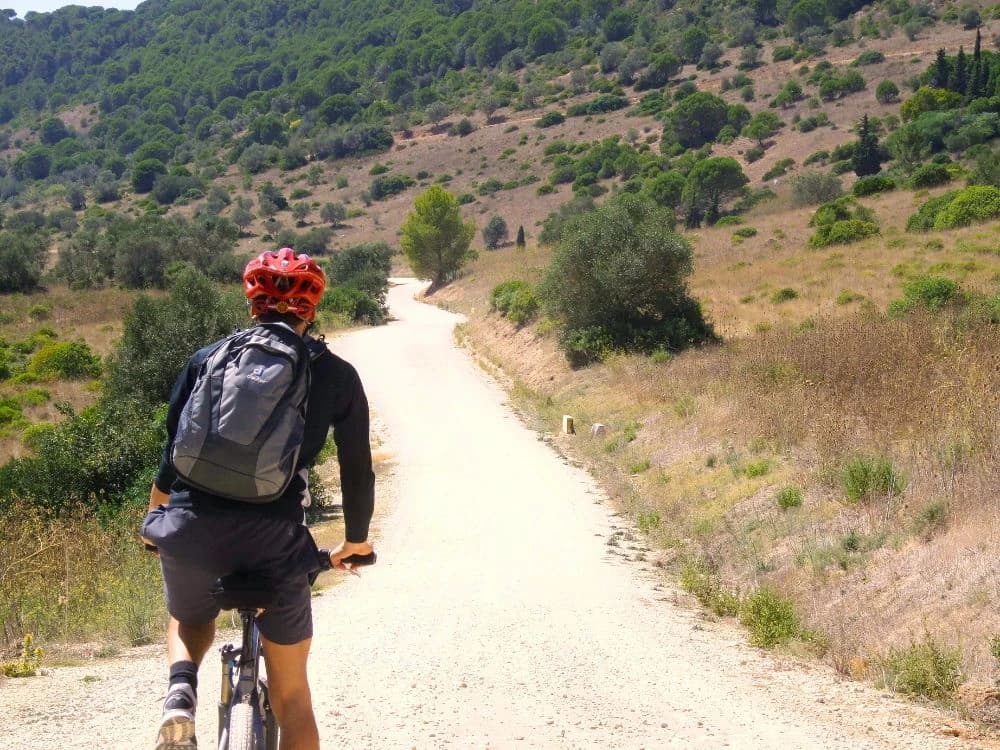
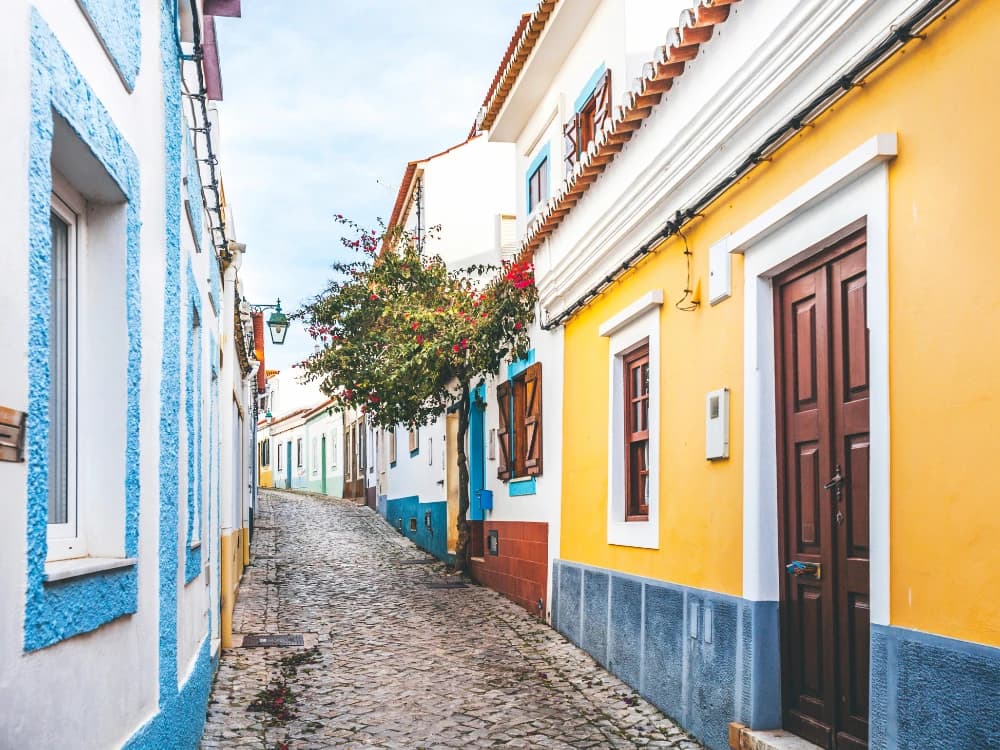
The Algarve interior is a different world from the coast. The Serra do Caldeirão hills are covered in cork oak, eucalyptus, and wild herbs — the air smells of rosemary and cistus. Villages here are small, white-washed, and almost untouched by tourism. The riding is hillier than the coast, with climbs of 200 to 400 metres, but the roads carry virtually no traffic. This is cycling for those who want solitude, authentic rural Portugal, and the satisfaction of earning their views. Gravel bikes work particularly well on the mixed surfaces of the interior — to ride both the wild coast and these inland trails, see our Alentejo and Vicentina Coast mountain bike tour.
What to Eat Along the Way
Algarve cuisine is built around the sea. Grilled sardines served on thick bread with a squeeze of lemon are available at almost every coastal town. Cataplana — a seafood stew cooked in a hinged copper pot — is the region's signature dish, combining clams, prawns, and chorizo in a fragrant tomato broth. Inland, the food shifts towards hearty mountain fare: roast chicken piri-piri, bean stews, and the rich almond and fig desserts that reflect the Algarve's Moorish heritage. Portuguese pastries and strong coffee at mid-morning provide the perfect cycling fuel.
Best Time to Cycle the Algarve
The ideal months are March to May and September to November. Spring brings wildflowers and mild temperatures perfect for all-day riding. Autumn offers warm seas for post-ride swimming and fewer tourists than summer. July and August are hot — temperatures regularly exceed 35°C — and best avoided unless you are comfortable riding very early in the morning. Winter is mild enough for cycling but brings occasional rain, particularly in December and January.
Planning a Self-Guided Algarve Cycling Holiday
A self-guided tour is the best way to experience the Algarve by bike. You ride independently while your luggage is transferred between hotels, GPS tracks guide you along the route, and a support hotline is available if anything goes wrong. Most tours cover the Ecovia do Litoral or a section of it over six to eight days, with daily distances of 30 to 50 kilometres. Our Wild Algarve Cycling Tour is exactly this kind of trip — an eight-day self-guided ride from the Costa Vicentina at Odeceixe to Vila Real de Santo António on the eastern Algarve, with luggage transfers, GPS navigation and nights in charming hotels along the way. For a similar coastal experience in Italy, the Puglia route from Matera to Lecce offers the same combination of sea views, exceptional food, and gentle terrain. Browse the full tour catalogue to compare options across Portugal, Italy, and beyond.
Frequently Asked Questions
Is the Algarve flat enough for beginner cyclists?
The coastal Ecovia do Litoral is mostly flat with gentle undulations, making it suitable for beginners. The inland hills are more challenging and better suited to intermediate riders. E-bikes are available on most tours for additional assistance.
Can I cycle the Algarve year-round?
The Algarve is cycleable from February through November. Winter months bring occasional rain but temperatures rarely drop below 12°C. Summer is very hot and best avoided for long-distance riding.
How long does it take to cycle the Ecovia do Litoral?
Most cyclists cover the full 214-kilometre route in six to eight days, averaging 30 to 40 kilometres per day. Shorter sections can be ridden as a weekend trip, with Faro as a convenient starting point.
What type of bike is best for the Algarve?
A hybrid or touring bike handles the coastal route well. For the inland hills and mixed surfaces, a gravel bike provides better versatility. Road bikes work on paved sections but struggle on the occasional unpaved stretches of the Ecovia.
Do I need to book accommodation in advance?
In spring and autumn, booking a few days ahead is usually sufficient. During summer, advance booking is essential. A self-guided tour package handles all accommodation booking for you, removing the logistical burden entirely.
Beyond the Algarve: more Portugal cycling. If the Algarve has hooked you on Portuguese cycling, head north to the green Minho family bike holiday in vinho verde country, or follow the pilgrim route on the Camino Portuguese from Porto to Santiago de Compostela.