Teaching a child to ride a bicycle is one of parenting's most rewarding milestones. The moment they pedal away independently — wobbly at first, then steadier with each metre — marks the beginning of a lifetime of freedom on two wheels. The modern approach to teaching cycling has moved away from training wheels in favour of a progression that builds balance first, then adds pedalling. Here is how to guide your child through each stage safely.
Stage 1: Balance Bikes (Ages 2–4)
Balance bikes — small bikes with no pedals, no chain, and no training wheels — are the single best tool for teaching young children to ride. Children sit on the saddle and push themselves along with their feet, gradually lifting their feet for longer glides as their balance improves. Most children who learn on a balance bike transition to a pedal bike within a few weeks of trying one, often skipping training wheels entirely. Choose a balance bike that is lightweight (under 4 kg), has an adjustable saddle height, and pneumatic tyres rather than solid foam — pneumatic tyres provide much better grip and a smoother ride.
Stage 2: First Pedal Bike (Ages 4–6)
When your child can glide on a balance bike with feet up for five seconds or more, they are ready for pedals. Start on a flat, smooth surface — a park path, a quiet car park, or a sports court works well. Hold the back of the saddle gently (not the child) and let them pedal forward. Most children find their balance within one to three sessions. Resist the temptation to hold on longer than necessary — the sooner they feel the bike responding to their own balance adjustments, the faster they learn. If they fall, keep the reaction calm. Falls at low speed on grass or soft ground are part of the process.
Stage 3: Braking and Stopping
Once your child can pedal and balance, teach braking immediately. Start with the rear brake only — squeezing the front brake too hard at low speed can pitch a child over the handlebars. Set up a simple exercise: pedal towards a line on the ground and stop before crossing it. Gradually reduce the stopping distance as their confidence grows. Explain that braking gently and early is always safer than braking hard at the last moment. Practice stopping from progressively higher speeds until it becomes instinctive.
Stage 4: Steering and Turning
Children naturally learn to steer by looking where they want to go — the bike follows their gaze. Set up a gentle slalom course using cones, water bottles, or chalk marks and let them weave through at their own pace. Teach them to lean slightly into turns rather than turning the handlebars sharply. Practice U-turns in both directions, as most children find turning in one direction easier than the other. Wide, open spaces are essential at this stage — avoid narrow paths or areas near traffic until turning is confident and consistent.
Stage 5: Road Awareness and Rules
Before riding on any road, even a quiet residential street, children need to understand basic rules: ride on the correct side, stop at junctions, look both ways, signal turns with their arm, and always give way to pedestrians. Practice these skills in a controlled environment first — many cities offer traffic gardens or cycling proficiency courses specifically for children. Ride alongside your child on their first road rides, positioning yourself between them and traffic. Keep initial road rides short and on quiet, familiar streets.
Safety Equipment
A properly fitted helmet is non-negotiable for all children cycling. The helmet should sit level on the head, covering the forehead, with straps snug under the chin. Check the fit regularly as children grow. Beyond helmets, ensure the bike has working front and rear lights, a bell, and reflectors on the wheels and pedals. High-visibility clothing or a reflective vest is advisable for riding in low light. Gloves protect hands in falls and improve grip in wet weather.
Building Confidence for Family Cycling Adventures
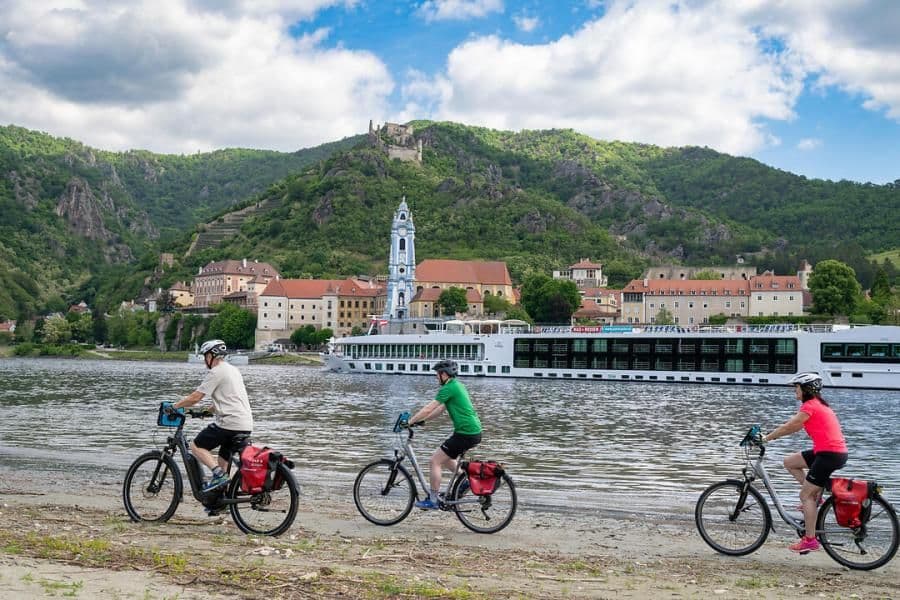
Once your child rides confidently and understands road basics, family cycling opens up enormously. Start with short rides to local parks, cafés, or friends' houses to build endurance and route-finding skills. Gradually extend to half-day rides on dedicated cycle paths. When the family is ready for a multi-day adventure, self-guided cycling tours designed for families provide the perfect structure: pre-planned routes on safe paths, luggage transfer, and accommodation booked in advance. The Adige Valley family tour is an excellent first tour for families with children aged ten and above, following flat, car-free paths from the Alps to Lake Garda. The Minho family bike holiday offers another gentle, family-friendly option along the Italian Adriatic. Browse the full tour catalogue for more family cycling holidays.
Frequently Asked Questions
At what age can children learn to ride a bike?
Children can start on a balance bike from age two. Most children transition to a pedal bike between ages four and six. Every child develops at their own pace — readiness depends more on coordination and confidence than age.
Are training wheels recommended?
Modern cycling education favours balance bikes over training wheels. Training wheels teach pedalling but not balance, so children face a second learning curve when the wheels come off. Balance bikes teach balance first, making the transition to pedals much smoother and faster.
How long does it take to learn to ride?
Children who have used a balance bike typically learn to pedal within one to three sessions. Children starting without prior balance bike experience may take one to two weeks of regular practice. Short, frequent sessions work better than long, exhausting ones.
What size bike does my child need?
Bike size is determined by wheel diameter matched to the child's height: 12-inch for 85–100 cm, 16-inch for 105–120 cm, 20-inch for 115–135 cm, and 24-inch for 130–155 cm. The standover test — standing over the top tube with both feet flat and at least 2 cm clearance — confirms correct sizing.
When can children join a family cycling tour?
Most self-guided family tours are designed for children aged ten and above who can ride independently for 30 to 50 kilometres per day on flat terrain. Younger children can participate in a trailer or child seat. Check how self-guided tours work for details on family options.