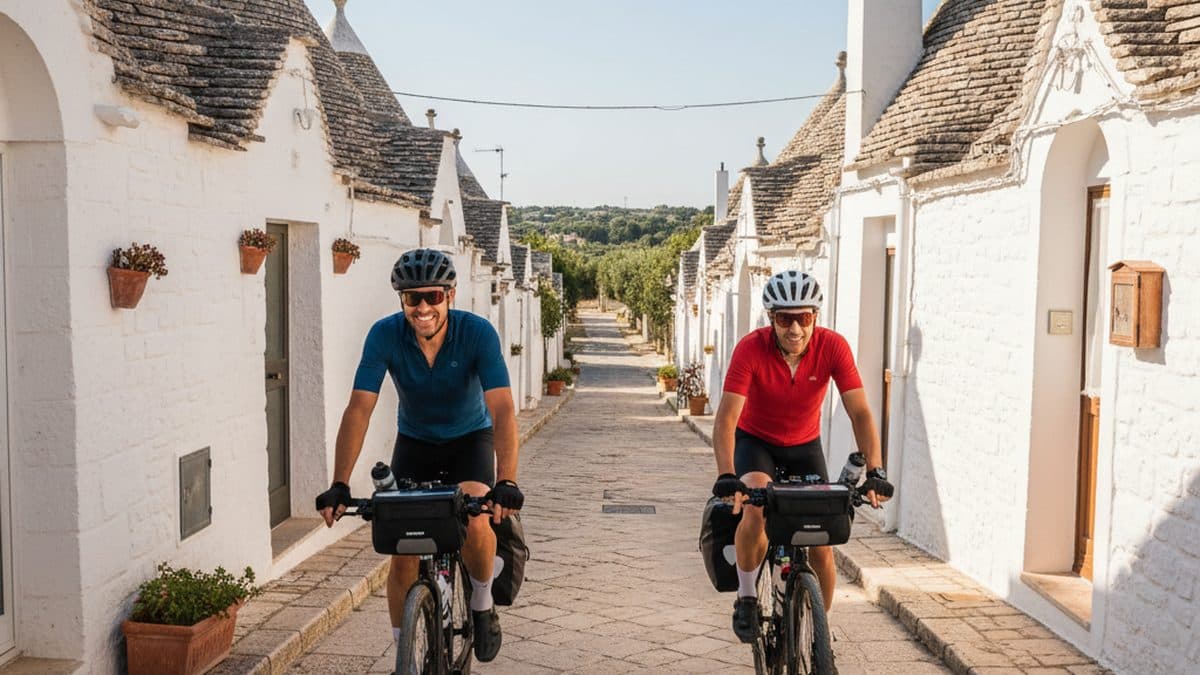
Puglia is the sun-baked heel of Italy, and one of the country's most rewarding regions to explore by bike. Flat to gently rolling, ringed by two seas, and dotted with whitewashed towns, trulli, and ancient olive groves, it offers easy riding with an extraordinary density of things to see — from the UNESCO cave city of Matera in neighbouring Basilicata to the baroque splendour of Lecce and the turquoise coves of the Salento. This guide walks through every self-guided cycling tour we offer across Puglia and Basilicata, and helps you choose the right one for your trip. If you already know where you're heading, jump straight to all our cycling tours in Puglia.
Why Cycle Puglia
Three things make Puglia ideal for cycling. First, the terrain: away from the Gargano mountains, most of the region is flat or gently rolling, with quiet country roads through olive groves and vineyards — perfect for relaxed daily distances. Second, the density of highlights: trulli at Alberobello, the white city of Ostuni, clifftop Polignano a Mare, the Sassi of Matera, and baroque Lecce are all within a few days' ride of one another. Third, the food: Puglia is one of Italy's great culinary regions, where orecchiette, burrata, seafood, and Primitivo wine turn every lunch into an event. Add a long season that stretches well into autumn, and it is one of the best-value cycling destinations in Italy.
The Puglia Cycle Routes
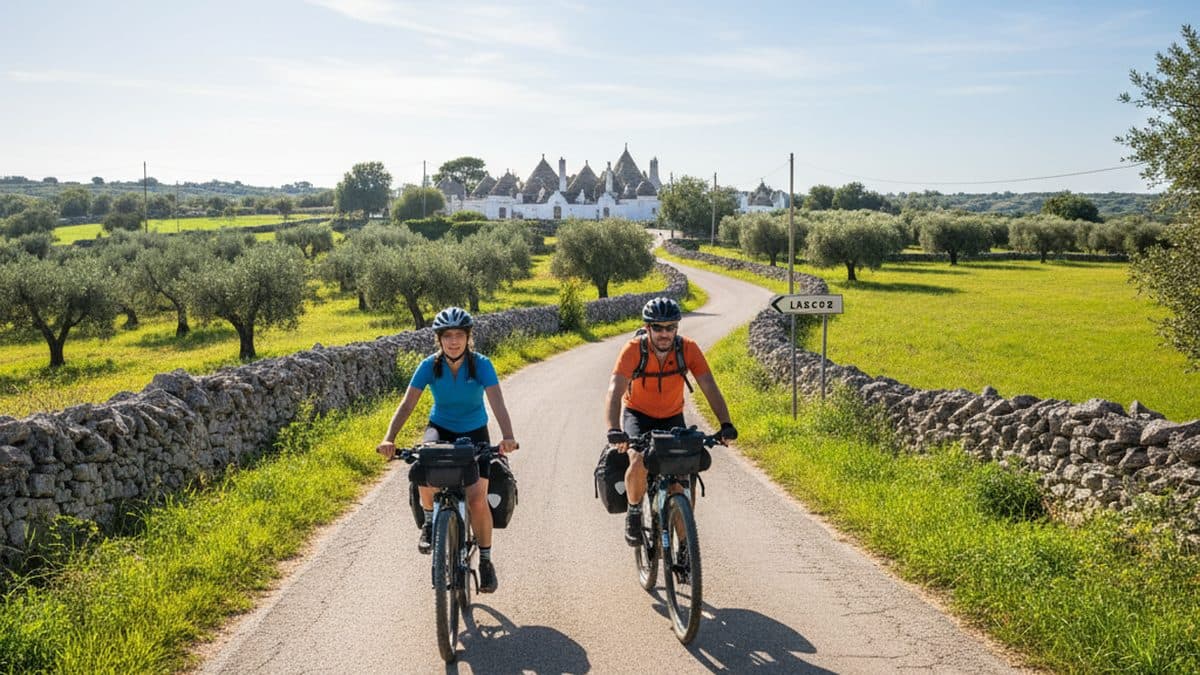
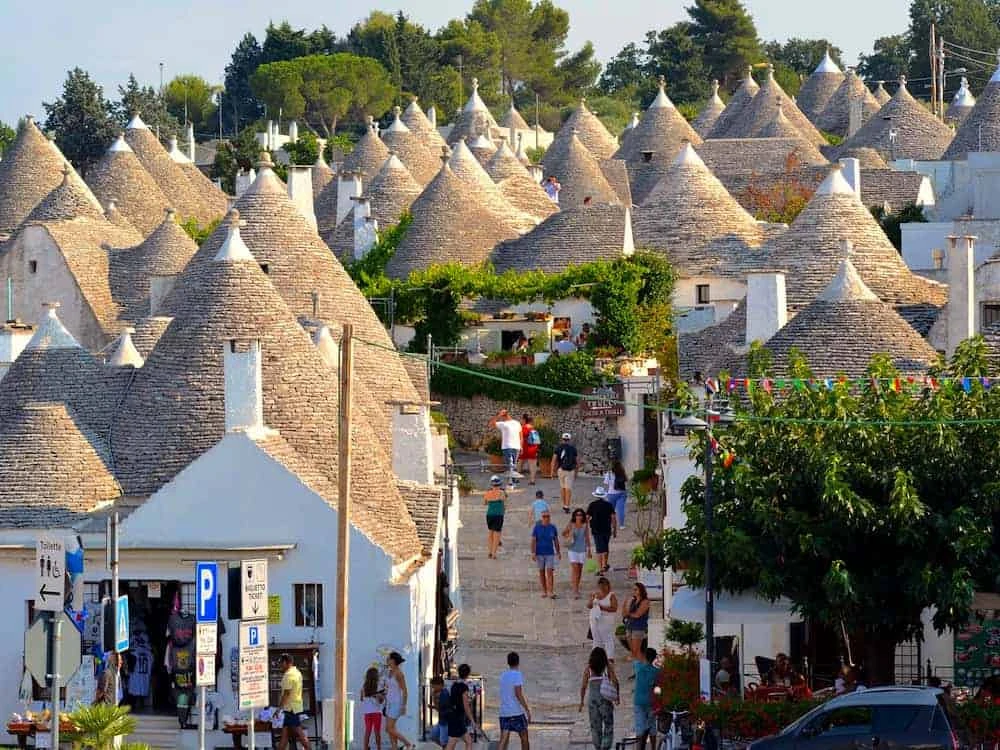
Most Puglia tours thread together the same iconic landscapes: the Valle d'Itria with its trulli and dry-stone walls, the Adriatic and Ionian coastlines, and the Salento peninsula at the tip of the heel. The riding is largely on quiet paved roads and country lanes, with short coastal stretches and the occasional gentle climb to a hilltop town like Ostuni. Distances are moderate — typically 45 to 70 km a day — leaving plenty of time for a swim, a long seafood lunch, or a wander through a baroque old town. Several routes also reach across the regional border into Basilicata to take in Matera, the extraordinary city of cave dwellings.
The Valle d'Itria is the scenic heart of most itineraries: a gentle plateau of red earth, ancient olive trees, and dry-stone walls, scattered with trulli and crowned by a string of beautiful towns. Locorotondo, the "round town" famous for its white wine, Cisternino with its open-air butcher-grills, and baroque Martina Franca are all within easy reach of one another. From the valley the routes drop to the coast, alternating between the rocky coves of the Adriatic — Polignano a Mare perched on its cliff, Monopoli's old port — and the long sandy beaches and watchtowers of the Ionian shore. It is this constant shift between countryside, hill town, and sea that makes Puglia so absorbing from the saddle.
Choose Your Puglia Route
Each itinerary below is bookable from our Puglia cycling tours page, where you can compare durations, difficulty and departure points side by side.
If you would rather settle into one base and ride out each day with no luggage to move, the eight-day hotel-based tour from Alberobello is ideal: you stay in a single masseria or hotel with half board and ride circular day trips to Ostuni, Polignano a Mare, the Castellana Caves, Martina Franca, and even Matera, returning each evening to the trulli capital.
For a classic point-to-point journey, the eight-day Alberobello to Lecce tour runs from the trulli through the Valle d'Itria and along both coastlines to the baroque capital of the Salento — about 310 km of easy riding between the Adriatic and Ionian seas. To begin in Basilicata and take in two UNESCO sites in one trip, the eight-day Amazing Puglia: Sassi, Trulli and Salento tour links the Sassi of Matera with the trulli of Alberobello and the Salento coast, including a short scenic train hop from Ostuni to Lecce. The eight-day Matera and Puglia self-guided tour covers similar ground at 351 km, weaving from Matera through the Valle d'Itria to Manduria's Primitivo vineyards and on to Lecce, with food and wine tastings built in.
And if you want to focus purely on the deep south, the six-day Tour of Salento is a relaxed loop from Lecce around the very tip of the heel — Gallipoli, Santa Maria di Leuca where two seas meet, and Otranto's mosaic cathedral — riding between the Ionian and Adriatic coasts.
For a shorter, point-to-point option that focuses purely on the Bari–Matera corridor across the Murgia plateau, the Alta Murgia Bike Tour: Bari to Matera links the region's coastal capital with the Sassi without looping through the Valle d'Itria or the Salento — useful if your time is short or you are continuing your trip elsewhere.
Two UNESCO Sites: Matera and Alberobello
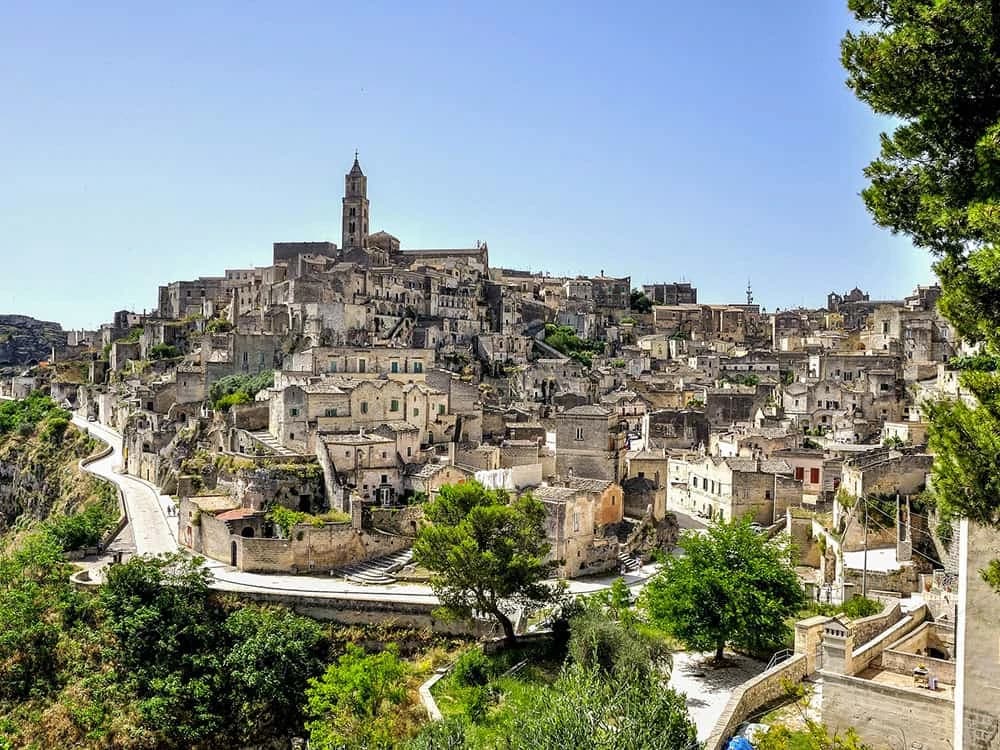
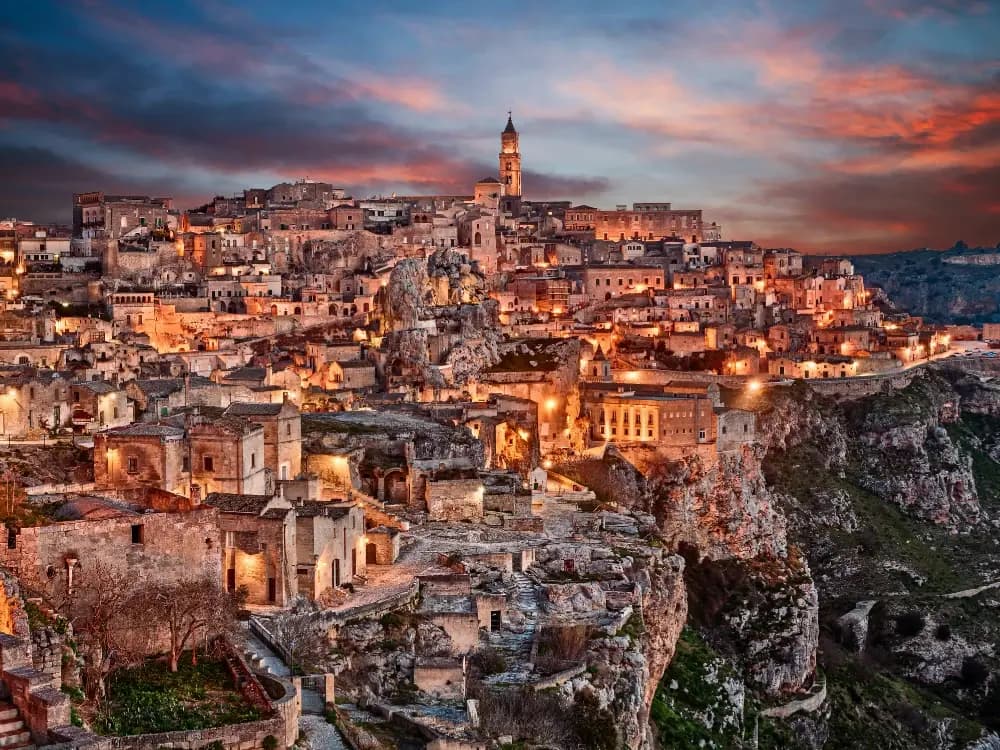
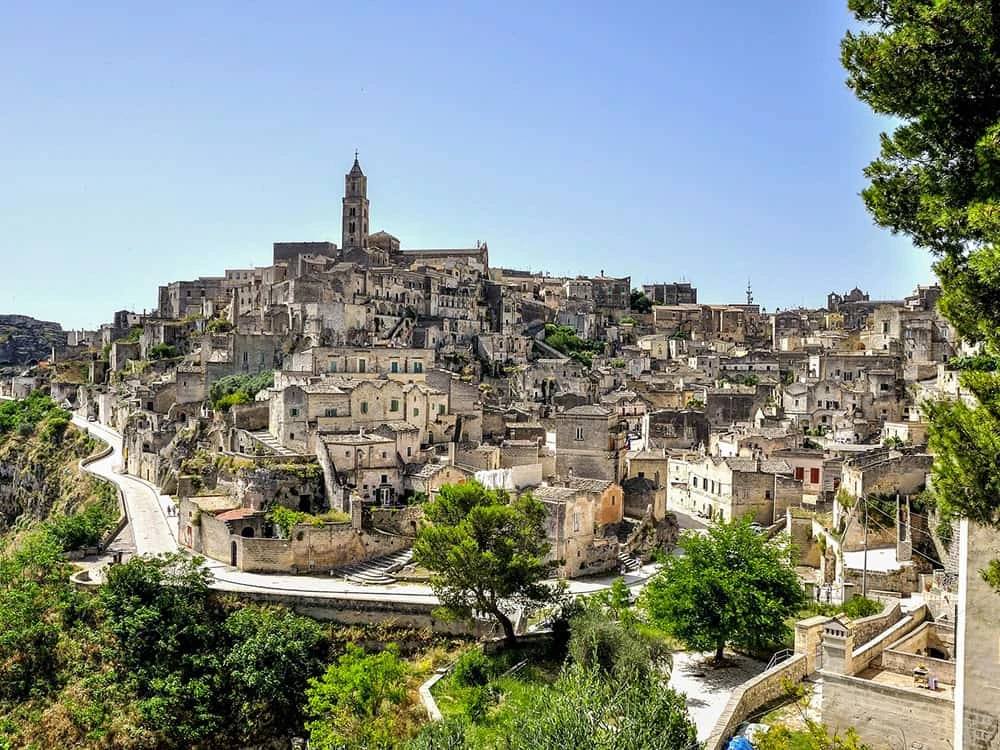
Two of the region's highlights are UNESCO World Heritage Sites, and several tours link them. Matera, just over the border in Basilicata, is one of the oldest continuously inhabited settlements on earth — a labyrinth of cave houses (the Sassi) and rock-cut churches carved into a ravine, now home to atmospheric cave hotels and restaurants. Alberobello is the capital of the trulli — some 1,500 conical-roofed dry-stone houses clustered in the Monti and Aia Piccola districts. Riding between the two, through the Murgia plateau and the Valle d'Itria, is one of the most evocative stretches of cycling in southern Italy.
Beyond the two headline sites, the Salento adds its own layer of wonder: the Greek-founded old town of Gallipoli on its island, Otranto with the medieval mosaic floor of its cathedral and the relics of its 813 martyrs, and Santa Maria di Leuca, where the Ionian and Adriatic seas meet at the southernmost point of the heel. Many tours finish in Lecce, the "Florence of the South," whose honey-coloured baroque churches and Roman amphitheatre make a fitting end to a Puglian ride.
What to Eat
Puglia eats exceptionally well, and simply. The signature pasta is orecchiette, often served with turnip greens (cime di rapa) or a rich tomato ragù. Burrata and stracciatella come from the dairies around Andria and Gioia del Colle; the Adriatic and Ionian deliver raw sea urchins, octopus, and the freshest fish; and bakeries turn out friselle, focaccia barese, and the almond sweets of the Salento. The wines are generous and sun-soaked — Primitivo from Manduria and Negroamaro from the Salento — and a post-ride aperitivo with local olives and cheese is practically obligatory.
When to Cycle Puglia
Puglia has one of the longest cycling seasons in Italy. April to June and September to October are ideal — warm, dry, and comfortable, with the spring countryside in bloom or the autumn grape and olive harvests underway. July and August are hot, often above 33°C, and the coast is busy with Italian holidaymakers; the sea breezes help on coastal stages, but inland riding is best early in the day. Thanks to the mild climate, the shoulder months even stretch into late autumn, making Puglia a great choice when northern Italy has cooled down.
Practical Tips and Getting There
The nearest airports are Bari and Brindisi, both served by direct flights from across Europe and well connected to Alberobello, Lecce, and Matera by train, bus, or transfer. Matera itself has no direct train, but is easily reached from Bari. Trekking bikes and e-bikes suit the terrain on every route, with gravel and road bikes available on some; e-bikes are popular for the longer linear journeys and the warmer months. Daily distances are moderate and the navigation easy, with route notes and GPS tracks provided. Several tours include luggage transfer between hotels, while the hotel-based option removes packing altogether. Book ahead for spring and autumn, the most popular riding seasons.
Frequently Asked Questions
Is Puglia easy to cycle?
Yes. Most of the region is flat to gently rolling on quiet roads, with only short climbs to hilltop towns like Ostuni. Daily distances are moderate, and e-bikes are available on every tour for extra comfort.
Are the tours guided or self-guided?
All the Puglia tours in this guide are self-guided. You receive route notes and GPS tracks, ride at your own pace, and luggage is transferred between hotels — or, on the hotel-based tour, you stay in one place and ride day loops.
Can I visit Matera on a cycling tour?
Yes. The Amazing Puglia and Matera & Puglia tours both start in Matera and link it with Alberobello and the Salento, and the hotel-based tour includes a day trip to Matera. It is one of the great highlights of the region.
What kind of bike should I choose?
Trekking bikes and e-bikes are well suited to Puglia's gentle terrain. Some tours also offer gravel and road bikes. E-bikes are popular on the longer point-to-point routes and in the warmer months.
Which tour is best for a first trip?
The hotel-based tour from Alberobello is the most relaxed — one base, half board, and easy day loops. For a journey, the Alberobello to Lecce route is a gentle, scenic introduction to the whole region.
When is the best time to go?
April to June and September to October offer the best balance of warm weather, quiet roads, and the spring or harvest countryside. Summer is hot but works well on the breezy coast.
Ready to Ride Puglia?
From a relaxed week based in trulli country to a full traverse from Matera's caves to Lecce's baroque streets, there is a Puglia cycling route for every level and every taste — UNESCO towns, two coastlines, and some of Italy's best food. Browse all our cycling holidays in Puglia to compare itineraries, durations, and routes, or widen the search across the whole country with our cycling tours in Italy.