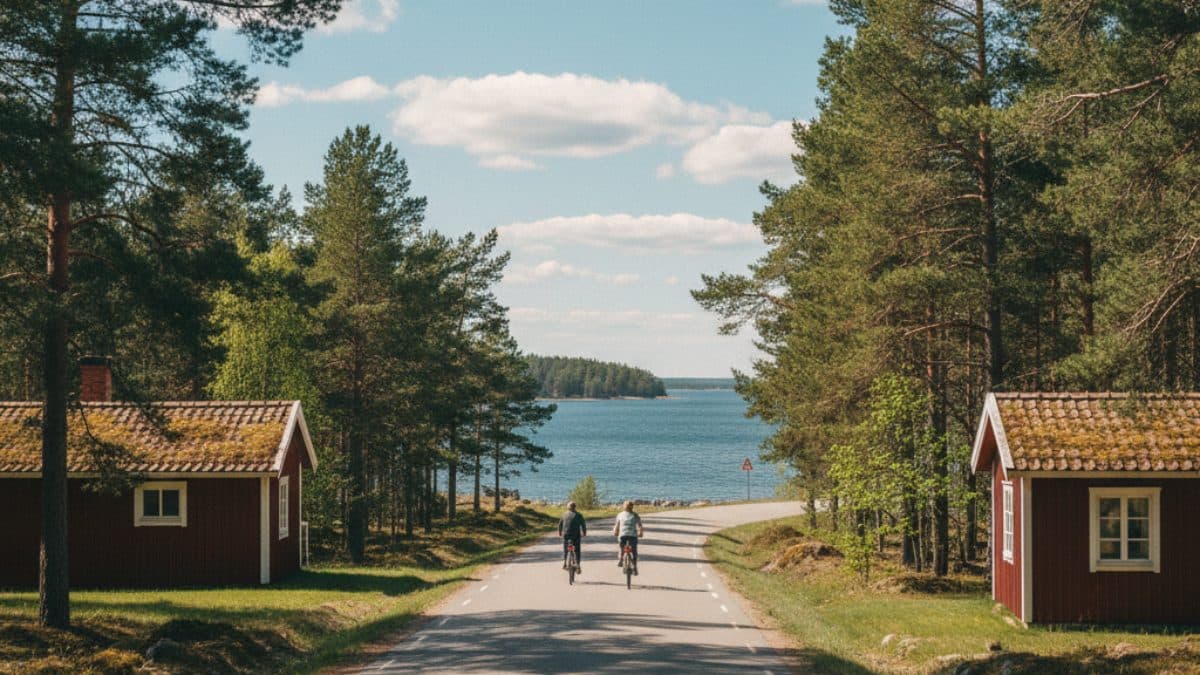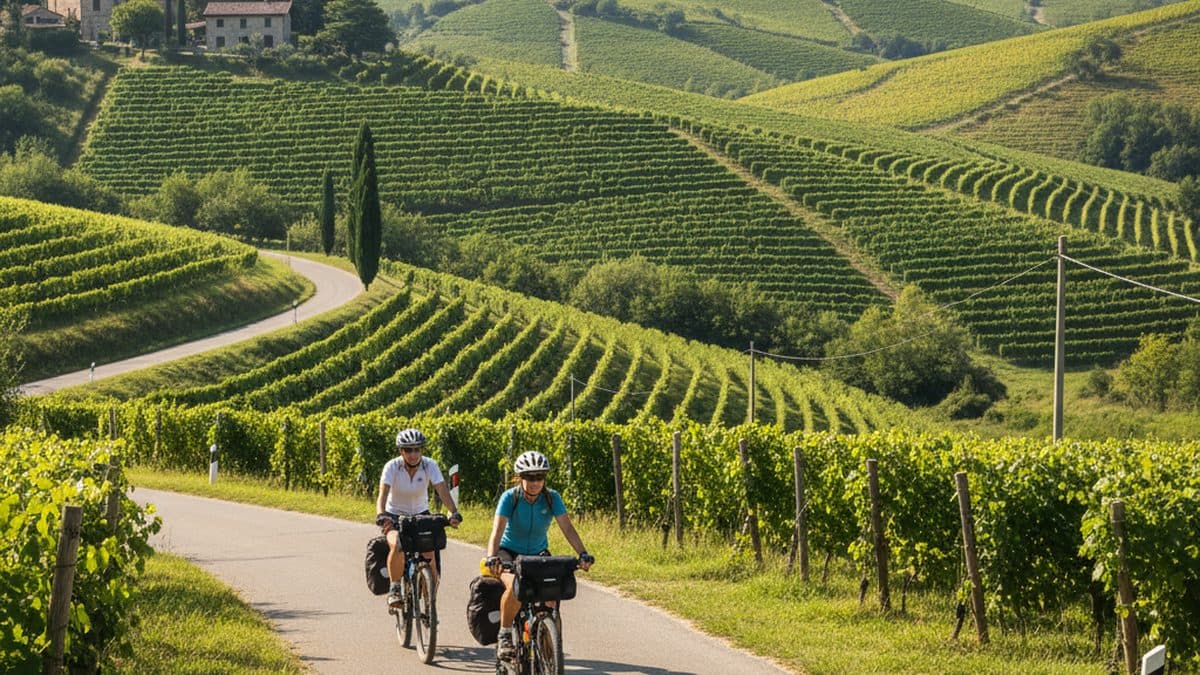

Europe is the world's best cycling destination, and for American travelers, a self-guided bike tour is one of the most rewarding ways to experience it. You will ride through landscapes that no highway reaches, eat at restaurants that no tour bus stops at, and arrive each evening at a hotel where your luggage is already waiting. No group schedule, no van to follow — just you, a bike, and the open road.
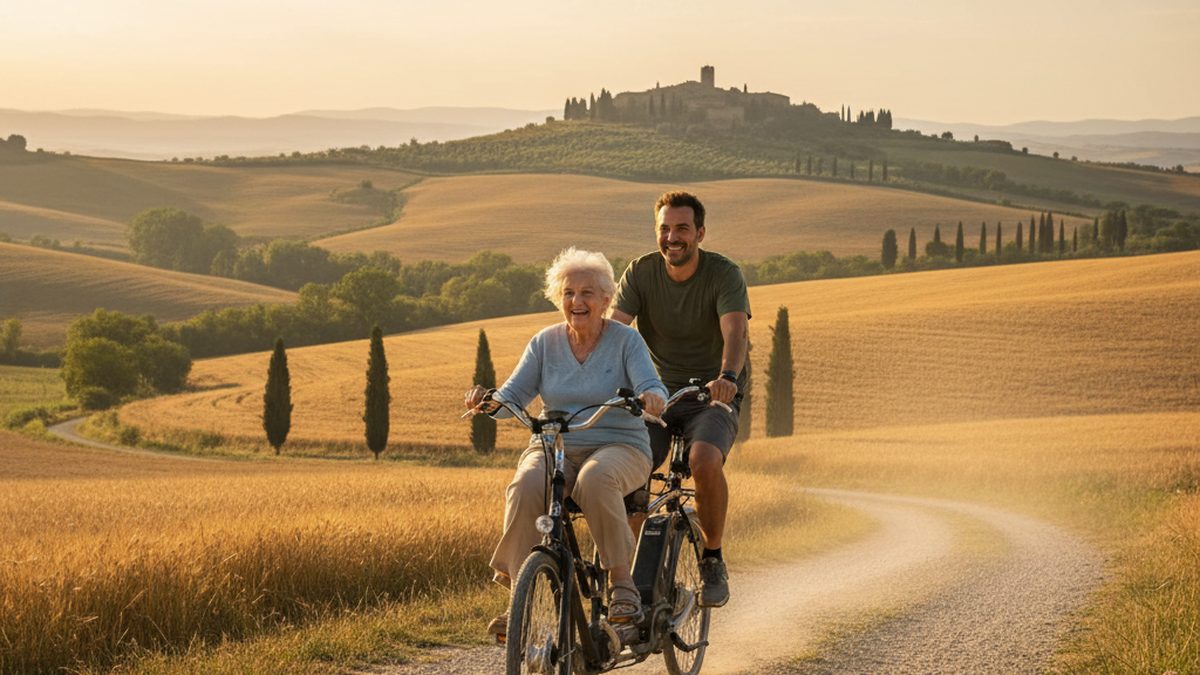
This guide covers everything you need to know to plan a European cycling holiday from the United States: choosing a country, understanding how self-guided tours work, handling flights and logistics, and avoiding the mistakes that first-timers commonly make.
What Is a Self-Guided Cycling Tour?
A self-guided cycling tour is a fully organized bike trip where you ride independently. A local tour operator handles all the logistics — hotel bookings, daily luggage transfers between hotels, bike rental, GPS route files, and emergency support — while you set your own pace and schedule each day. There are no groups, no guide riding ahead of you, and no fixed departure times.
Think of it as a middle ground between backpacking (where you handle everything yourself) and a guided group tour (where someone else makes all the decisions). You get the freedom of independent travel with the convenience of having everything pre-arranged. For a detailed breakdown, see our How It Works page.
Most self-guided tours run between 5 and 10 days, covering 30 to 70 km (roughly 20 to 45 miles) per day on a mix of dedicated cycle paths, quiet country roads, and occasional stretches of regular road.
Why Americans Should Consider Cycling in Europe
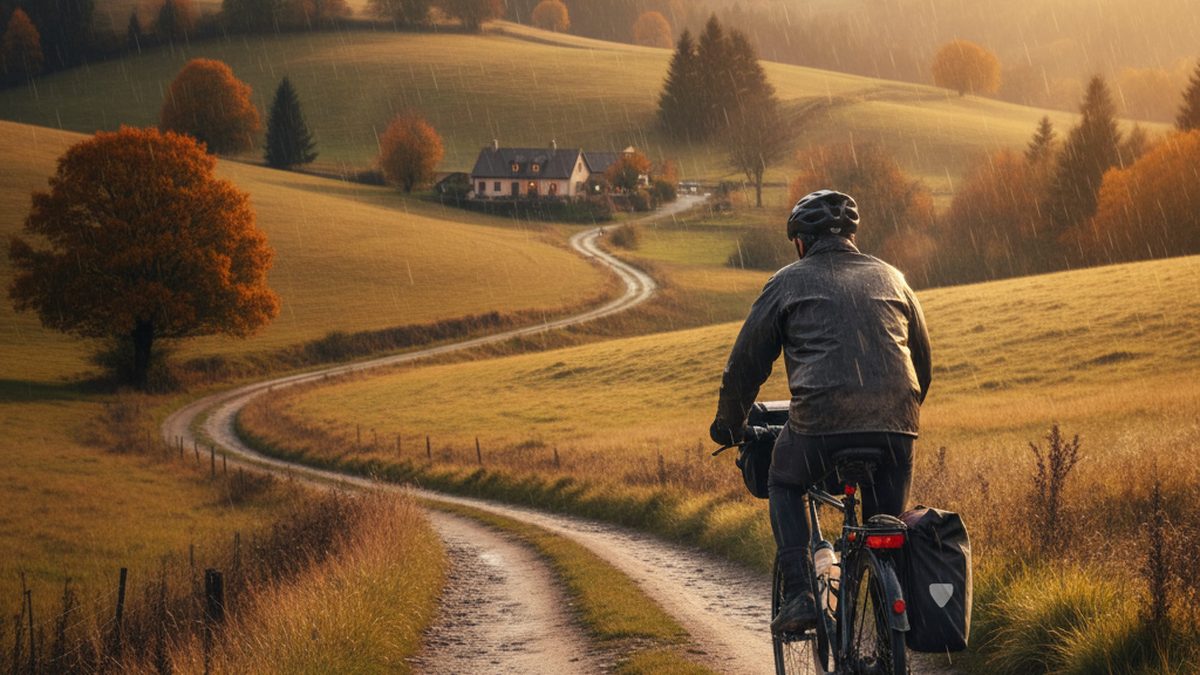
European countries have invested heavily in cycling infrastructure. Italy alone has over 20,000 km of dedicated cycle paths, including converted railway lines that offer completely car-free riding. France, Austria, Germany, and the Netherlands have similarly extensive networks.
The distances are manageable. Unlike cross-country rides in the US, European bike tours cover relatively short daily distances through densely packed scenery. You might pass through three medieval towns, two vineyards, and a coastal village — all before lunch. The cultural density per mile is unlike anything available in North America.
The logistics are simpler than you'd expect. You don't need to speak the local language. You don't need to bring your own bike. And you don't need to figure out hotels, routes, or luggage transport — that's all handled for you.
Best Countries for Your First European Cycling Holiday
If this is your first time cycling in Europe, three countries stand out for American visitors.
Italy
Italy offers the widest variety of terrain and the best food of any European cycling destination. Flat coastal routes like the Trabocchi Coast are perfect for beginners, while routes through Puglia and Umbria combine moderate cycling with deep cultural immersion. Direct flights from major US cities to Rome, Milan, and Venice make access straightforward. Browse all cycling tours in Italy.
France
France has some of Europe's best-maintained cycle paths, particularly along the Loire Valley and the Atlantic coast. The Loire Castles route is a classic first-timer choice — flat terrain, stunning châteaux, and excellent wine at every stop. The Vélodyssée from Bordeaux to Biarritz offers coastal riding through pine forests and surf towns. See all cycling tours in France.
Austria and the Alps
The Adige Valley route from the Austrian border to Lake Garda is one of Europe's easiest and most scenic rides — almost entirely downhill on dedicated cycle paths through apple orchards and alpine valleys. It's an excellent choice for families and beginners who want dramatic scenery without challenging terrain.
How to Get There: Flights and Logistics
Most European cycling tours start in cities with international airports or fast train connections. For Italy, fly into Rome, Milan, Venice, or Bari depending on your route. For France, Paris is the main hub, with connections to regional starting points by TGV (high-speed train). For Alpine routes, Munich, Innsbruck, or Zurich are common gateways.
A few practical tips for American travelers:
Flights: Book round-trip to the same city, or open-jaw if your tour starts and ends in different cities (many tours are linear, not loops). Open-jaw tickets are often the same price as round-trip on major carriers.
Jet lag: Plan to arrive at least one day before your tour starts. Most tours begin with a rest day or short transfer, but arriving the night before and sleeping off the jet lag makes a significant difference.
Trains: European trains are excellent and bikes are generally allowed (sometimes with a reservation). Your tour operator can advise on the best way to reach the starting point from the nearest airport.
Travel insurance: Standard US health insurance does not cover medical costs in Europe. Purchase travel insurance that includes medical coverage, trip cancellation, and ideally cycling-specific coverage before you leave.
What's Included in a Typical Tour Package
Self-guided cycling tour packages typically include hotel accommodation with breakfast (3- or 4-star), daily luggage transfer between hotels, a quality touring bike or e-bike rental, GPS route files or a dedicated app, detailed route notes and maps, and a 24/7 emergency support hotline.
What's generally not included: flights, dinners, lunches, personal travel insurance, and drinks. Some tours offer half-board upgrades. E-bikes usually cost an additional €50–150 for the full tour — a worthwhile investment if you're concerned about fitness or if the route includes hills.
Prices for self-guided tours in Europe typically range from €500 to €1,500 per person (roughly $550 to $1,650 USD), depending on duration, destination, and accommodation level. This represents excellent value compared to equivalent organized vacations.
Choosing the Right Difficulty Level
European cycling tours are graded by difficulty, and the grading is generally reliable. Here's what to expect at each level:
Easy: Flat or gently rolling terrain, 25–45 km (15–28 miles) per day, dedicated cycle paths. Examples: Tour of Salento, Umbrian Valley short break. Suitable for anyone who can ride a bike comfortably for 3–4 hours.
Moderate: Rolling hills, 40–65 km (25–40 miles) per day, mix of cycle paths and quiet roads. Examples: Puglia, Umbria, Loire Valley. Requires a reasonable fitness level and some prior cycling experience.
Challenging: Significant hills or mountains, 50–80 km (30–50 miles) per day, some road riding. Examples: Nice to Genoa, Corsica. Best for experienced cyclists who ride regularly.
If you're unsure, choose one level easier than you think you can handle. European tours are meant to be enjoyed, not endured. And remember: e-bikes are available on almost every route, which effectively reduces any tour by one difficulty level.
What to Bring from the US
Since bikes and helmets are provided, your packing list is simpler than you might expect. Bring padded cycling shorts (2–3 pairs), moisture-wicking jerseys, a lightweight rain jacket, cycling shoes or comfortable sneakers, sunglasses, and sunscreen. For evenings, pack casual clothes for dinner — European dress codes are relaxed but slightly more put-together than American casual.
Leave your bike at home unless you're very particular about equipment. The touring bikes and e-bikes provided by European operators are high quality and well-maintained. Shipping your own bike internationally adds $200–400 each way in airline fees plus the risk of damage.
Common Mistakes Americans Make
Overestimating daily distances. In the US, a 30-mile ride might mean straight roads and few stops. In Europe, 30 miles means cobblestone towns, gelato breaks, wine tastings, photo stops, and lunch at a trattoria. Budget more time than you would at home.
Skipping the e-bike option. There's no stigma attached to e-bikes in Europe — they're extremely popular among all age groups. If you're not sure about your fitness level, or if the route includes hills, an e-bike makes the experience dramatically more enjoyable.
Trying to see too much. A 7-day cycling tour covers one region thoroughly. Resist the urge to tack on three more cities by train afterward. The point of cycling travel is depth, not breadth.
Not arriving early enough. Transatlantic jet lag is real. Arriving the morning your tour starts means cycling 40 km on 3 hours of sleep. Arrive a day early, explore the starting city on foot, sleep well, and start fresh.
When to Go
The European cycling season runs from April to October, with the sweet spot being May through June and September through October. These shoulder months offer warm temperatures, fewer tourists, and lower prices. July and August are peak season — hotter, busier, and more expensive, especially in Mediterranean countries.
For Americans planning around the US calendar: Memorial Day week, early June, and late September are ideal windows. Avoid the first two weeks of August in France and Italy — many locals are on vacation themselves, which means crowded roads and fully booked hotels.
Frequently Asked Questions
Do I need a visa to cycle in Europe?
US citizens do not need a visa for stays up to 90 days in the Schengen Area, which covers most of Western Europe including Italy, France, Spain, Germany, and Austria. Starting in 2025, US travelers need an ETIAS authorization (similar to the US ESTA program), which can be obtained online before departure.
How much does a cycling holiday in Europe cost in total?
A typical one-week self-guided tour costs €600–1,200 per person for the tour package. Add round-trip flights ($500–1,000 from major US cities), dinners (€20–40 per night), and incidentals. Total budget for a 7-day trip: approximately $2,000–3,500 per person including flights.
Can I use my US cell phone in Europe?
Most US carriers offer international plans or day passes for Europe. Alternatively, purchase a local SIM card or eSIM on arrival. You will need mobile data for GPS navigation on your tour. Wi-Fi is available at all hotels.
What if I have a mechanical problem on the road?
All self-guided tour operators provide a 24/7 emergency support hotline. They can arrange roadside assistance, a replacement bike, or a pickup if needed. Basic repair kits (pump, spare tube, multi-tool) are typically included with the bike rental.
Is cycling in Europe safe?
European countries generally have excellent cycling infrastructure and drivers accustomed to sharing the road with cyclists. Many routes use dedicated, car-free cycle paths. Standard precautions apply: wear a helmet, use lights in tunnels, and follow local traffic rules (ride on the right side of the road, same as the US).
Can I do a cycling tour solo?
Absolutely. Self-guided tours are popular with solo travelers. You ride at your own pace, and hotels are pre-booked so there's no logistical stress. Some operators charge a single supplement for solo room occupancy — check the tour details for specifics.
Start Planning Your Trip
Ready to explore Europe by bike? Browse our full collection of self-guided cycling tours to find a route that matches your interests and fitness level, or see our dedicated guide to cycling holidays in Europe from the USA. If you're not sure where to start, our team can help — get in touch for free, personalized advice tailored to American travelers.