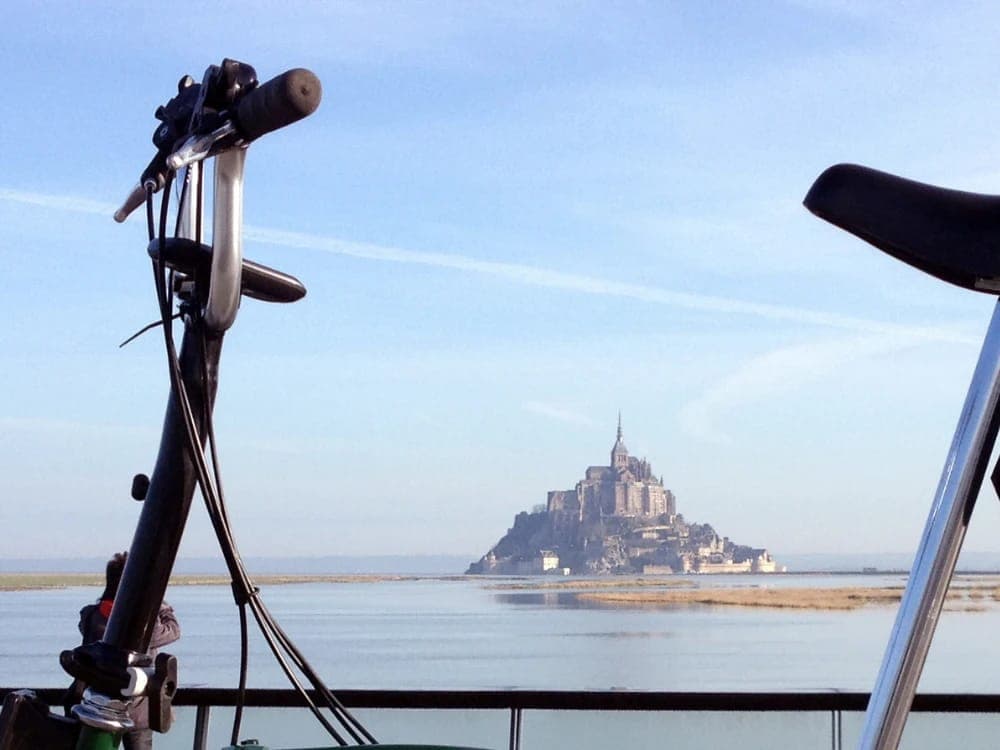

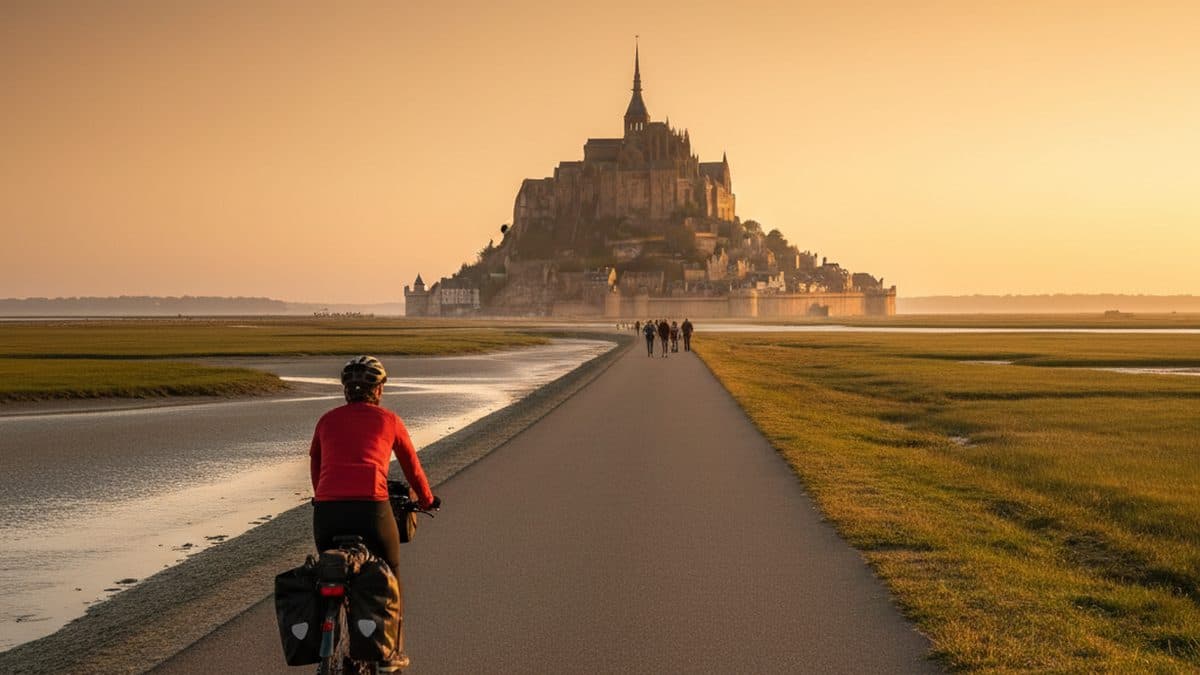
Mont Saint-Michel is one of those places that looks unreal even when you are standing in front of it. A Gothic abbey perched on a granite island, surrounded by the fastest-rising tides in Europe, it has drawn pilgrims for over a thousand years. Arriving by bicycle — after days of riding through the Breton countryside, past granite farmhouses and along wild coastal paths — adds a dimension of experience that no car journey or coach tour can match.
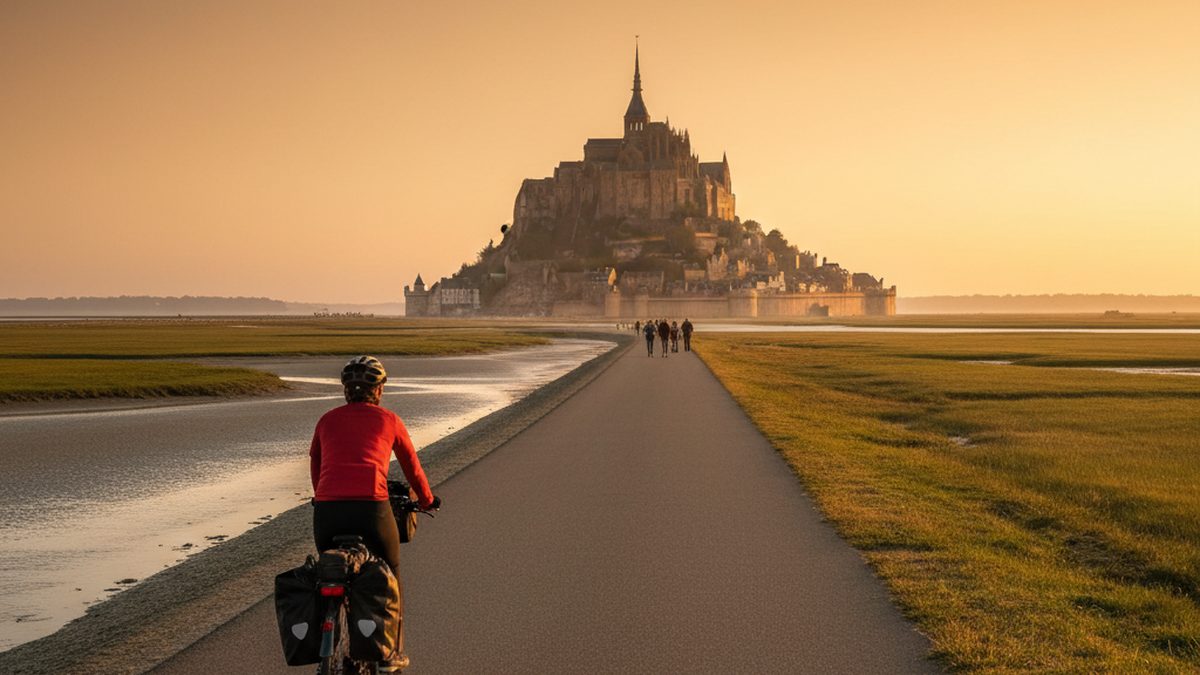
Brittany and Normandy together form one of France's finest cycling regions: green, gently rolling, coastal, and rich in history. This guide covers the best cycling routes to Mont Saint-Michel, what the riding is like, and how to plan your trip. They are just part of our wider range of self-guided cycling tours in France.
Why Brittany Is Perfect for Cycling
Brittany has a character distinct from the rest of France. The landscape is Celtic rather than Mediterranean: stone-walled fields, mist-draped forests, and a coastline that alternates between sandy beaches and dramatic granite cliffs. The cuisine centres on seafood, butter, crêpes, and cider rather than wine. The pace of life is slower than Paris but livelier than the deep countryside of central France.
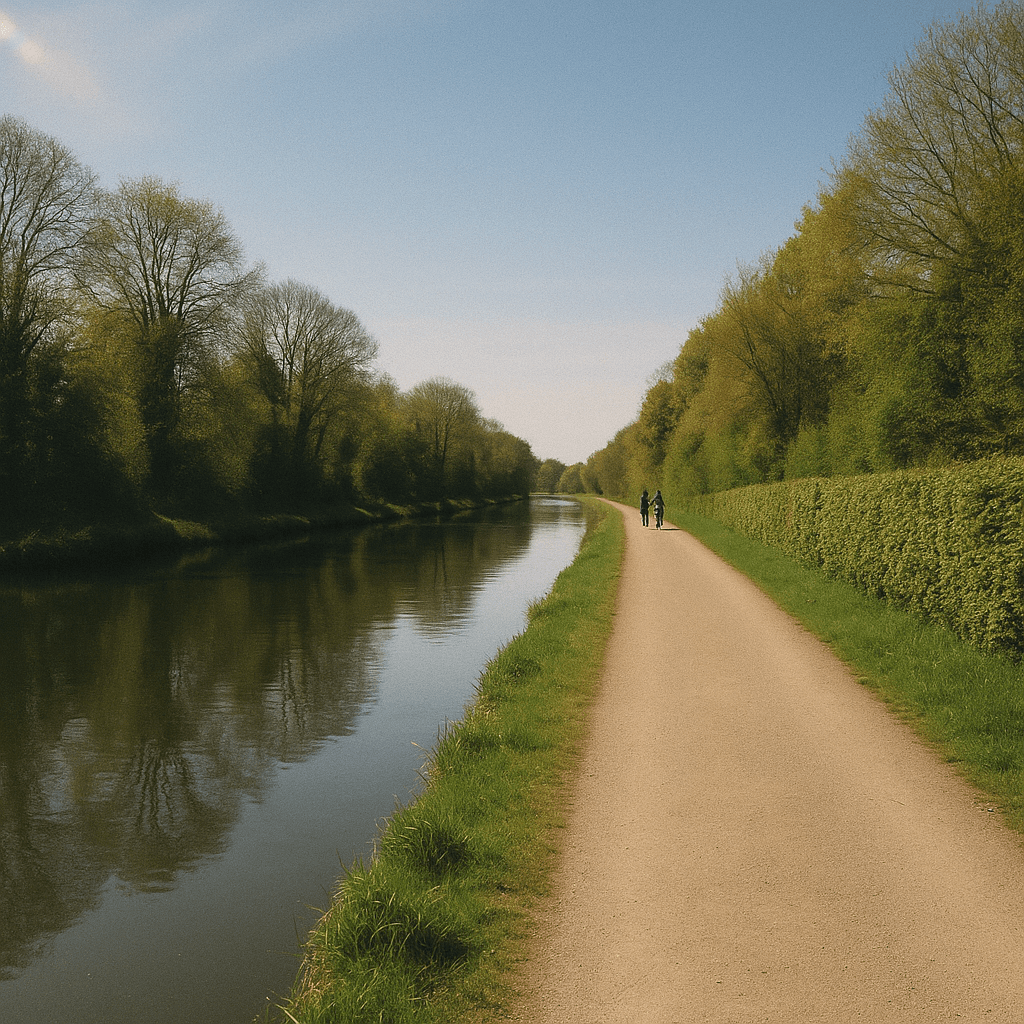
For cycling, Brittany offers a network of voies vertes (greenways) built on converted railway lines and canal towpaths. These car-free paths cross the region from coast to coast, passing through villages that seem unchanged since the 19th century. The terrain is gently rolling — there are no mountains — with short climbs and descents that add variety without exhaustion.
The weather is maritime: mild summers (18–25°C), occasional rain showers that blow through quickly, and a freshness that makes cycling comfortable even in July and August when southern France is scorching.
Our Brittany and Normandy Tours
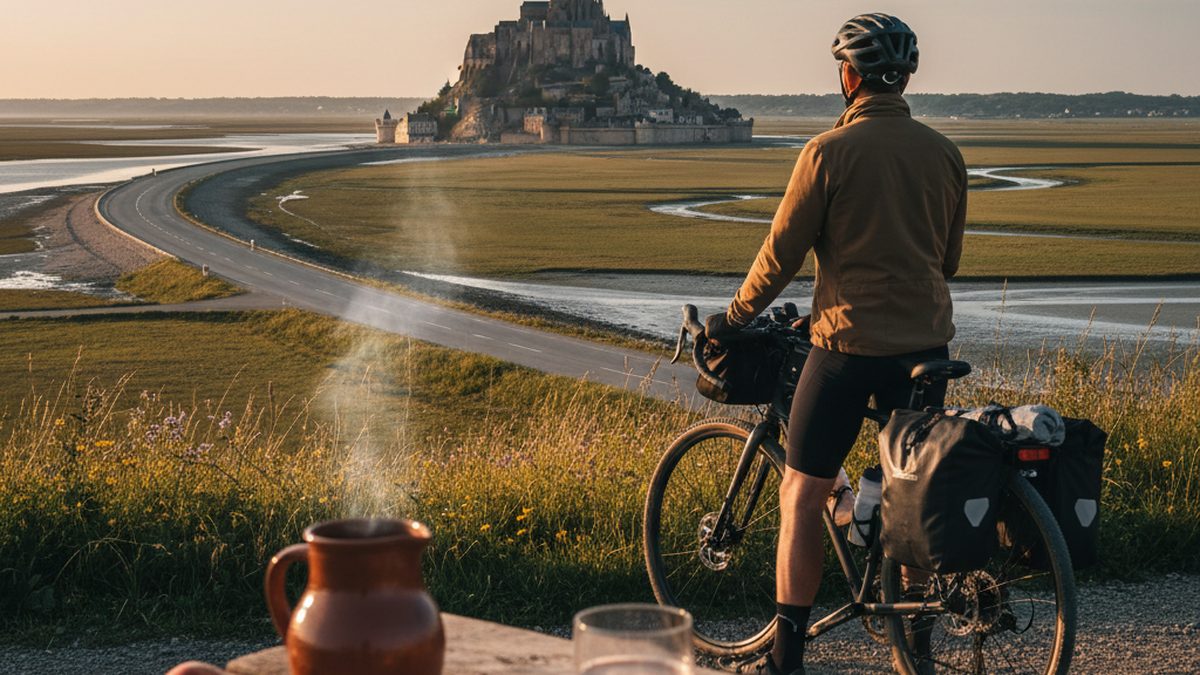
We offer three routes that reach Mont Saint-Michel from different starting points, each offering a different length and perspective:
Corsaire Country to Mont Saint-Michel
The Corsaire Country to Mont Saint-Michel route is the most focused option. Starting from the walled port city of Saint-Malo — once home to the corsaires (French privateers) who raided English shipping — you ride along the Emerald Coast to Cancale, famous for its oysters, then inland through the Breton countryside to Mont Saint-Michel.
This is a shorter tour, ideal for those who want a concentrated Brittany experience without committing to a full week. The daily distances are manageable, the terrain is gentle, and the combination of Saint-Malo's maritime history with Mont Saint-Michel's spiritual grandeur creates a powerful narrative arc.
Rennes to Mont Saint-Michel via Saint-Malo
The Rennes to Mont Saint-Michel route is a longer exploration that begins in Brittany's capital city and loops north to the coast before heading west to the abbey. The route follows the Ille-et-Rance canal towpath out of Rennes — a flat, shaded, car-free start that eases you into the ride — then crosses the Breton interior through farmland and forest before reaching the coast at Saint-Malo.
From Saint-Malo, the route follows the coast to Cancale and then turns south to Mont Saint-Michel. This tour gives you the best of both inland and coastal Brittany, with the added advantage of starting and finishing at a major railway hub (Rennes TGV station, 90 minutes from Paris).
Véloscénie: Paris to Mont Saint-Michel
The Véloscénie from Paris to Mont Saint-Michel is the grand option — a long-distance route covering the full distance from the French capital to the Normandy coast. The Véloscénie is one of France's most celebrated national cycling routes, following a mix of greenways, towpaths, and quiet rural roads through the Île-de-France, the Beauce plain, Chartres, the Perche countryside, and the Normandy bocage before arriving at Mont Saint-Michel.
This is a tour that unfolds France's northern landscape day by day: the suburban fringe gives way to cathedral cities, then to rolling farmland, then to the hedgerow country of Normandy, and finally to the tidal flats and the silhouette of the abbey on the horizon. It is the most ambitious of our three options but also the most rewarding for cyclists who enjoy long-distance touring.
Mont Saint-Michel: What to Know Before You Arrive
Mont Saint-Michel sits on a rocky island in a vast tidal bay on the border between Brittany and Normandy. At high tide, the sea surrounds the island; at low tide, the bay becomes an expanse of sand stretching to the horizon. The abbey at the summit — known as La Merveille (The Marvel) — is one of the greatest achievements of medieval architecture.
Cyclists arriving at Mont Saint-Michel should note that bicycles cannot be ridden onto the island itself. You will park your bike at the mainland parking area and walk or take the free shuttle across the causeway to the island. The walk takes about 25 minutes each way. The abbey requires at least 90 minutes for a proper visit, so plan to spend half a day at the site.
For the best experience, arrive in the late afternoon when the day-trip crowds have thinned, explore the abbey and the narrow streets, and stay overnight in one of the hotels on the island or on the mainland. Seeing Mont Saint-Michel at sunset and again at sunrise, with the light changing across the bay, is an experience that stays with you.
The Emerald Coast: Saint-Malo to Cancale
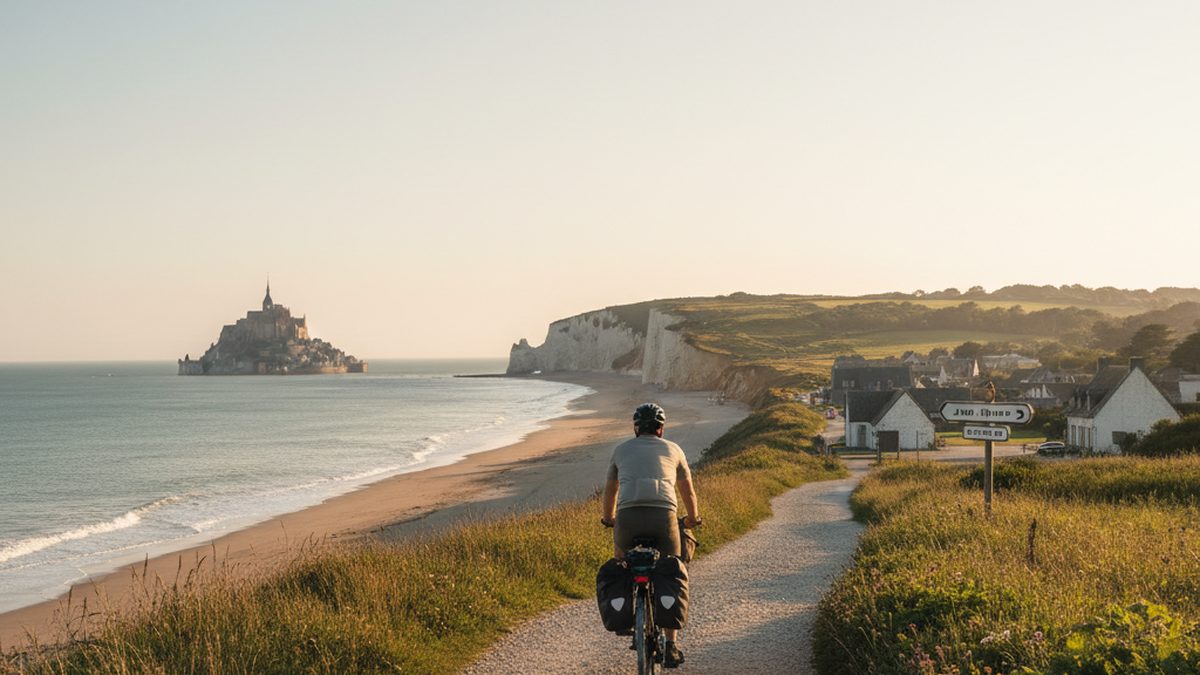
The stretch from Saint-Malo to Cancale is one of the highlights of any Brittany cycling tour. The Côte d’Émeraude (Emerald Coast) is named for the striking green colour of the sea, and the coastal path passes beaches, headlands, and the ruined Fort la Latte perched on its cliff.
Cancale is the oyster capital of Brittany. The town's waterfront is lined with oyster stands where you can buy a dozen freshly shucked oysters and eat them overlooking the beds where they were grown. For cyclists, this is one of those stops where you lock up the bike, sit down, and take your time.
When to Go
The Brittany cycling season runs from May to September. June and September are the best months: warm but not hot (18–24°C), long daylight hours, and fewer tourists than July and August. July and August are busier but still pleasant — Brittany rarely gets uncomfortably hot, thanks to the Atlantic breeze.
May is cooler (15–20°C) and greener, with occasional rain. The countryside is at its most lush, and the tourist sites are uncrowded. If you are comfortable with a rain jacket and slightly cooler evenings, May is a beautiful time to ride.
Mont Saint-Michel itself is busiest from 10 AM to 4 PM in July and August. Arriving by bicycle in the late afternoon gives you a significant advantage over coach tourists who leave after their scheduled visits.
Getting There
Rennes is the main gateway to Brittany, with TGV service from Paris Montparnasse in 90 minutes. Saint-Malo is reachable by regional train from Rennes in about an hour. For the Véloscénie, you start in Paris itself — the route begins at Notre-Dame and follows the Seine south before turning west.
Return from Mont Saint-Michel is typically arranged by the tour operator, with a transfer to Rennes TGV station or to the nearest rail connection.
Frequently Asked Questions
How difficult is cycling in Brittany?
Brittany is moderately easy. The terrain is gently rolling with no serious mountain climbs. Most routes use converted railway greenways and canal towpaths that are flat and car-free. Daily distances are typically 40 to 60 km, achievable by recreational cyclists.
Can I ride my bike onto Mont Saint-Michel?
No. Bicycles must be left at the mainland parking area. You walk or take the free shuttle across the causeway to the island, about 25 minutes each way. The abbey and village streets are pedestrian only.
What is the weather like in Brittany?
Brittany has a mild maritime climate. Summers are warm but rarely hot (18–25°C), with occasional rain showers. The Atlantic breeze keeps conditions comfortable for cycling. A packable rain jacket is essential year-round.
Which route is best for a first visit to Brittany?
The Corsaire Country to Mont Saint-Michel route is the best introduction. It is shorter, starts in the spectacular town of Saint-Malo, and finishes at Mont Saint-Michel. The daily distances are manageable and the highlights are concentrated.
Is the Véloscénie suitable for beginners?
The Véloscénie is a long-distance route that requires multiple days of riding. While the terrain is not difficult (mostly flat greenways), the total distance and duration make it more suitable for cyclists with some touring experience. The Brittany sections are easy, but the full Paris-to-Mont-Saint-Michel route requires stamina and comfort with consecutive riding days.