Italy offers an extraordinary range of cycling landscapes, from snow-capped Alpine valleys to sun-drenched Mediterranean coastline. Each region has its own character — its own terrain, cuisine, architecture, and atmosphere. The best region for your cycling holiday depends on what kind of ride you are looking for: easy or challenging, coastal or inland, cultural immersion or pure nature.
This guide covers the most popular cycling regions in Italy, with route recommendations, terrain descriptions, and practical advice to help you choose.
South Tyrol and the Adige Valley
South Tyrol, Italy's northernmost province, feels like a different country. German is the dominant language, the architecture is Alpine, and the landscape is a striking mix of apple orchards, castle ruins, and dramatic mountain peaks. The cycling infrastructure here is among the best in Europe, with dedicated, well-maintained cycle paths running through the valley floors.
The Adige Valley family tour is the region's signature ride: 192 km from the Austrian border to Lake Garda, following the Adige river along a gentle, mostly downhill path. The route is almost entirely car-free and suitable for families with children aged 10 and above. It finishes at Lake Garda, where a swim in the clear water is the perfect reward.
South Tyrol is also the starting point for more ambitious routes into the Dolomites. The Dolomiti to Trieste ride begins in the Alta Pusteria valley and covers 395 km through three countries, offering dramatic changes in landscape and culture along the way. For a deeper exploration of the peaks and the lakes around them, see our dedicated guide to cycling northern Italy — the Dolomites, lakes and Veneto.
Terrain: Valley cycle paths, mostly flat to gently downhill. Mountain routes available for experienced cyclists.
Best for: Families, beginners, nature lovers, Alpine scenery enthusiasts
Season: May to September
Difficulty: Easy (valley routes) to challenging (mountain routes)
Puglia
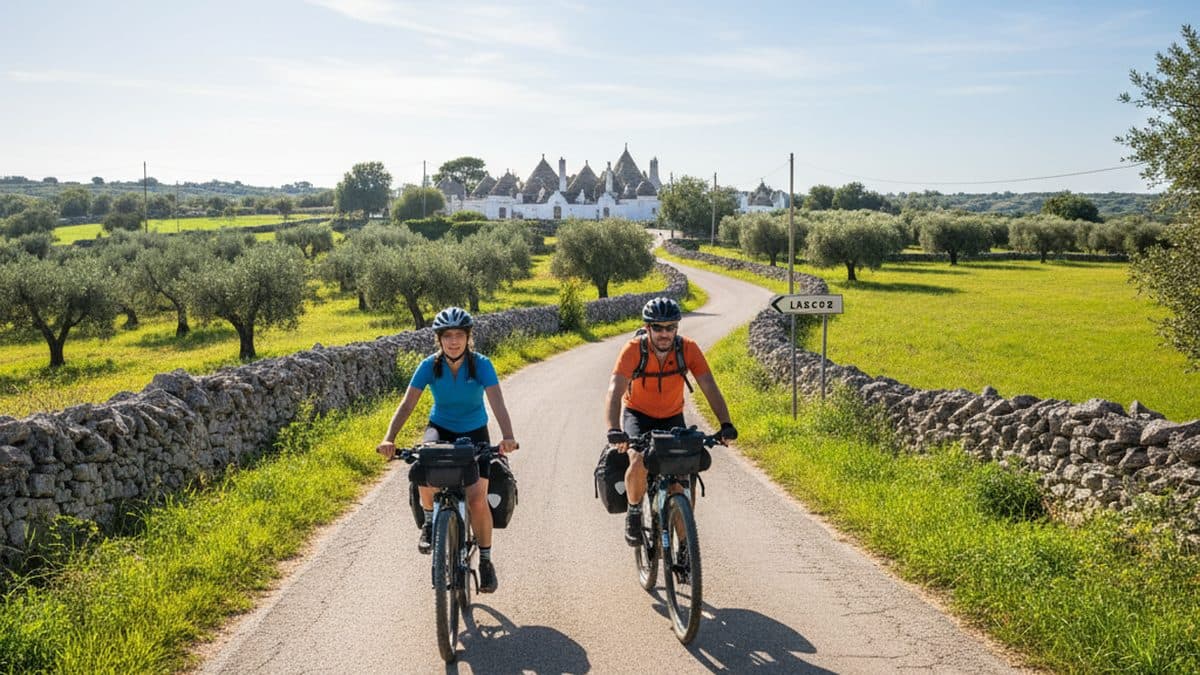
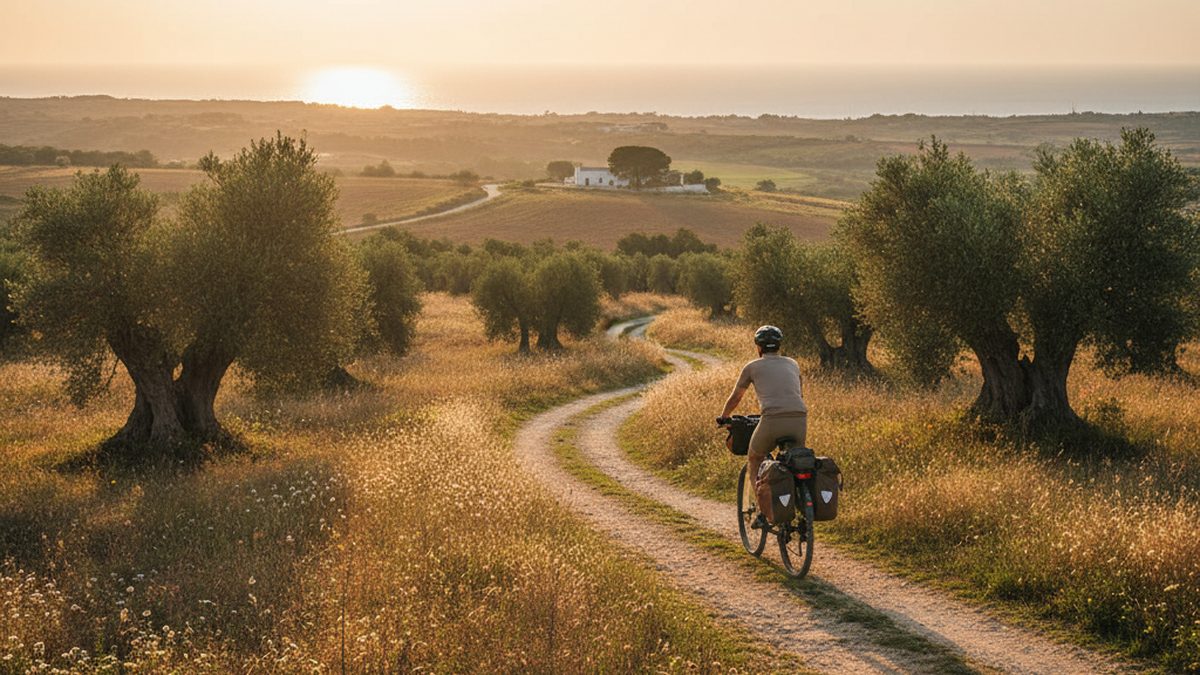
Puglia occupies the heel of Italy's boot, and it is one of the country's most rewarding cycling regions. The landscape is flat to gently rolling — olive groves stretching to the horizon, whitewashed villages, dry-stone walls, and the distinctive cone-roofed trulli houses of the Itria Valley. The food is exceptional: Puglia produces more olive oil than any other Italian region, and the local cuisine is built on fresh vegetables, handmade pasta, and extraordinary bread.
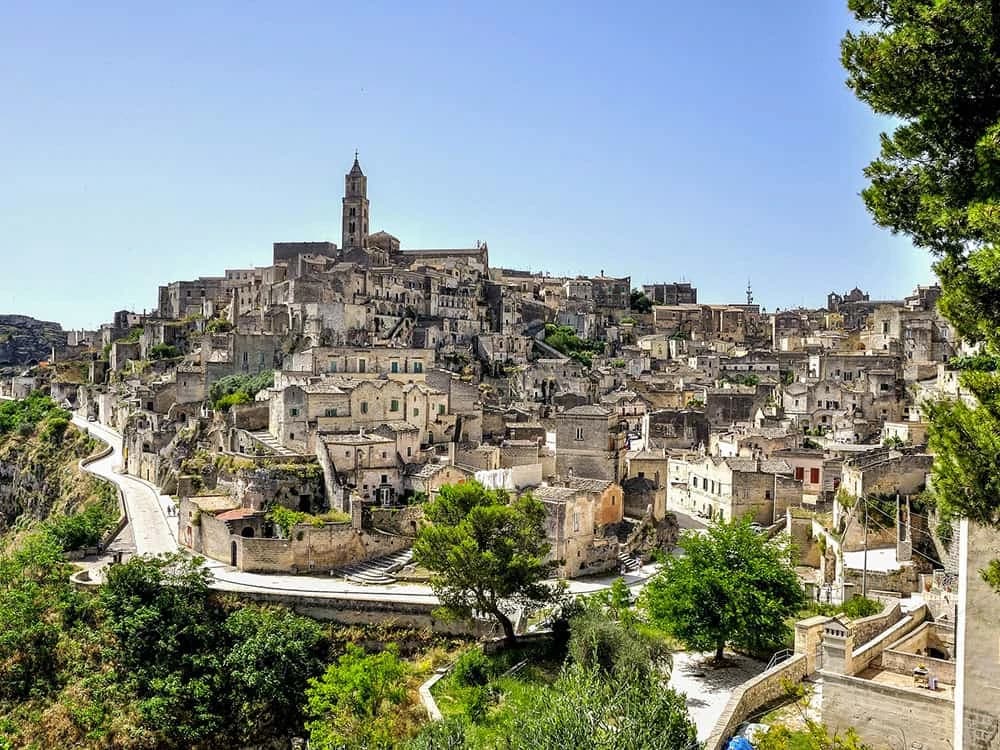
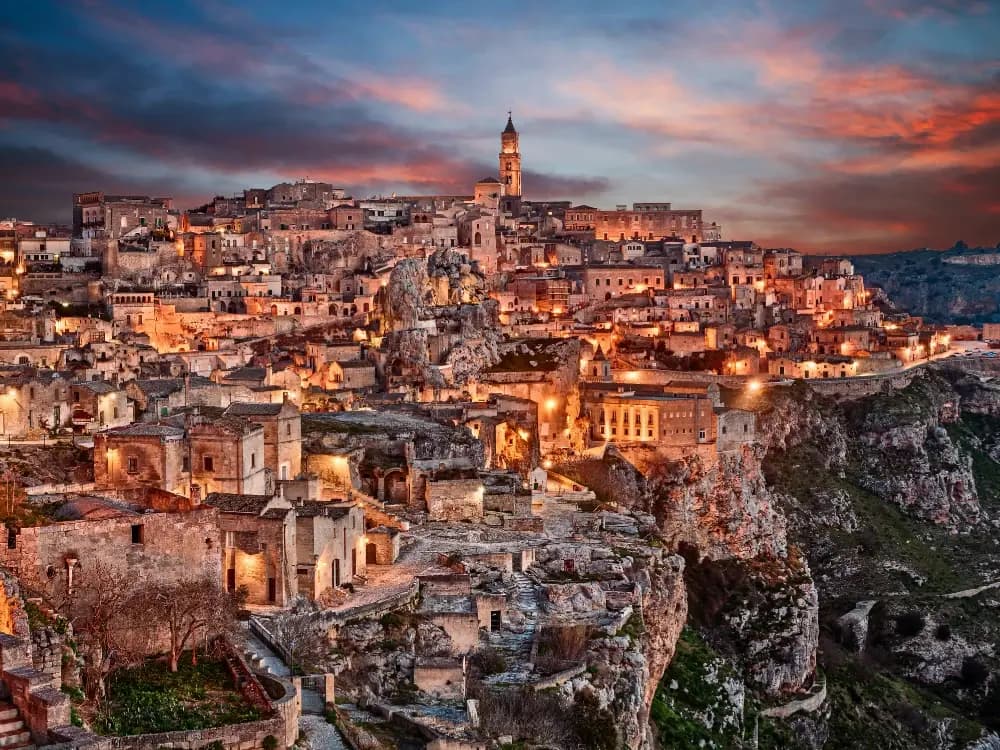
The Puglia route from Matera to Lecce is the definitive tour of this region: 313 km over 8 days, connecting the ancient cave dwellings of Matera (a UNESCO World Heritage Site) with the baroque splendour of Lecce via the trulli country of Alberobello and the flatlands of the Salento. For more options across the heel, see our full guide to cycling Puglia and the Salento.
Puglia has one of the longest cycling seasons in Italy. The climate is mild enough for comfortable riding from March through November, making it an excellent choice for early-season or late-season trips when northern Italy is too cold.
Terrain: Flat to gently rolling. Some longer days on open roads.
Best for: Culture lovers, food enthusiasts, intermediate cyclists
Season: March to November (best in April, May, September, October)
Difficulty: Moderate
Umbria
Umbria is often called the green heart of Italy, and it is one of the most underrated cycling destinations in the country. Landlocked and less visited than neighbouring Tuscany, Umbria offers the same combination of medieval hilltop towns, rolling countryside, and exceptional food — but with fewer tourists and lower prices.
The Valle Umbra loop is a 7-day ride starting and ending in Assisi, covering 262 km through Spoleto, Norcia, and Montefalco. The terrain is hillier than Puglia — expect some real climbs — but the rewards are proportional. Every town has its own culinary identity, and the Sagrantino wine of Montefalco is worth the trip alone. Our full Umbrian Valley cycling guide covers every route from short break to full immersion.
Umbria is particularly beautiful in May and September, when the light is soft, the temperatures are comfortable, and the countryside is at its most photogenic.
Terrain: Hilly with some significant climbs. Mix of quiet roads and rural paths.
Best for: Wine lovers, history enthusiasts, experienced recreational cyclists
Season: April to October (best in May, June, September)
Difficulty: Moderate
Abruzzo and the Adriatic Coast
Abruzzo is home to one of Italy's best-kept cycling secrets: the Via Verde of the Trabocchi Coast. This converted railway line runs along the Adriatic coast from San Benedetto del Tronto to Vasto, offering 161 km of almost entirely flat, car-free riding with the sea on one side and the Maiella mountains rising on the other.
The route takes its name from the trabocchi — ancient wooden fishing platforms that jut out over the turquoise water. The cycling is easy and suitable for all fitness levels, making it one of the best beginner routes in Italy. The Trabocchi Coast is also an excellent family option, with short daily distances and a safe, dedicated path.
Beyond the coast, Abruzzo's interior is mountainous and dramatic, home to three national parks and some of the wildest landscapes in mainland Italy. These areas are better suited to mountain biking and gravel riding than touring.
Terrain: Flat coastal cycle path (Via Verde). Mountainous interior.
Best for: Beginners, families, coastal scenery lovers
Season: April to October (best in May, June, September)
Difficulty: Easy (coastal route)
Liguria and the Italian Riviera
The Ligurian coast is one of Europe's most scenic cycling corridors — rocky cliffs dropping into deep blue water, terraced hillsides covered in lemon trees, and colourful fishing villages tucked into narrow bays. The Nice to Genoa route is the region's signature ride: 240 km over 8 days, starting in France and following the coast through Sanremo, Imperia, and the Cinque Terre area to Genoa.
The terrain is more demanding than flatter regions. The coast is hilly, with frequent climbs and descents as the road navigates headlands and valleys. This is not a beginner route — but for experienced cyclists, the combination of Mediterranean glamour, authentic fishing villages, and dramatic coastal scenery is hard to beat.
Terrain: Coastal hills with frequent climbs and descents.
Best for: Experienced cyclists, coastal scenery enthusiasts, cross-border adventure
Season: May to October (best in June, September)
Difficulty: Moderate to challenging
Friuli Venezia Giulia and Istria
Italy's northeastern corner is where Italian, Slavic, and Germanic cultures meet. Friuli Venezia Giulia is anchored by Trieste — a cosmopolitan port city with Viennese coffeehouses, Roman ruins, and a unique borderland identity. From Trieste, cycling routes extend both west into the Venetian plains and east into Slovenia and Croatia.
The Istria route from Trieste to Pola is a multi-country adventure covering 345 km through Italian, Slovenian, and Croatian territory. The route crosses the Karst plateau, follows the Istrian coastline past Venetian-era towns, and finishes at the Roman amphitheatre of Pola. This is truffle country, and autumn is particularly special with truffle tastings and Malvasia wine at every stop.
The Dolomiti to Trieste route approaches from the opposite direction, descending from the Alpine peaks through varied terrain — from German-speaking villages to Mediterranean coastline — over 395 km. For the wider cross-border picture, see our guide to alpine cycling across Austria, Slovenia and Croatia.
Terrain: Rolling to hilly. Mix of coast, karst, and plains.
Best for: Food and wine enthusiasts, multi-country exploration, culturally curious cyclists
Season: April to October (best in May, June, September)
Difficulty: Moderate
Piedmont and the Northwest
Tucked beneath the western Alps, Piedmont pairs royal history with gentle plains and some of Italy's finest food and wine. Around Turin, flat cycle paths link the Savoy palaces, parks, and rivers of the old royal capital — easy, family-friendly riding with a regal backdrop. The Piedmont Castles and Parks family tour is a relaxed four-day loop from Turin to the grand palace of Venaria, across the vast Mandria park, past the lakeside town of Avigliana, and back via the baroque Stupinigi hunting lodge and the banks of the Po. Beyond the city, the Langhe and Monferrato hills offer rolling vineyard country famous for Barolo and white truffles.
Terrain: Flat cycle paths around Turin; rolling vineyard hills further south.
Best for: Families, beginners, wine and food lovers
Season: April to October (best in May, June, September)
Difficulty: Easy (Turin parks) to moderate (Langhe hills)
Sardinia
Sardinia is the Mediterranean at its most elemental — granite mountains, wild macchia scrubland, and some of the clearest water in Europe. The north of the island is the classic cycling ground, combining the glamorous Costa Smeralda with quiet inland roads and dramatic coastline. The North Sardinia ride from Costa Smeralda to Alghero traces 315 km of this coast and interior over eight days, finishing in the Catalan-flavoured port town of Alghero. The riding is varied — flat coastal stretches interspersed with rolling climbs — and the reward is beaches, seafood, and a culture quite distinct from the mainland.
Terrain: Mixed — flat coast and rolling inland climbs.
Best for: Beach and sea lovers, intermediate cyclists, island explorers
Season: April to October (best in May, June, September)
Difficulty: Moderate
How to Choose the Right Region
Match the region to your priorities. If ease and safety are paramount — especially for families or first-time touring cyclists — the Adige Valley, the Trabocchi Coast, and the parks of Piedmont offer dedicated, car-free paths with minimal elevation. For cultural depth and extraordinary food, Puglia and Umbria are unmatched. For dramatic coastal scenery and a physical challenge, the Ligurian Riviera and Sardinia deliver. And for multi-country adventure with culinary variety, Friuli Venezia Giulia and Istria offer a unique border-crossing experience.
Explore all options on our Italy cycling tours page, where you can filter by region, difficulty, and duration.
Frequently Asked Questions
Which Italian region is easiest for cycling?
South Tyrol (Adige Valley) and Abruzzo (Trabocchi Coast) are the easiest regions. Both feature dedicated, flat cycle paths with minimal traffic. The Adige Valley route is mostly downhill, making it particularly effortless. The royal parks of Piedmont around Turin are another gentle, family-friendly option.
Which region has the best food for cyclists?
Puglia and Umbria are the top choices for food-focused cycling. Puglia offers exceptional olive oil, fresh pasta, and seafood, while Umbria is known for truffles, cured meats, and Sagrantino wine. Piedmont, with its Barolo wine and white truffles, is a strong contender too.
Can I cycle across multiple regions in one trip?
Yes. Several routes cross regional or national borders. The Nice to Genoa route crosses from France into Liguria, the Dolomiti to Trieste route spans South Tyrol to Friuli, and the Istria route covers Italy, Slovenia, and Croatia in a single trip.
Which region is best for a first cycling holiday?
The Trabocchi Coast in Abruzzo is ideal for a first cycling holiday. The route is flat, car-free, and only 161 km over 6 days. The coastal setting is beautiful, and the daily distances are short enough to leave plenty of time for sightseeing and relaxation.
Is Tuscany good for cycling?
Tuscany is a popular cycling destination, known for its rolling hills, vineyards, and Renaissance towns. However, the terrain is hillier than many expect, and summer heat can be intense. Umbria, its less-visited neighbour, offers a similar experience with fewer crowds and more manageable prices.